
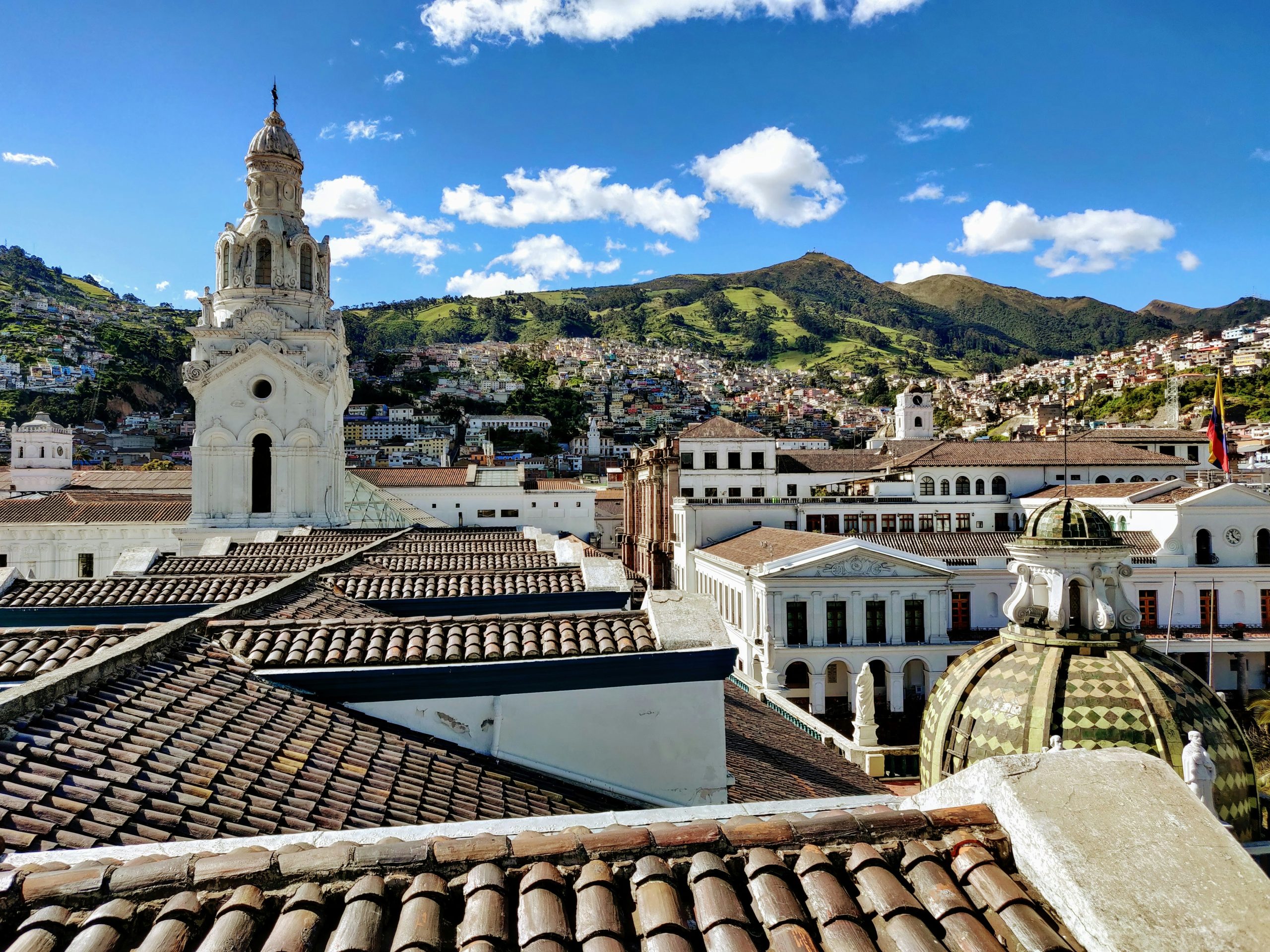
Ecuador’s Andean highlands, known as La Sierra, attracted more visitors than any other region in the country in 2024, with tourism generating USD1.79bn in foreign currency nationally and employing more than half a million people.
The Sierra — which spans ten Andean provinces including Pichincha, Tungurahua, Cotopaxi and Chimborazo, and is home to the capital Quito and the colonial city Cuenca — leads Ecuador in visitor arrivals. Ecuador recorded 1,262,664 international arrivals in 2024, generating total sector sales of USD6.15bn, with domestic travel adding 6.7 million trips during national holidays and USD427.86mn in spending during those periods alone. Tourism revenue is expected to reach USD922.80mn by the end of 2025, rising to USD1.04bn by 2029.
A significant policy milestone in 2024 was the approval of the Organic Law for the Strengthening of Tourism Activities and Employment Promotion, which created the Ecuadorian Tourism Development Fund. The fund is designed to provide access to capital, ease financial pressure on operators, and promote Ecuador globally. In the same year, Ecuador registered tourism investments totalling USD42.9mn across 11 projects and signed two investment contracts worth USD18.2mn, creating 146 jobs. The government also established three new international air routes, bringing the total to 28 routes and 318 weekly frequencies connecting Ecuador to 17 international destinations.
Ecuador additionally formalised a new Country Brand in 2024, and joined the “Andean Paths” cross-border tourism brand alongside Colombia, Bolivia and Peru — a regional initiative to draw high-value visitors to the Andes as a shared destination. The country also joined the Ibero-American Network of Smart Tourism Destinations and became the first nation in the Americas, and fifth globally, to adhere to the Framework Convention on Tourism Ethics, as noted by UN Tourism.
Within the Sierra, Quito serves as the principal gateway. In 2025, the city expanded its urban trail network, introduced sustainable transport measures and improved visitor centres, according to Metropolitan Touring, which described Quito as a destination in active development for international arrivals. The nearby Cotopaxi National Park — home to one of the world’s highest active volcanoes at 5,897 metres — continues to attract outdoor travellers, as do the páramo grasslands and colonial-era market towns of the broader highlands.
Cuenca, in the southern Sierra, received the “Culinary Capitals” certification from the World Food Travel Association in 2024 and was separately recognised by UN Tourism for its commitment to sustainability, reinforcing the city’s position as a cultural and gastronomic draw within the region.
The cloud forests on the western Andean slopes, particularly the Chocó Andino, represent a growing focus for regenerative and community-based tourism. The Chocó Andino de Pichincha Biosphere Reserve, a UNESCO-designated area of 287,000 hectares located less than two hours from Quito, spans 12 different forest types and is home to around 270 mammal species, 600 bird species, and some 10,000 plant varieties. Its communities, united under the Commonwealth of Chocó Andino, have turned ecotourism into a tool for conservation and local employment.
“Tourism provides local people with jobs and income while helping to diversify the economy,” said Gerson Arias, Head of Operations and Tourism Research at Quito Turismo. He described the Chocó Andino model as one designed to generate income, preserve biodiversity and stem the migration of young people from rural areas.
Communities including Yunguilla and Santa Lucía, both supported in their early years by the Maquipucuna Foundation, have shifted from slash-and-burn agriculture and logging to ecotourism and nature-positive enterprises. Yunguilla — home to 50 families managing more than 3,000 hectares of territory — won the TO DO Award 2024 for community-based tourism. The community draws around 6,000 overnight visitors annually.
The Maquipucuna Reserve, a 14,000-acre protected cloud forest near Quito, has become internationally recognised for its annual congregation of ecologically vulnerable Andean spectacled bears, which return between August and November to feed on wild avocados. The foundation is now fundraising to secure an 89-hectare property to protect a key migration corridor for the bears, whose total global population is estimated at fewer than 10,000.
Environmental protection in the Chocó Andino has taken a significant legal turn. In August 2023, around 2 million Quito residents voted in a citizens’ consultation, with nearly 70% backing a ban on metallic mining in the Metropolitan District of Quito, including all Chocó Andino territory. The vote was widely described as a landmark moment for conservation governance in Latin America. However, implementing the prohibition fully has remained a challenge, with 11 existing mining concessions still active in the territory as of early 2024, according to research published in the International Journal of the Commons.
Despite strong numbers nationally, challenges remain. Community-based tourism continues to face labour informality and growing environmental pressure, and there are calls for regionally tailored policies and stronger governance mechanisms to ensure equitable, sustainable development. Ecuador’s broader economic context — including a fiscal deficit of 2.7% of GDP in 2024 and a 51% drop in foreign direct investment — has raised questions about the pace of infrastructure spending.
Still, the direction of travel is clear. “Until cloud forests that are standing are valued more than cut-down forests in monetary terms, there will always be a constant threat,” said Isabel Ontaneda, Director of Operations at the Maquipucuna Foundation.