
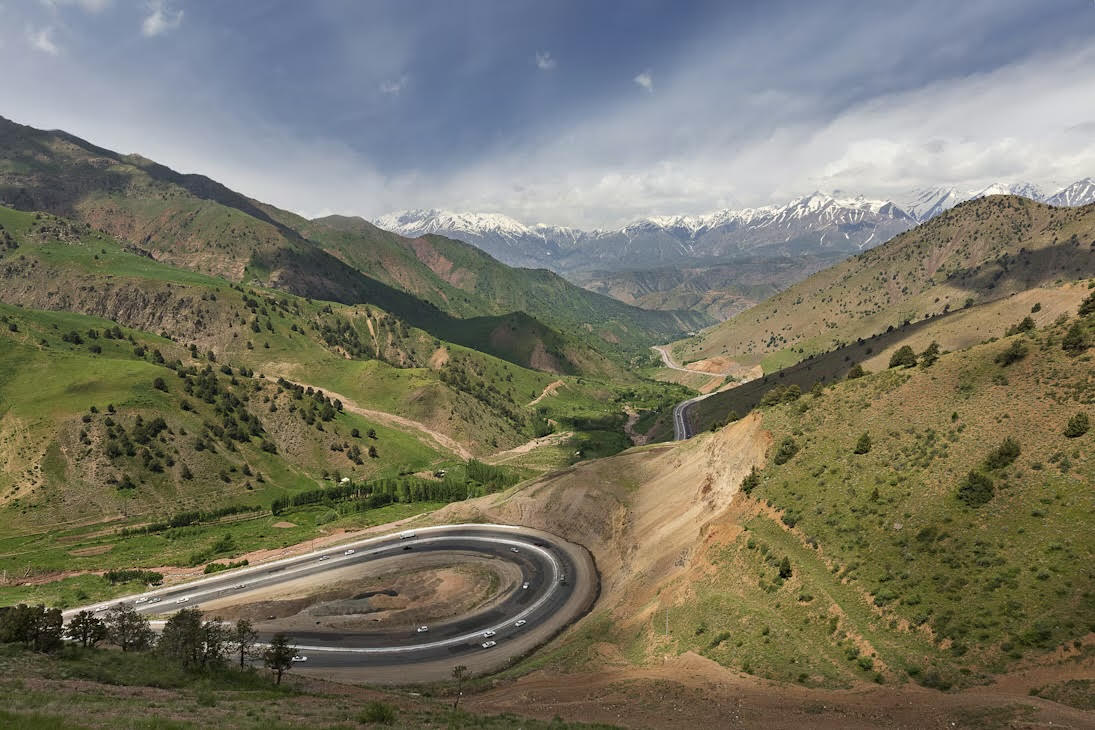
Uzbekistan‘s Fergana Valley, long overshadowed by the Silk Road cities of Samarkand and Bukhara, is drawing fresh attention from the international travel industry as infrastructure investment, expanding air connectivity and a structured community tourism programme work in concert to position the region as a credible alternative destination in Central Asia.
The wider context is significant. The number of foreign tourists visiting Uzbekistan grew in 2024 by 20% to eight million people, while the country’s export of tourism services surged from $2.14bn in 2023 to $3.52bn in 2024. By 2025, momentum had accelerated further: between January and October alone, total arrivals reached nearly 9.6 million, according to Aziz Mirjalilov, head of marketing at Uzbekistan’s Tourism Committee. Uzbekistan ranked among the seven fastest-growing destinations worldwide for inbound tourism between January and September 2025, according to UN Tourism.
The Fergana Valley, which spans the Namangan, Fergana and Andijan regions in eastern Uzbekistan, has historically attracted a fraction of those visitors. The Fergana Valley Community Tourism Network (CTN), launched in 2023 as a pilot initiative under a GIZ (German economic development) programme, is working to change that. The CTN connects travellers to local artisans, small businesses and unique travel experiences in a way that keeps money local and supports small businesses, operating across the Namangan, Fergana and Andijan regions in close cooperation with the Tourism Committee and the three regional tourism departments. In 2025, CTN hosted more than 50 tourism professionals in Samarkand and Tashkent to explore new opportunities in sustainable and community-based travel in Fergana Valley.
On the accommodation side, Turkish hotel group Reikartz announced a forthcoming property in central Fergana city, comprising 37 rooms and a conference hall, adding European-branded inventory to a market currently dominated by independent guesthouses and locally managed hotels. The opening is part of a broader national trend: by 2026, more than 1,000 new lodging facilities are to be added across Uzbekistan, with the Fergana Valley identified among the emerging regions targeted for tourism development alongside Kashkadarya and Karakalpakstan.
Air access to the valley is also broadening. Andijan International Airport resumed operations in 2025, following completion of the first stage of a large-scale reconstruction project covering the runway, taxiways and apron. Under the 2025–2026 autumn-winter schedule, six airlines operate flights from Andijan, including Uzbekistan Airways services to Istanbul, St Petersburg, Moscow, and Novosibirsk. Fergana Airport (FEG) serves routes to Moscow and Istanbul via multiple carriers including Turkish Airlines and S7 Airlines; and a new flight from Delhi to Namangan Airport launched in January 2026, connecting the Fergana Valley directly to India.
The valley’s festival calendar gives cultural tourists structured reasons to visit at specific times of year. The Namangan International Flower Festival runs from late May to late June and opens with a parade of more than 200 flower-decorated vehicles through Namangan’s main streets before a month of concerts, dance performances, handicraft fairs and culinary events centred on Babur Park. In autumn, the Namangan International Honey Festival gathers beekeepers from more than 10 countries at Valley of Legends Park each October, running alongside a plov cooking competition, fashion show and master classes from domestic and international beekeeping specialists. For textiles, the biennial Atlas Bayrami silk festival in Margilan celebrates the region’s ikat-weaving traditions, recognised on UNESCO’s Register of Intangible Cultural Heritage, drawing master artisans and designers from Uzbekistan and abroad for exhibitions, fashion shows and live weaving workshops.
Adventure tourism is growing fast. CTN promotes the Chatkal Mountain Range, which borders the Fergana Valley to the northwest, through two dedicated two-day trekking routes, one through Padibuva Gorge to Chodak village and another to the Arashan alpine thermal pools and Tulpor Lake. The Arashan route is accessible only from mid-July through September when the area is free of snow and ice, and requires four-wheel-drive vehicles on steep mountain roads. Chodak village, within that network, is developing a homestay offer as a base for cultural and nature experiences.
Agricultural tourism represents a less-developed but logical asset given the valley’s geography and strong agricultural sector. Long described as the breadbasket of Central Asia, the region’s orchards, vineyards and melon fields — along with the honey production that draws international competitors to Namangan each autumn — provide the raw material for farm-visit itineraries. The CTN’s culinary journey route already threads through food markets and connects travellers to local producers.
Germany’s Import Promotion Desk (IPD) has a three-year partnership to help bring Fergana Valley’s artisan products to European markets. It’s a development which blurs the line between trade promotion and destination marketing, as craft purchasing (particularly for silks and ceramics) is a primary motivation for cultural tourism in the region.
Uzbekistan’s government, under its Uzbekistan-2030 strategy, has set a target of 15 million foreign tourists and $5bn in tourism services exports, a goal that will require significant visitor dispersal beyond the three established Silk Road cities. The Fergana Valley, with its UNESCO-listed craft traditions, mountain access, a growing festivals calendar and an organised community network, is increasingly well-positioned to absorb a share of that growth.