
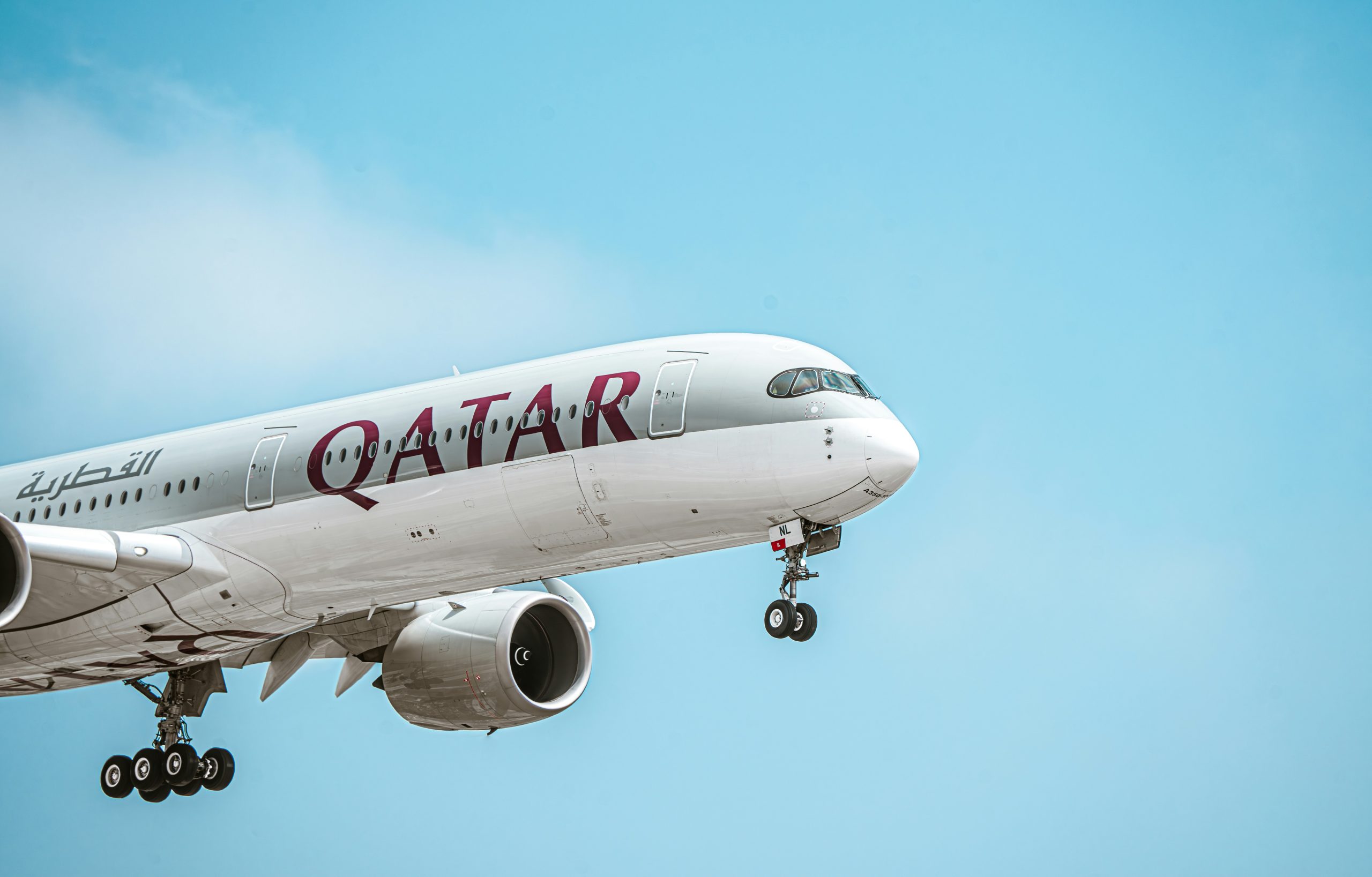
The three major Arab carriers are battling the most severe operational disruption in their histories as the US-Israeli war on Iran enters its 18th day, with intermittent airspace closures, drone strikes on airport infrastructure, and collapsing passenger demand threatening the region’s status as a global aviation hub.
Emirates, Etihad Airways and Qatar Airways have all been forced into reduced or limited schedules since the conflict began on 28 February, when joint US-Israeli strikes on Iran triggered retaliatory missile and drone barrages across the Persian Gulf.
More than 46,000 flights in and out of the Middle East have been cancelled since hostilities began, according to aviation analytics firm Cirium. Dubai International Airport, the world’s busiest for international passengers, has suffered four separate drone-related incidents, the most recent on 16 March when a strike hit a nearby fuel depot and forced a temporary suspension of all operations.
Emirates operating at reduced capacity
Emirates is running a reduced flight schedule from Dubai, serving select global destinations including London Heathrow, Mumbai, Sydney and New York JFK. The carrier is prioritising passengers with earlier bookings and has warned travellers not to go to the airport without a confirmed reservation.
Of the 2,796 flights Emirates had scheduled since the start of the conflict, 1,581 have been cancelled, affecting an estimated 644,133 seats, according to Cirium. The airline has begun routing some intercontinental services via Dubai World Central and Abu Dhabi, with technical stops in Medina or Jeddah to work around airspace restrictions.
Emirates is offering passengers booked to travel between 28 February and 15 April the option to rebook on alternate flights or request a refund, with up to nine changes permitted under its current travel waiver, valid until 30 April.
Dubai Airport with is now obligatory warning has no flights listed on its website as we continue into a third week, according to Emerging Travel research.
Etihad expands limited Abu Dhabi schedule
Etihad Airways has resumed a limited commercial schedule from Zayed International Airport in Abu Dhabi, serving more than 70 destinations. The carrier is offering free rebooking for tickets issued on or before 28 February with original travel dates up to 31 March, with passengers able to push travel back to 15 May.
In a bid to shore up consumer confidence, Etihad has also introduced a no-change-fee booking initiative for all new reservations made from 6 March, allowing one free date change for travel up to 31 March 2027.
Some flights were heading south, with flights heading towards the Indian sub-continent in recent hours, as we continue.
Daily services to London, Frankfurt, Dublin, Cairo and numerous Indian and southeast Asian cities are operating, with additional European destinations available on select days. However, Etihad has cautioned that all flights remain subject to last-minute operational approvals based on airspace conditions.
Qatar Airways launches revised limited schedule
Qatar Airways announced on 16 March that it would operate a revised limited schedule from Hamad International Airport in Doha, running from 18 March through to 28 March. The temporary timetable reconnects Doha with more than 70 destinations across Africa, the Americas, Asia, Europe, the Middle East and the Pacific.
Qatari airspace remains officially closed to regular commercial traffic, with the limited flights operating under special permission from the Qatar Civil Aviation Authority. The carrier has stated that the schedules have been enhanced to offer more flexibility, and bookings are now open, though no onward connections from Doha are currently permitted.
Qatar’s airspace was initially closed on 28 February. The country has been struck repeatedly by Iranian missiles and drones throughout the conflict, with its Ministry of Defence confirming at least 14 ballistic missile and four drone impacts in the first week alone.
Wider Gulf carrier disruption
The crisis extends well beyond the big three. Gulf Air has relocated temporary operations to King Fahd International Airport in Dammam, Saudi Arabia, after the closure of Bahraini airspace, running a limited programme of special flights to Frankfurt, Nairobi, London, Mumbai and Bangkok. Flydubai has resumed a reduced schedule, while Air Arabia is operating limited services from Sharjah, Abu Dhabi and Ras Al Khaimah to more than 40 destinations.
Kuwait Airways is rerouting passengers through Jeddah after sustained physical damage to Kuwait International Airport from drone strikes. Saudia has suspended services to multiple regional destinations.
International carriers pull back
European and Asian carriers have made sweeping cuts. British Airways has cancelled flights to Amman, Bahrain, Dubai and Tel Aviv through to the end of May, with Abu Dhabi services suspended until later in the year. Lufthansa Group airlines have pulled all flights to Dubai, Abu Dhabi, Amman and Erbil until 28 March, with Tel Aviv suspended until 9 April. KLM has cancelled services to Dubai, Riyadh and Dammam until 28 March.
Air France has suspended Dubai and Riyadh routes until at least 20 March, while deploying larger aircraft on its Asian routes to absorb redirected demand. Turkish Airlines has cancelled flights to Bahrain, Saudi Arabia, Iran, Iraq, Jordan, Kuwait, Lebanon, Oman, Qatar, Syria and the UAE. Wizz Air has suspended Dubai and Abu Dhabi services from European bases until the middle of September.
Jet fuel costs compound the pain
The operational disruption is being compounded by a surge in jet fuel prices. Costs have risen more than 60 per cent since the start of the year, from $2.11 per gallon to $3.40 by 10 March, after the effective closure of the Strait of Hormuz halted around 20 per cent of global oil shipments. Airlines worldwide are passing the increase through to passengers, with ticket prices climbing sharply on routes that would normally transit through the Gulf.
Oxford Economics has modelled two scenarios for the region. Under a protracted conflict, inbound arrivals to the Middle East could fall 27 per cent year-on-year in 2026, representing a loss of 38 million international visitors and $56bn in tourism spending. GCC countries face the largest losses, having built their tourism strategies on perceptions of safety and stability now under severe strain.
What travel trade professionals need to know
The situation remains highly fluid. Airlines are adjusting schedules on a near-daily basis, with fresh airspace closures possible whenever new missile or drone salvos occur. The UK Foreign, Commonwealth and Development Office is advising against all but essential travel to the UAE, which has significant implications for standard travel insurance policies.
Trade professionals should note that most standard policies do not cover acts of war, making “cancel for any reason” cover the only reliable option for clients booking travel that transits through the region. Demand for such policies has surged 18-fold since the conflict began, according to online marketplace Squaremouth.
For the Gulf carriers, the immediate priority is repatriation and the gradual restoration of network capacity. The longer-term question is how quickly passenger confidence in the region can be rebuilt once the conflict ends.