
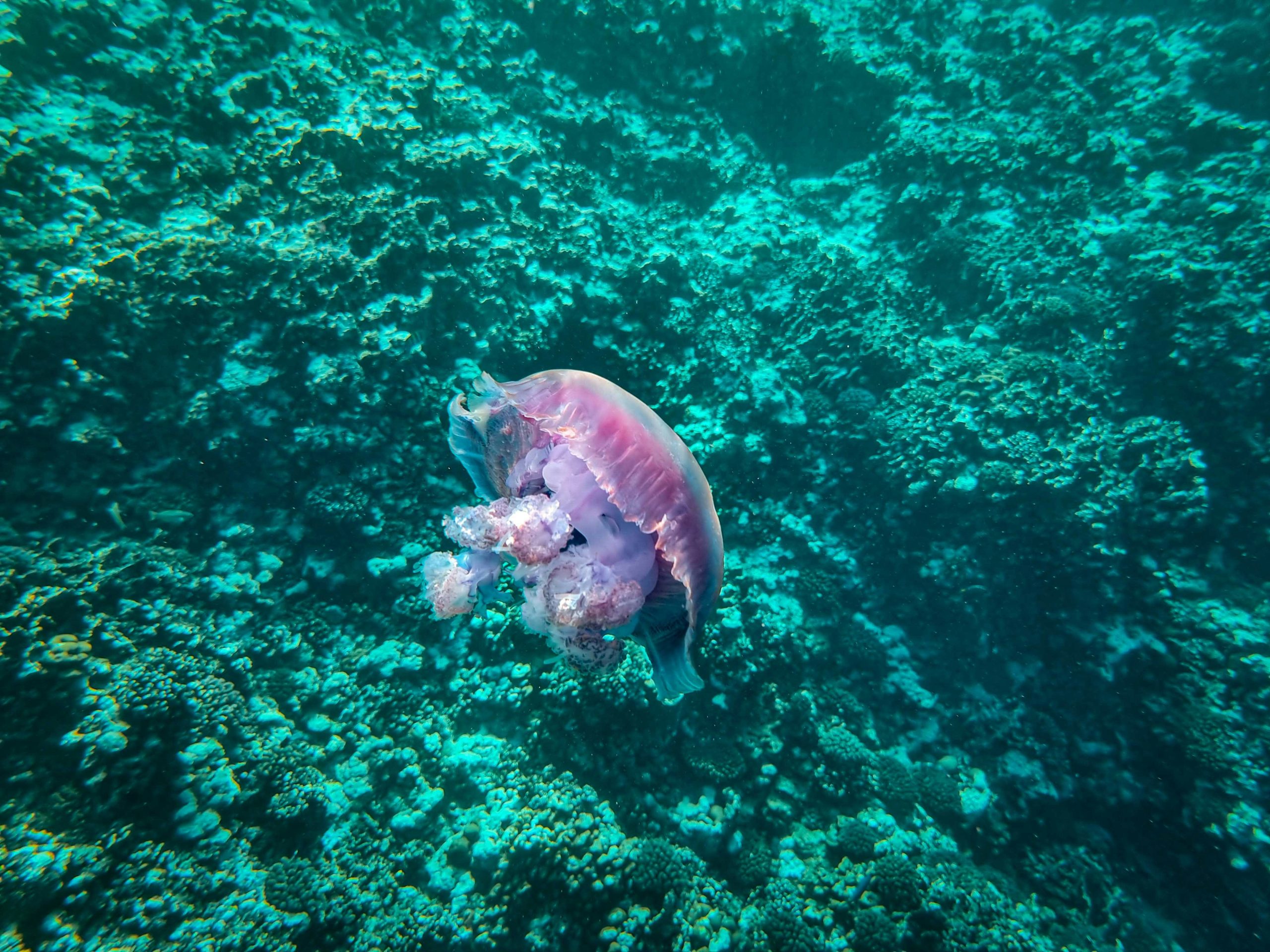
Saudi Arabia has deserts, megaprojects and ancient cities. What it does not advertise loudly enough is an archipelago of coral islands in the southern Red Sea that looks more like the Maldives than the Middle East.
The Farasan Islands are a group of nearly 200 islands and islets spread across 1,050 square kilometres of the Red Sea, lying around 40 kilometres off the coast of Jizan in the country’s southwest. The protected area was designated a UNESCO Biosphere Reserve in 2021 and sits on Saudi Arabia’s tentative list for World Heritage status.
Three islands are inhabited, with the main settlement on Farasan Al-Kabir. Around 12,000 people live on the main island, employed primarily in government services, marine fisheries and domestic tourism. For international visitors, the islands remain largely undiscovered — which is precisely their appeal.
The marine environment is the centrepiece. Around 200 species of fish, 50 types of coral and three species of dolphin inhabit the surrounding waters, with named dive sites including Marmar, Dohra, Shib Ammar, Goorgonian Point and Dannak — ranging from caves with interior reefs to turtle nesting grounds and strong-current walls. Manta rays, whale sharks, dugongs, hawksbill and green turtles all move through these waters.
On land, the islands surprise. They support the largest population of idmi gazelle in Saudi Arabia, alongside concentrations of greater flamingo, pink-backed pelican, Eurasian spoonbill and osprey. The sooty falcon, white-eyed gull and the Red Sea noddy — a subspecies endemic to the Red Sea and Gulf of Aden — are all present.
History runs deep here. The ancient Roman-era village of Al-Qassar, a World War I-era German-built structure and an Ottoman fort are among the historical sites preserved on the islands. A Latin inscription left by a Roman military detachment in the 2nd century BCE remains one of the most remarkable archaeological finds in the Arabian Peninsula.
Under Saudi Vision 2030, the islands are set for further tourism development, including improved transportation links and an increased number of daily cruises. Visitors can reach the islands via daily free ferries from Jizan. The best time to visit is between November and April, when temperatures are mild and the annual Harid Festival — celebrating the islands’ famed parrotfish — takes place in April