
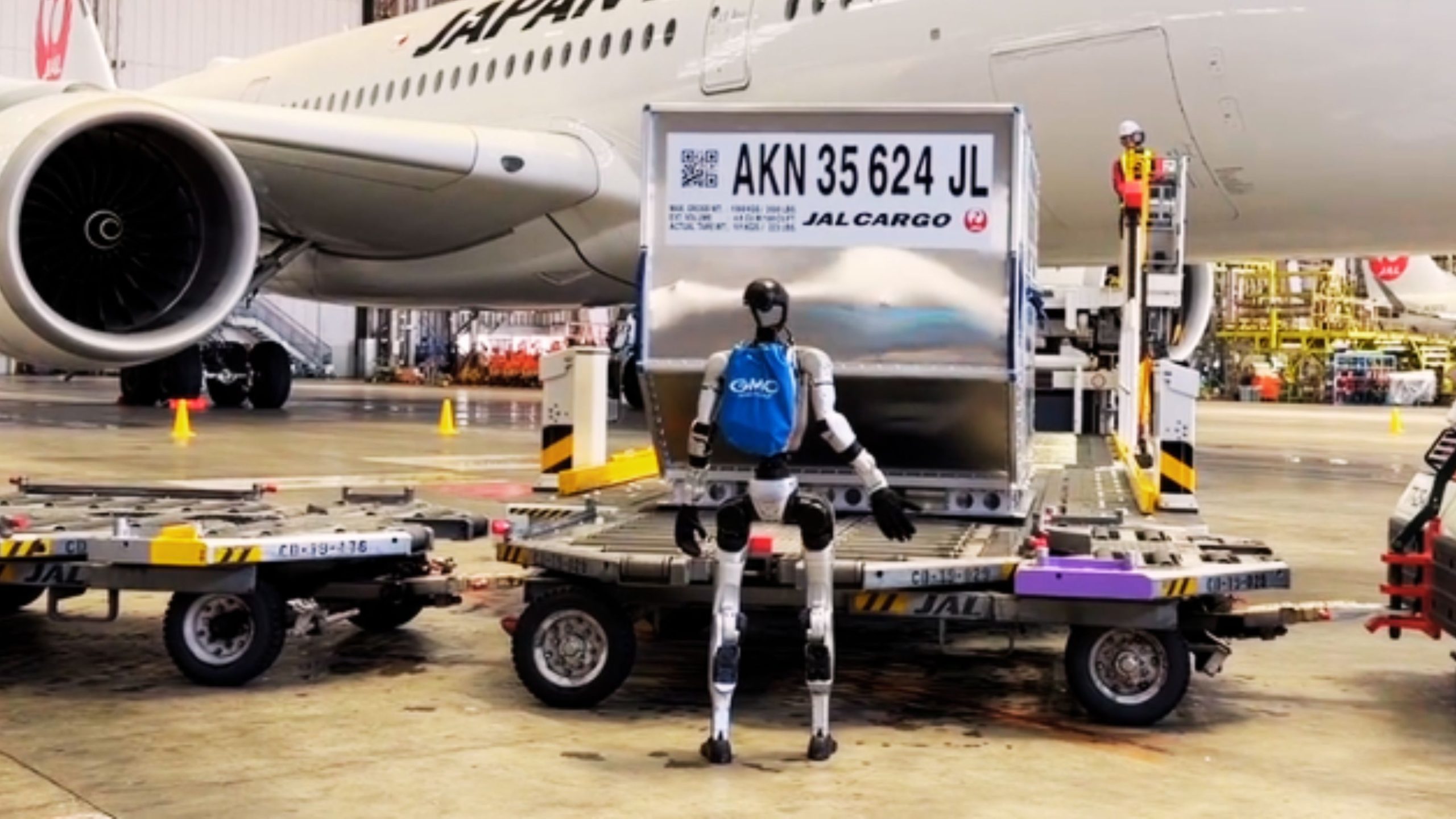
Japan Airlines (TYO: 9201) ground handling subsidiary JAL Ground Service (JGS) and GMO AI & Robotics Trading (GMO AIR) will launch Japan’s first airport humanoid robot demonstration at Haneda Airport in May, the companies said in a joint statement on April 27.
The trial will run from May 2026 through 2028 in phased verifications. Initial work will focus on visualising and analysing airport operations to identify where humanoid robots can operate safely, followed by repeated operational testing in simulated airport environments.
The scope covers general ground handling operations including loading and unloading of baggage and cargo, and cabin cleaning. The objective is labour saving and efficiency in ground handling operations through humanoid robot utilisation.
JGS, which handles ground operations at major domestic airports for the JAL Group, will provide airport operations expertise, define business requirements and evaluate safety standard compliance.
GMO AIR, the GMO Internet Group’s AI and robotics trading arm, will provide the humanoid robots and develop and optimise their motion programmes. The company will draw on know-how from its Humanoid Dispatch Service and the GMO Humanoid Lab Shibuya Showcase, a physical AI research and development hub opened on April 7.
Functional difference
Conventional fixed automated facilities and single-function robots have had difficulty adapting to existing infrastructures and complex operational workflows, the companies said. Humanoid robots possess a range of motion and adaptability comparable to humans, allowing introduction without significant modifications to existing airport facilities or aircraft structures.
The aviation industry faces ground handling labour shortages due to factors including an increase in inbound tourism coupled with a declining working-age population, the statement said.
The GMO Internet Group has designated 2026 as the First Year of Humanoids and is committing to solving social issues through the fusion of AI and robotics.
Japan recorded 36.87mn international visitor arrivals in 2024 and is targeting 60mn by 2030 under its tourism master plan, putting acute pressure on airport operations capacity. Ground handling shortages have already affected throughput at peak periods at major Japanese airports, with implications for slot allocation and the addition of foreign carrier frequencies.
If successful, the deployment of humanoid robots in ground handling could reshape labour economics across Asian airport operations, with potential follow-on adoption by All Nippon Airways and ground handlers operating at Korean, Singaporean and Gulf hubs facing similar workforce pressures.
JGS was established in 1951. GMO Internet Group is one of Japan’s largest internet conglomerates, with operations spanning domains, hosting, payments, financial services and AI.