
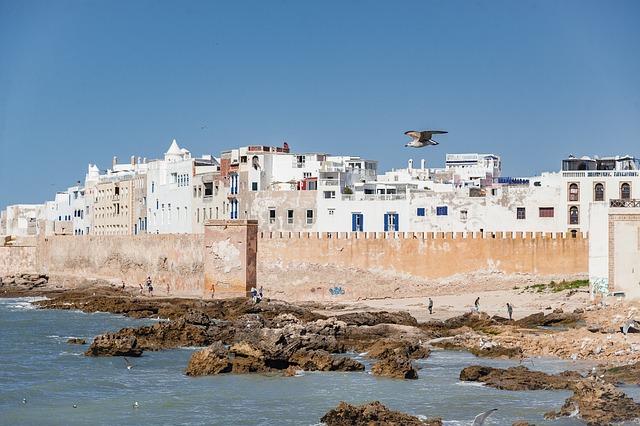
An Egyptian-Emirati consortium has committed EUR200mn ($216mn) to kick off the first phase of a long-stalled coastal resort in Essaouira, Morocco, in one of the most closely watched off-plan investments on the country’s Atlantic coast, Asharq Business reported on April 22, citing sources with knowledge of the deal.
The three-way alliance, comprising UAE-based Al Nowais Investments, Egypt’s Sunrise Resorts & Cruises and billionaire Samih Sawiris investing through his Luxembourg-registered vehicle SOSTNT, has taken full ownership of SAEMOG — Société d’Aménagement d’Essaouira Mogador — the Moroccan company that holds the concession over the site. Morocco’s Competition Council cleared the acquisition, executed through Sawiris’ Dubai-based Orascom Investments LLC, in December 2024.
The project’s history is as tangled as it is ambitious. The Mogador development had been part of Morocco’s Plan Azur tourism initiative since 2006 but had struggled for years to gain momentum without committed investor capital. The original project dates to 2004 and eventually went bankrupt before any meaningful build-out was completed. SAEMOG carried losses of MAD1bn ($105mn) on its books at the point of transfer, according to local reports. Morocco’s prime minister, Aziz Akhannouch, travelled to Essaouira in person to formalise the handover, a signal of how much weight Rabat places on getting the project off the ground.
The first phase covers a site of 2.5mn square metres and targets around 800 hotel keys across three hotels and a club over a five-year construction timeline. According to sources cited by Asharq Business, 270 rooms are to be delivered by the end of 2027, with a separate 350-room hotel to follow within four years. The build-out also includes a 300,000 square metre leisure and retail village incorporating 150 additional rooms, an 18-hole golf course restoration, a nine-hole reconfigured course, golf club house, beach club and 30 boutique hotel units. A second phase, estimated to cost between EUR100mn and EUR150mn, is expected to begin five years after construction on the first phase starts.
The full scope of the development plan includes the renovation of the existing Sofitel Mogador, three new beachfront hotels, a Club Med resort, a leisure village and residential real estate. Over its full lifecycle, the project aims to add 3,700 accommodation beds and create up to 20,000 direct and indirect jobs in the region.
The construction partner in the deal is Besix, the Belgium-based contractor that is a joint venture subsidiary of Sawiris’ Orascom Construction. The combination of Gulf capital, Egyptian hospitality operating expertise through Sunrise — which runs a portfolio of Red Sea resorts — and Besix’s contracting capacity gives the consortium an unusually integrated delivery structure for a project of this complexity.
Sawiris himself is no stranger to building resort towns from the ground up. As chairman of SIX Swiss Exchange-listed Orascom Development Holding (ODH SW), he oversaw the creation of El Gouna, the upscale Red Sea resort city that became the template for integrated destination development across the MENA region. He stepped down as ODH chairman in December 2021, handing the role to his son Naguib Samih Sawiris, but has continued deploying capital through personal and family vehicles. His net worth stands at approximately $1.4bn, placing him 20th on Forbes’ 2026 ranking of Africa’s wealthiest individuals.
The deal also extends the Sawiris family’s broader interest in Morocco. Naguib Sawiris, Samih’s brother, has expressed willingness to invest up to $100mn in Morocco’s energy sector, with a focus on electric vehicle batteries and charging stations.
The timing of the Essaouira commitment is directly tied to a national infrastructure race. Morocco, already Africa’s top tourism destination, is counting on a $4bn investment drive to increase hotel capacity by a fifth before it co-hosts the FIFA World Cup at the end of the decade. The programme aims to add nearly 25,000 new rooms across major cities and key tourism corridors through around 700 projects. Three quarters of those projects will be funded by Moroccan investors, with international brands expected to manage at least 15% of the new capacity.
Essaouira sits outside the six World Cup host cities — Casablanca, Rabat, Marrakech, Tangier, Fez and Agadir — but its position roughly midway between Marrakech and Agadir makes it a natural overflow destination during the tournament. “Essaouira’s proximity to Marrakech and Agadir positions it as a natural extension of Morocco’s key tourism corridors,” a source with knowledge of the project told EnterpriseAM, adding that the development would directly support Morocco’s capacity to absorb increased visitor volumes.
Morocco’s broader tourism numbers give the investment its commercial rationale. The country received 4.3mn tourists in the first quarter of 2026, a 7% year-on-year rise. In 2025, it welcomed nearly 20mn visitors, generating around $15bn in revenue, roughly 9% of GDP. The government’s target is 26mn arrivals annually by 2030.
Imad Barrakad, chief executive of the Moroccan Agency for Tourism Development SMIT, described the country’s current hotel expansion as “one of the most significant expansions ever undertaken in the kingdom, both in terms of its scale and its pace.”