

Travellers are increasingly turning to artificial intelligence to dream up their next trip but remain deeply reluctant to let it handle the booking, according to Expedia Group’s AI Trust Gap report published on April 16.
The survey of more than 5,700 adults across the US, UK and India found that 53% were comfortable letting AI suggest travel options, 42% used or would use it to monitor prices, 40% used it to help build itineraries and nearly half said it saved them time and helped them discover places they would not have found otherwise.
Traditional channels still dominate the planning phase. Only 8% of travellers in the US and UK said they currently rely on AI chatbots such as ChatGPT or Gemini when planning a trip, compared with 59% who use search engines and 49% who use online travel agencies.
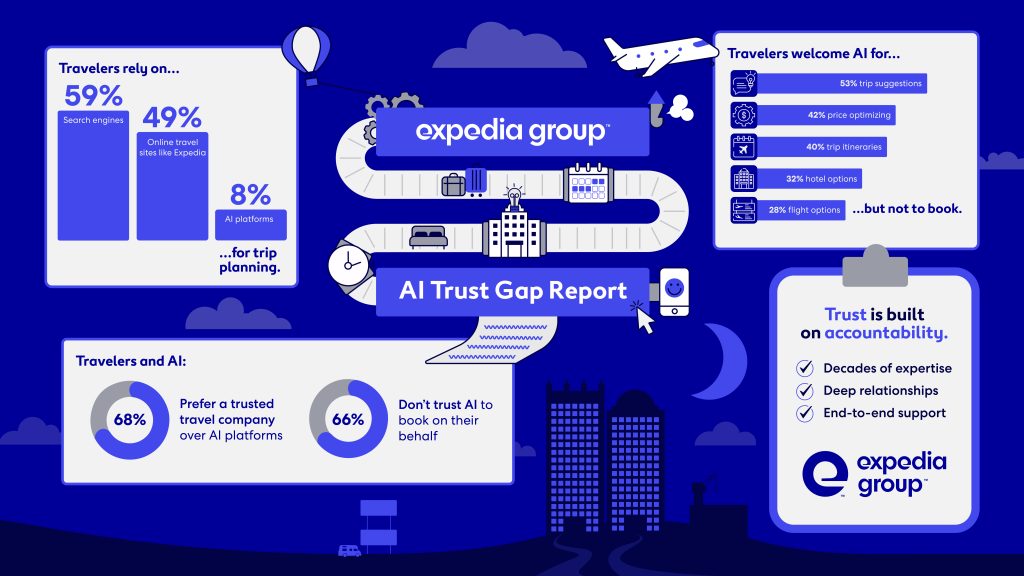
The gap widens at the point of purchase. Some 68% said they preferred to book with a trusted travel brand over AI chatbots and agents even when AI booking was available, two thirds said they would not trust an AI assistant to buy or book anything on their behalf, and only 8% said they felt comfortable booking through an AI platform.
Concerns about AI-driven transactions centre on loss of control at 57%, data and payment privacy at 57%, and misuse of personal data at 56%. Some 40% said they worried about poor customer service if something went wrong after an AI-driven purchase.
“Travelers don’t have a technology problem with AI. They have a trust problem,” Expedia Group chief AI and data officer Xavi Amatriain said. “AI is already transforming how people plan, discover and experience travel. But travelers aren’t interested in booking a trip through an AI chatbot, and what’s holding them back isn’t model quality or features. It’s trust.”
“Trust in travel isn’t built through technology alone,” Amatriain said. “It’s built through real-world relationships and assets, strong customer support, and decades of deep industry knowledge. That kind of foundation takes time to build.”