
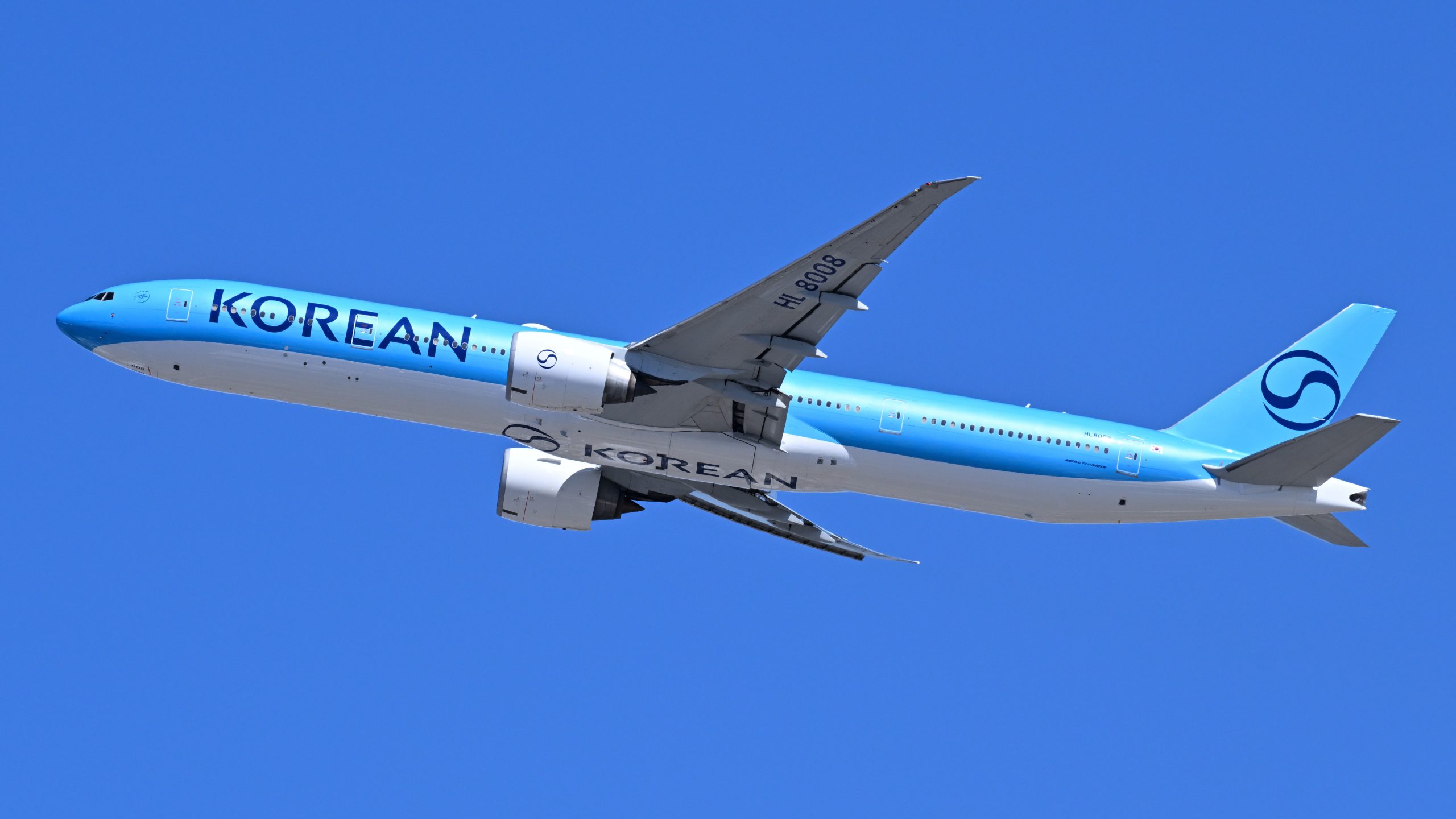
The Korean airlines fuel surcharge on international tickets issued in May has doubled, with Korean Air (KRX: 003490), Asiana Airlines and budget carriers cutting routes as oil prices continue to climb in the wake of the US-Iran war, Yonhap reported on May 1.
The Korean airlines fuel surcharge has hit the highest tier under the country’s current pricing system, level 33, applied to fuel prices above 470 cents per gallon. It is the first time the top tier has been triggered since the system was introduced in 2016.
Korean Air will impose a Korean airlines fuel surcharge of KRW75,000 to KRW564,000 ($55 to $415) per one-way ticket from this month, up from KRW42,000 to KRW303,000 in April. The increase represents a 1.8 to 1.9 times rise.
The shortest routes, including Fukuoka and Qingdao, will carry a KRW75,000 surcharge, while the longest sectors to New York, Atlanta, Washington and Toronto will incur the maximum KRW564,000.
How Korean airlines fuel surcharge tiers work
Asiana Airlines, now part of Korean Air following the 2024 merger, set its international surcharge at KRW85,400 to KRW476,200 per one-way ticket, nearly doubling from KRW43,900 to KRW251,900 in April.
The pass-through has not been sufficient to offset rising fuel costs, and South Korean carriers are also cutting routes. Asiana Airlines initially planned to cut eight international flights across three routes in May but has since expanded the reduction to 13 flights.
Low-cost carrier Jeju Air, which cancelled 45 round-trip flights across eight routes in April, increased the cuts to 131 flights across 14 routes for May.
Air Premia, which primarily operates medium and long-haul routes to the Americas, has decided to cancel 22 flights in July.
Industry response to higher Korean airlines fuel surcharge
“As oil price volatility has become extreme, a structure is forming where it is difficult to generate profits regardless of passenger demand,” an industry official said. “As long as the high oil price trend continues, route restructuring is inevitable.”
Brent crude rose nearly 7% to more than $126 a barrel on April 30, the highest level since Russia’s invasion of Ukraine in 2022, after reports that the US military was preparing new strike options against Iran. US-traded West Texas Intermediate crude surged 2.3% to around $109 a barrel.
The cost pressure on Asian aviation has been compounded by rerouting requirements following the closure of Iranian and Iraqi airspace during the US-Iran war that began on February 28, with carriers operating between East Asia and Europe forced onto longer southern or northern routings that significantly increase fuel burn and crew costs.
Royal Jordanian Airlines reported a Q1 net loss of $19.2mn on April 29, more than double the year-earlier figure, citing airspace rerouting that drove flight hours up 19% against just a 5% rise in passengers. Emirates is currently operating to more than 100 destinations on a reduced schedule, against around 140 in its pre-conflict full network.
The Korean airlines fuel surcharge system uses a tiered structure based on Singapore-traded jet fuel prices, with each level corresponding to a 10-cent-per-gallon increment. The level 33 ceiling applied this month sets fuel costs at the system’s maximum reference point.