
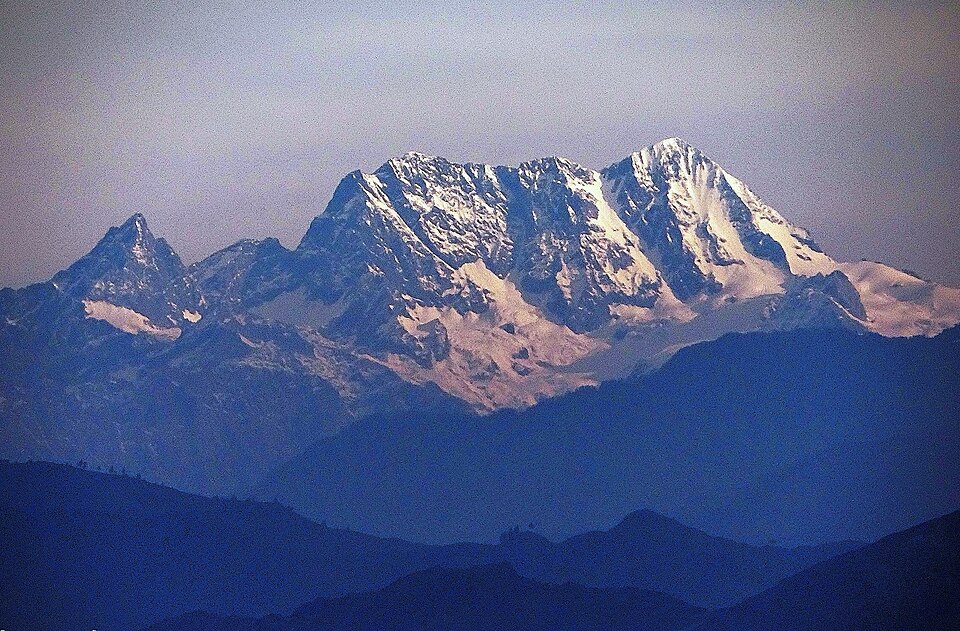
Pakistan’s northern valleys have a narrative problem. The country holds some of the most extraordinary mountain terrain on earth — five peaks above 8,000 metres, three of the planet’s great mountain ranges converging in a single region, landscapes that regularly stop seasoned Himalayan travellers in their tracks. And yet international visitor numbers remain a fraction of what geography alone ought to generate. The Khyber Pakhtunkhwa (KP) government’s Integrated Tourism Zone programme is an attempt to change the structural conditions that have kept it that way. Its most compelling site is Mankiyal, a valley in upper Swat that the provincial government has identified as a gateway to the Hindu Kush’s most biodiverse terrain.
The place itself
Mankiyal Valley is known as the adventure capital of Swat. Its natural features include Chukail Meadows, Taip Meadows and Jaba Meadows, while markhor, bears and wolves are all native to the valley. Chukail Meadows sits at an altitude of 3,261 metres in the Hindu Kush range. The approach from the valley floor involves a full day’s trek through alpine terrain — crossing wooden bridges over the Mankiyal River, passing through high-altitude villages, and climbing through meadows that open suddenly onto glacier views and snow-covered peaks.
This is not a destination that accommodates casual visitors under current conditions. The road infrastructure remains incomplete, partly due to damage from the 2022 floods that affected much of upper Swat. Thousands of visitors from across Pakistan have nonetheless been reaching the valley each season, with travellers in some sections crossing the river by chairlift where flood-damaged bridges have not been rebuilt. The demand is evidently there. The infrastructure to support it, particularly for international visitors, is not.
What the Integrated Tourism Zone proposes
The 30-acre Mankiyal eco-tourism destination in Swat will feature wellness resorts, ethnobotanic parks and a village activity centre According to the KP Chief Secretary’s review meeting of March 2025. ITZ Mankiyal has been designated as an integrated health and wellness destination Dawn — a positioning that differentiates it from the adventure-first framing of Madaklasht to the north and the family-oriented character of Thandiani near Abbottabad.
The official positioning describes ITZ Mankiyal as a gateway to the biodiversity of the Hindu Kush mountain range, targeting long and medium-term international visitors and adventurers, with the site’s strategic location making it ideal for ecotourism carried out in synergy with conservation. The potential development of a Mankiyal Biodiversity Interpretive Centre and research facilities has been identified as central to the concept.
The project is being developed at an estimated cost of PKR2.9bn, on a 754-kanal (approximately 94-acre) site, with nearby attractions including Jabba Lake, Jarogo Valley, Katora Lake waterfall and the broader Swat Valley.
The connectivity piece
The most consequential infrastructure decision affecting Mankiyal’s viability as a tourism zone is road access. The KP government has expedited work on a 22-kilometre Mankiyal-Banda Sarai Road to connect the ITZ with the Swat Expressway, and all four planned ITZs are being linked with the Hazara and Swat Expressways to support adventure sport and broader tourism connectivity.
Rules and regulations for Mankiyal and Ghanool ITZs have been modelled on integrated tourism zone frameworks from Malaysia and Indonesia. The reference points are deliberate — both countries have used structured investment zones to move tourism from informal to institutional at pace, and the KP government appears to be studying that model closely. Across all four planned ITZs, the combined expected outcome is 200,000 direct and indirect jobs and USD2.8bn in investment.
The broader context: a province repositioning itself
Khyber Pakhtunkhwa’s tourism push is not happening in isolation. To boost international climbing expeditions, KP announced a complete royalty fee waiver for 2025-26, which usually ranges between USD2,500 and USD4,000 per expedition. The province has also introduced affordable camping pods at sites including Sharan Lake, Gabeen Jaba, Mahaband and Bishigram, priced at PKR3,500-5,000 per night, as a direct response to the high cost of private hotel accommodation in the valleys. The ITZs sit above this baseline tier — they are aimed at creating the kind of structured, internationally competitive product that can be packaged by foreign tour operators and positioned in global markets.
The Hindu Kush Himalayan region as a whole is home to four of 34 global biodiversity hotspots, six UNESCO natural World Heritage sites, 330 Important Bird Areas and 53 Important Plant Areas. Mankiyal’s proposed Biodiversity Interpretive Centre, if developed to international standard, would give serious ecotourism operators something concrete to build itineraries around — the kind of anchor product that converts general interest in Pakistan’s north into bookable, repeatable programmes.
The gap between what this valley contains and what the tourism sector currently offers around it remains considerable. The ITZ programme represents the most substantive attempt yet to close it.