
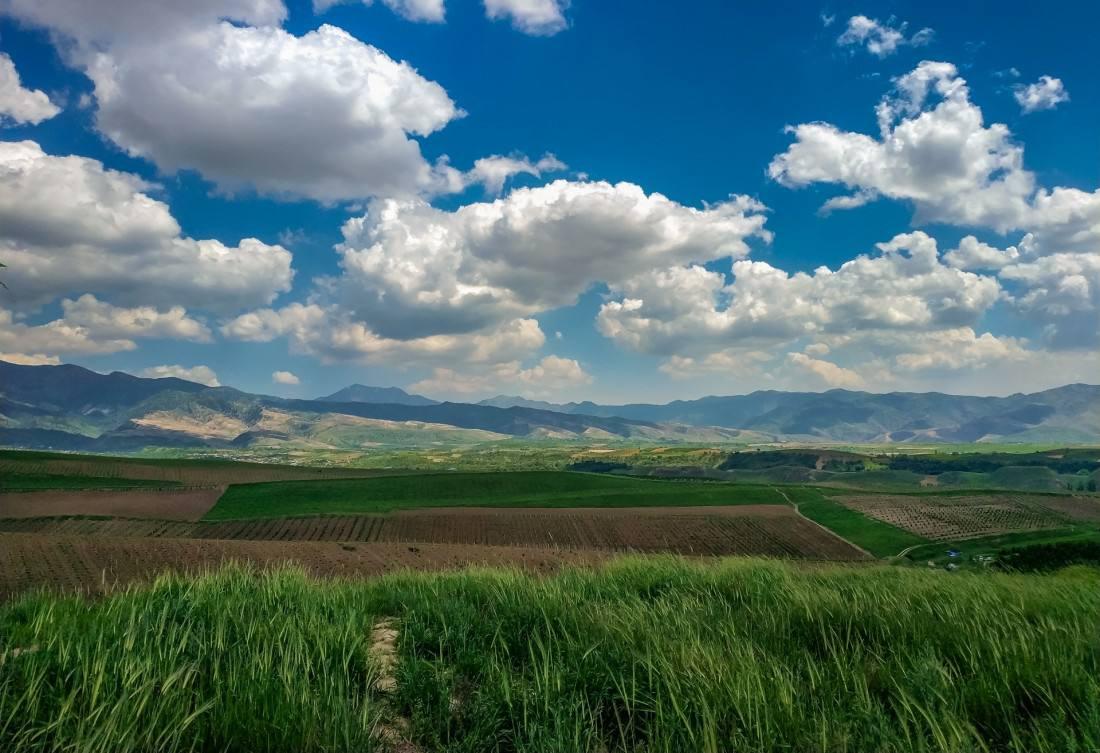
Uzbekistan’s tourism story has, until recently, been told almost entirely through its ancient cities. Samarkand, Bukhara, Khiva — the blue-domed monuments of the Silk Road that have drawn curious travellers for decades and now draw them in rapidly growing numbers. But the country’s government is increasingly aware that monument tourism, however magnificent the inventory, has limits. The mountains do not.
The Oltin Bel — Golden Belt in English — resort in Parkent district, approximately 60 kilometres from Tashkent in the Tien Shan foothills, is the physical expression of a much larger strategic bet: that Uzbekistan can build a mountain tourism offer that competes at regional and eventually international level, and that the Tashkent region specifically can become a year-round destination rather than a historical detour.
What exists today
The initial phase of the Oltin Bel recreation zone, built on a three-hectare site on the slopes of Khushmanzara mountain, is already operational. It currently features two compact hotels offering a combined 188 beds, capsule houses, a restaurant and service buildings. A further 20 capsule houses are planned for the next development stage.
President Shavkat Mirziyoyev visited the complex during a tour of Parkent district and inspected the hospitality facilities directly, highlighting the importance of expanding accessible tourism infrastructure in mountainous regions. Presidential site visits of this nature in Uzbekistan tend to accelerate delivery timelines — the government’s involvement at the highest level is not ceremonial but signals active prioritisation.
The initial offering is deliberately positioned at the accessible end of the market: compact, affordable, and designed to demonstrate proof of concept before the larger investment phases begin. What follows is considerably more ambitious.
The Austrian ski resort: 1,200 hectares in three phases
An Austrian company is contracted to build a large-scale ski resort across 1,200 hectares of Parkent’s snowy terrain. The project will include three-, four- and five-star hotels, ski slopes, ski lifts, chalets, picnic zones, restaurants and wellness complexes. It will be implemented in three phases, and upon completion will be able to receive up to 15,000 tourists per day. Around 600 service facilities will be created, and taking seasonal employment into account, the total number of new jobs is expected to reach 10,000.
Experts predict that the resort will become one of the largest and most prestigious tourism centres in the country, alongside the established Amirsoy complex in Bostanlyk district. The Amirsoy comparison is instructive. Amirsoy, which opened in December 2019 after a €100mn investment across 900 hectares, attracted an estimated 150,000 local visitors in its first three months alone and has been operating year-round with skiing in winter and hiking and mountain biking in summer. Oltin Bel is being designed at a larger scale and with a stronger international orientation from the outset.
The broader $1.8bn Parkent tourism programme
The ski resort is only one component of a far wider investment programme. A total of 52 tourism projects worth USD1.8bn are planned for Parkent district, with the combined objective of serving over one million visitors annually and creating 3,300 permanent jobs. The scale of that commitment positions Parkent not as an add-on to existing Tashkent tourism itineraries but as a destination in its own right.
The Tashkent region’s wider 2026 roadmap targets 16.5 million tourists, with Oltin Bel Peak designated as a premier ski zone featuring luxury hotels and chalet-style housing. Parallel alpine developments are planned for Gazalkent, Akhangaran and Angren to decentralise tourism and provide year-round activity options across the region. Total bed capacity across the region is being expanded to 35,500.
The regional context
Uzbekistan is not building mountain tourism in isolation. As part of a broader Central Asian connectivity push, Uzbekistan and Kazakhstan signed a comprehensive action plan for 2026–2027 to establish unified travel routes allowing international travellers to visit both countries on a single visa — making the new Tashkent ski resorts a seamless extension of a visit to Almaty or Turkestan.
The long-term government plan envisages linking Amirsoy with the Soviet-era Beldersay and Chimgan resorts to create a combined ski zone that has been compared in ambition to France’s Les Trois Vallées or Canada’s Whistler Blackcomb. Oltin Bel, sitting in a different mountain range to the south of the capital, adds a further node to what is emerging as a genuinely substantial mountain tourism geography within two hours of Tashkent International Airport.
For international tour operators, the trajectory matters. Parkent and Oltin Bel are at an early but accelerating stage of development, with presidential attention, confirmed Austrian investment and a master plan that extends well beyond the initial hotel cluster already open on the mountainside. The ground-floor moment for building packages around this destination is now.