
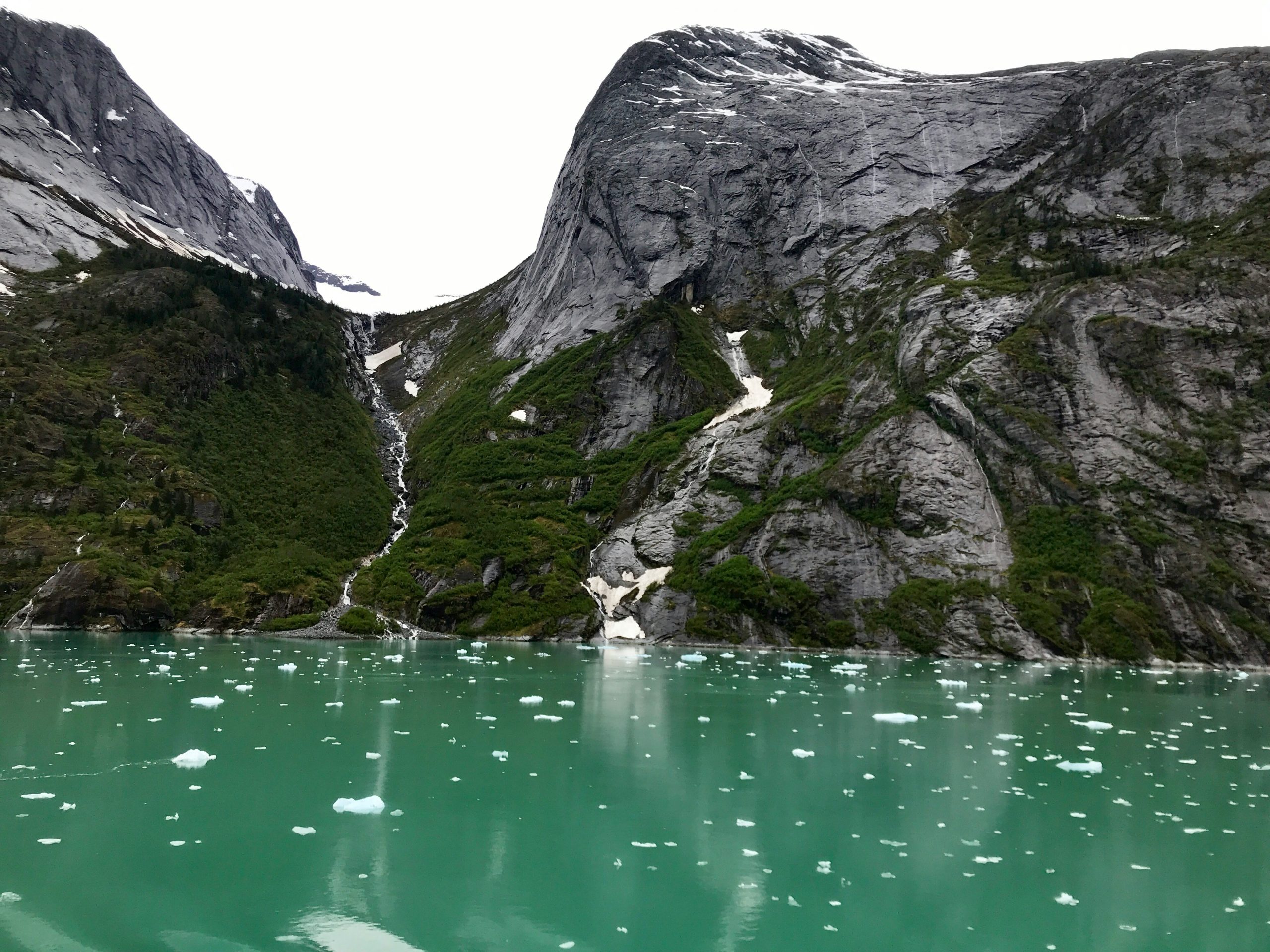
At least six major cruise lines have removed Tracy Arm Fjord from their 2026 Alaska itineraries, citing ongoing geological instability following a landslide-triggered tsunami that struck the narrow waterway south of Juneau on August 10, 2025.
Carnival Cruise Line, Holland America Line and Royal Caribbean Cruises have all notified customers that their ships this summer will not be visiting the area, which offers views of the Sawyer Glacier. Alaska Public MSC Cruises, Virgin Voyages and regional tour company Allen Marine are also routing ships to Endicott Arm and Dawes Glacier instead. Norwegian Cruise Line said it does not have voyages sailing by Tracy Arm.
The landslide originated high on a slope above the toe of the South Sawyer Glacier, near the head of the fjord, sending water surging more than a quarter-mile up the mountain wall opposite the slide and out through Tracy Arm. No ships were in the fjord at the time and no deaths or injuries were reported, but kayakers camped on an island near where Tracy and Endicott arms meet had much of their gear swept away.
Steven Sobieszczyk, a U.S. Geological Survey spokesperson, said the area remains unstable. “Continued rockfall and small-scale sliding from the exposed landslide scar are expected and could impact the water, potentially causing a future localised tsunami,” he said.
“As guest safety remains our top priority, and current waterway conditions are not suitable for cruise ship navigation in Tracy Arm Fjord, Alaskan itineraries will instead visit the Endicott Arm and Dawes Glacier,” Royal Caribbean said in an emailed statement.
The first cruise ships of the 2026 season are scheduled to arrive in Ketchikan on April 21 and in Juneau the following week.
Mike West, the Alaska state seismologist and director of the Alaska Earthquake Center, said the safety precaution was geologically sound. “Anytime you collapse the side of a mountain, I think it’s a safe assumption to assume that you’ve got an unstable mountainside,” he said, adding that “the earth is getting used to its new arrangement.”
The slope that failed had not been identified as an active hazard before the August 2025 event, and scientists are still working to understand what caused the collapse and what other hazards may exist in the wider fjord network