
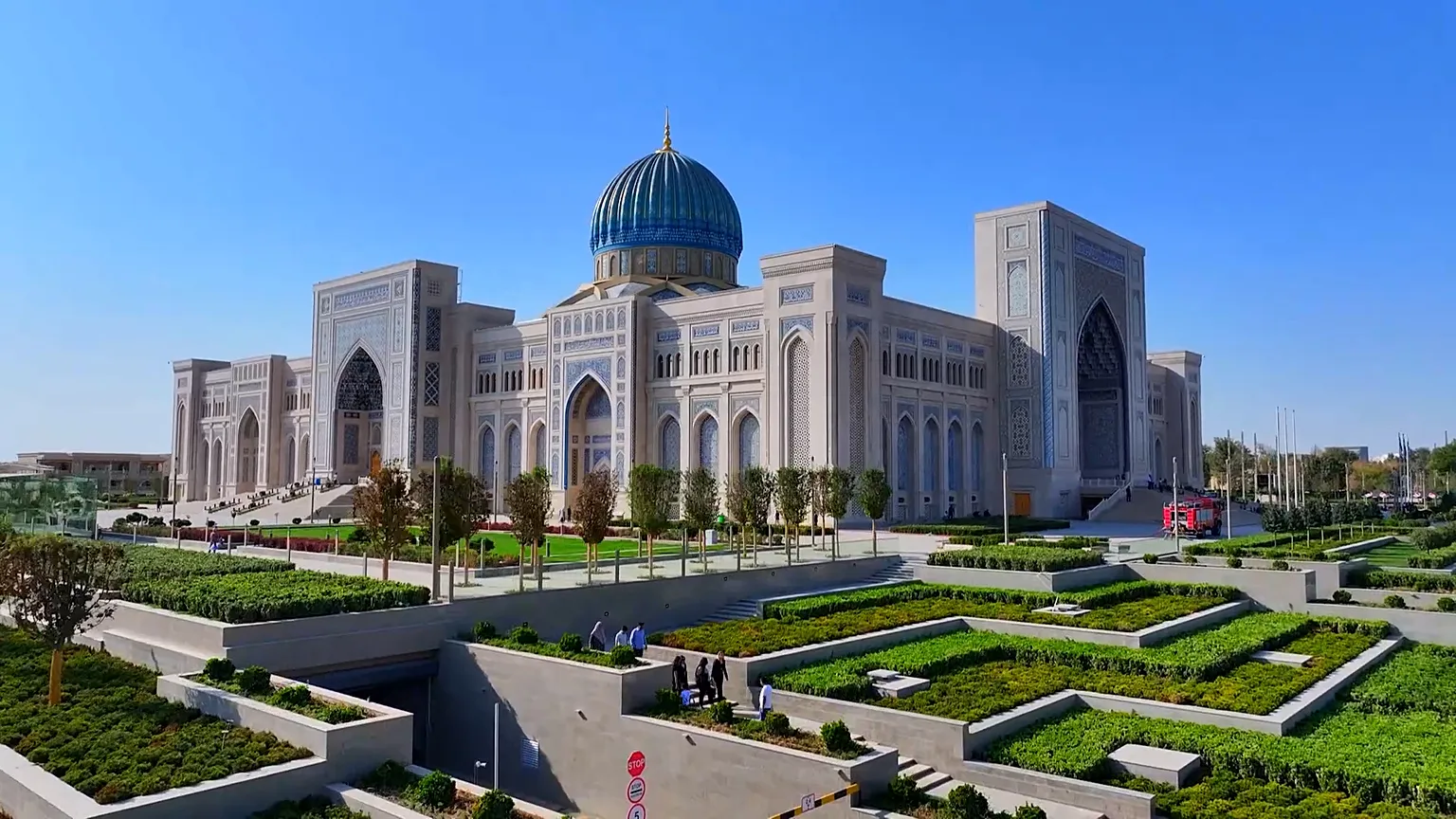
Uzbekistan has inaugurated the Center for Islamic Civilization (CIC) in Tashkent, opening its doors to the public during the final days of Ramadan after eight years of planning and construction, PRNewswire reported on March 17.
The three-storey complex houses a museum, a research library with 200,000 books, restoration laboratories and a 460-seat conference hall. It was built at an estimated cost of $150mn and has been awarded the Prix Avicenne 2025 by the French scientific community in recognition of its work on the heritage of Ibn Sina.
The building is crowned by a 65-metre blue dome and draws its architectural language from the Timurid era, with mosaic-covered archways, blue tile-covered domes and intricate ornamentation. It stands adjacent to the historic Hazrati Imam Mosque in Tashkent’s Hast-Imam district.
The main square covers approximately 15,000 square metres, with separate wings dedicated to a research centre, digitisation and restoration laboratories, and offices for international organisations. Nearly 2,000 rare manuscripts and artefacts have been repatriated from international auctions and private collections.
The exhibition programme moves from pre-Islamic heritage through the First and Second Renaissances and into a section on modern Uzbekistan, combining rare objects with replicas, three-dimensional technologies and audiovisual formats. The Hall of Honour contains 14 arches depicting key events in Central Asian history, with interactive panels linked to a digital platform featuring avatars of more than 100 historical thinkers and scholars.
Around 1,500 specialists from more than 40 countries contributed to the centre’s scientific, architectural and cultural elements over the eight years of construction. In December 2025, the Centre signed a memorandum of understanding with the United Nations Alliance of Civilizations.
For the travel industry, the opening adds a major cultural anchor to Tashkent at a time when Uzbekistan’s inbound tourism has grown steadily, with the country recording 7.1mn international arrivals in 2024 according to government figures.
Firdavs Abdukhalikov, Director General of the Centre, said the institution was built around a specific obligation: “Heritage is not what is stored behind glass, but what continues to live in us.”