
At 2 York Street in Colombo Fort, directly overlooking the port that for centuries was one of the busiest staging points on the Indian Ocean trade route, the Grand Oriental Hotel has been receiving guests since November 5, 1875. It is, in its own words, “giant yet living” — a phrase that captures both the weight of the building’s history and the candour with which its current management is approaching the task of reviving it.
The history
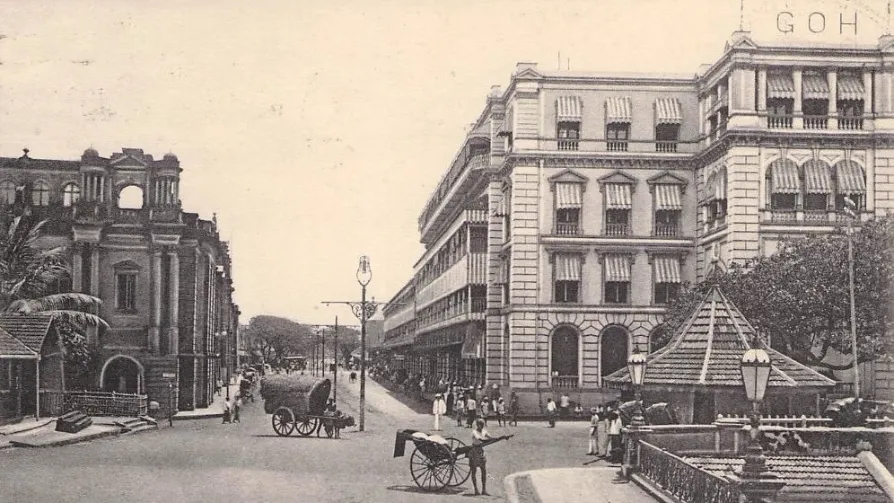
The original structure on the site was a simple single-storey building inhabited by a Dutch Governor, which was converted into British Army barracks in 1837. In 1873 it was converted into a hostelry under Governor Sir Robert Wilmot-Horton, with architect James George Smither — who also designed the National Museum of Colombo, Colombo General Hospital and the old Colombo Town Hall — completing the reconstruction in the same year. The hotel opened officially on November 5, 1875, with 154 luxury and semi-luxury rooms.
It was promoted to potential guests as “the only fully European owned and fully equipped hotel in the East,” and was the first hotel in Ceylon to install an electrically operated lift. Shares in the hotel were in high demand at its public offering, a measure of the commercial confidence placed in Colombo’s position as a port of call on the major Indian sea route.
The guest register reads like a selective survey of the 19th and 20th centuries. The hotel has 80 rooms, two of which are named after its most celebrated former residents: Anton Chekhov, who stayed for five days in 1890 and began writing his short story “Gusev” during his visit, and Dr José Rizal, the Philippine nationalist and polymath, who stayed in May 1882. Queen Elizabeth II and the Duke and Duchess of Kent also attended events at the hotel during a royal visit to Colombo.
In 1954 the Bank of Ceylon purchased the hotel for Rs. 625,000. During the years that followed, legal disputes left the hotel without official management for nearly two years, before the Bank eventually retook control in 1963 and renamed the property the Taprobane Hotel. In 1966 the architect Geoffrey Bawa was appointed to remodel it, creating the Harbour Room — a restaurant on the fourth floor with a direct view over Colombo Harbour — and opening the Blue Leopard nightclub in the basement, described at the time as the country’s first. The hotel reverted to its original name in 1989 and reopened after renovation in June 1991.
Where it stands now
The hotel celebrated its 150th anniversary on November 5, 2025. A partial refurbishment was carried out in 2022, and in January 2025 a new board of directors was appointed by the Bank of Ceylon, with a stated commitment to repositioning the property. The hotel’s own heritage page describes its trajectory as “a roller coaster ride” and its current tag line as “Giant Yet Living.”
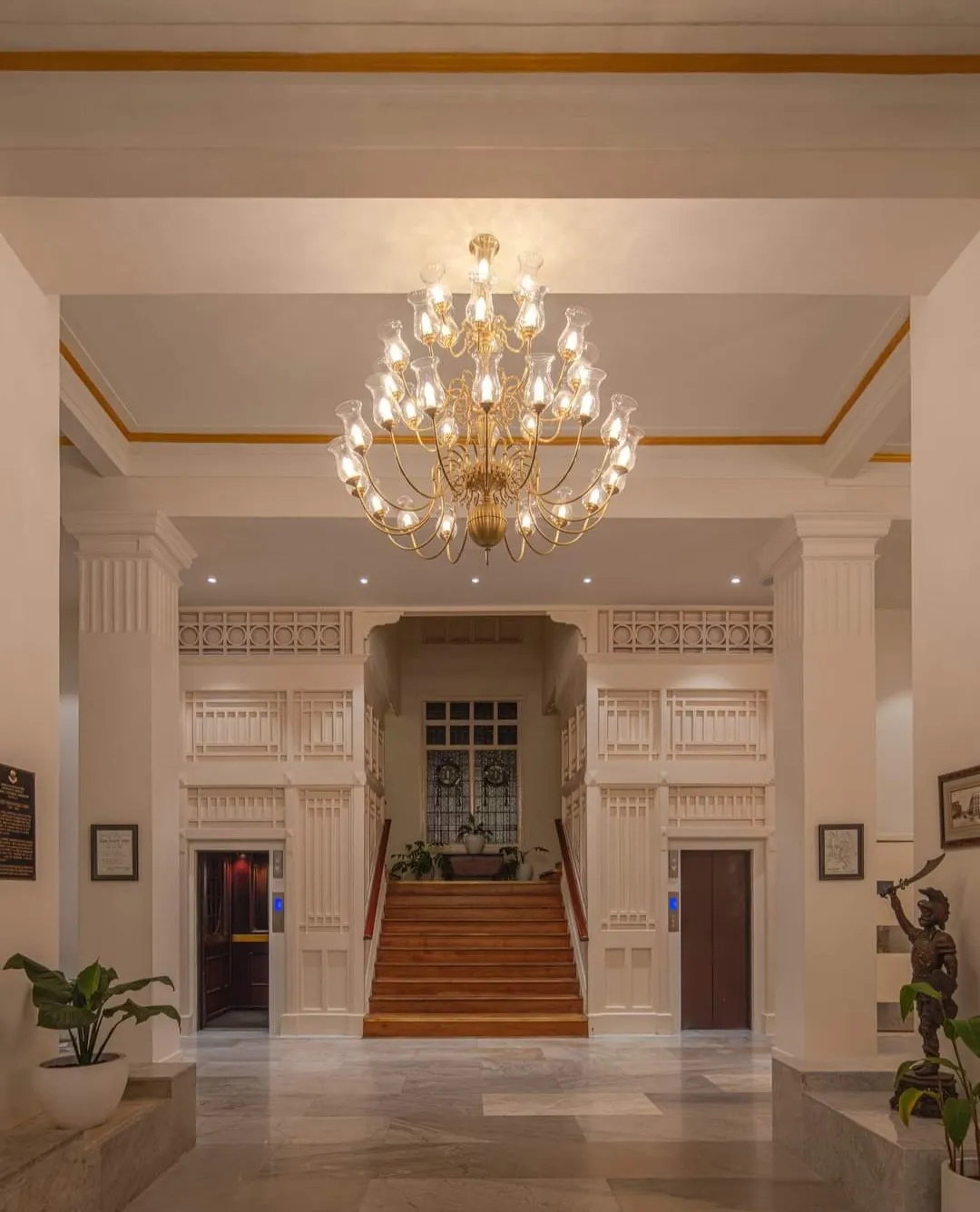
The gap between the building’s historical prestige and its present condition is the central challenge. Recent guest reviews on booking platforms consistently note the contrast between an impressive entrance, lobby and harbour-facing restaurant, and rooms that reviewers describe as significantly below the standard the building’s history suggests. The hotel is currently rated three stars.
Sri Lanka’s Board of Investment lists the Grand Oriental Hotel as an investment opportunity, noting that it recently underwent refurbishment as part of its restoration and is expected to be positioned as the top boutique colonial hotel in the city. The BOI notes that the surrounding area is to be transformed into a Heritage Square, with several other development projects commissioned to restore colonial architecture, and that a proposed cruise terminal would bring direct connectivity of transit tourists to the hotel.
What it offers today
The Harbour Room on the fourth floor is the hotel’s most distinctive asset — cited as the only restaurant in Sri Lanka with a direct harbour view. The Sri Lankan Restaurant serves local cuisine, and the Blue Leopard nightclub, now operating as B-52, remains the oldest in Colombo. The hotel also has the Tap Bar, a coffee bar and the Tiffin Hut pastry café. Rates currently start at around USD$25 per night, positioning it as a budget heritage option rather than a luxury proposition.
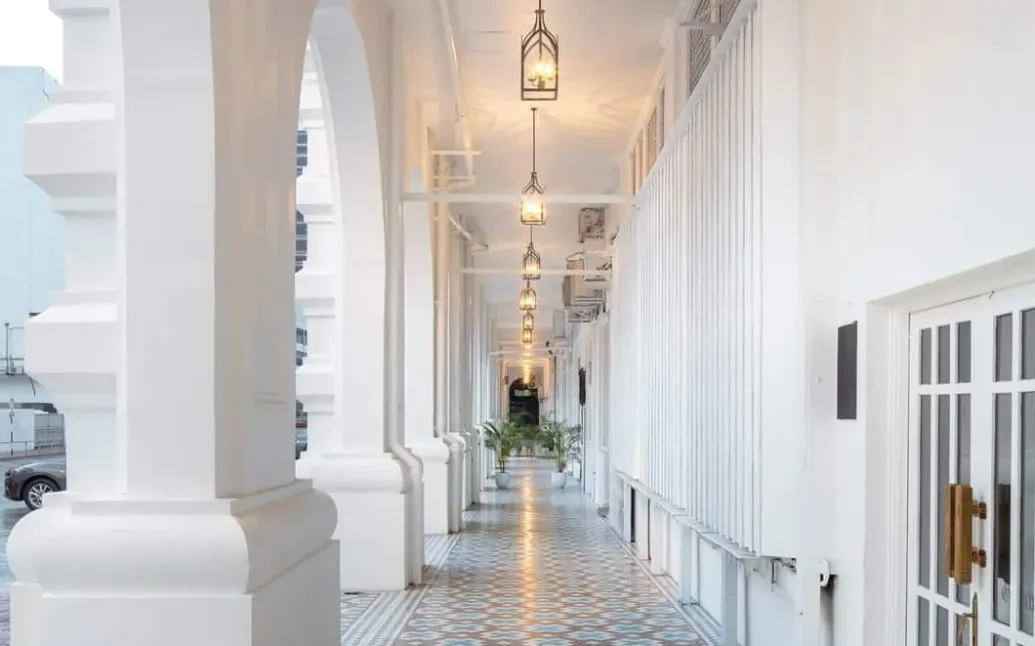
A restoration project covering the public areas — including the facade lighting, the colonnaded arcade, the entrance foyer and the interior — was undertaken by the State Ministry of Urban Development and the Urban Development Authority as part of the Heritage Square development programme.
The case for the Grand Oriental Hotel’s relevance has never been in question. The building is an archaeologically protected monument, occupies an irreplaceable location, and carries a guest history that most hotels of any age would envy. The question that the January 2025 board appointment must now answer is whether the institutional will exists to match the building’s standing with a product that meets it.