
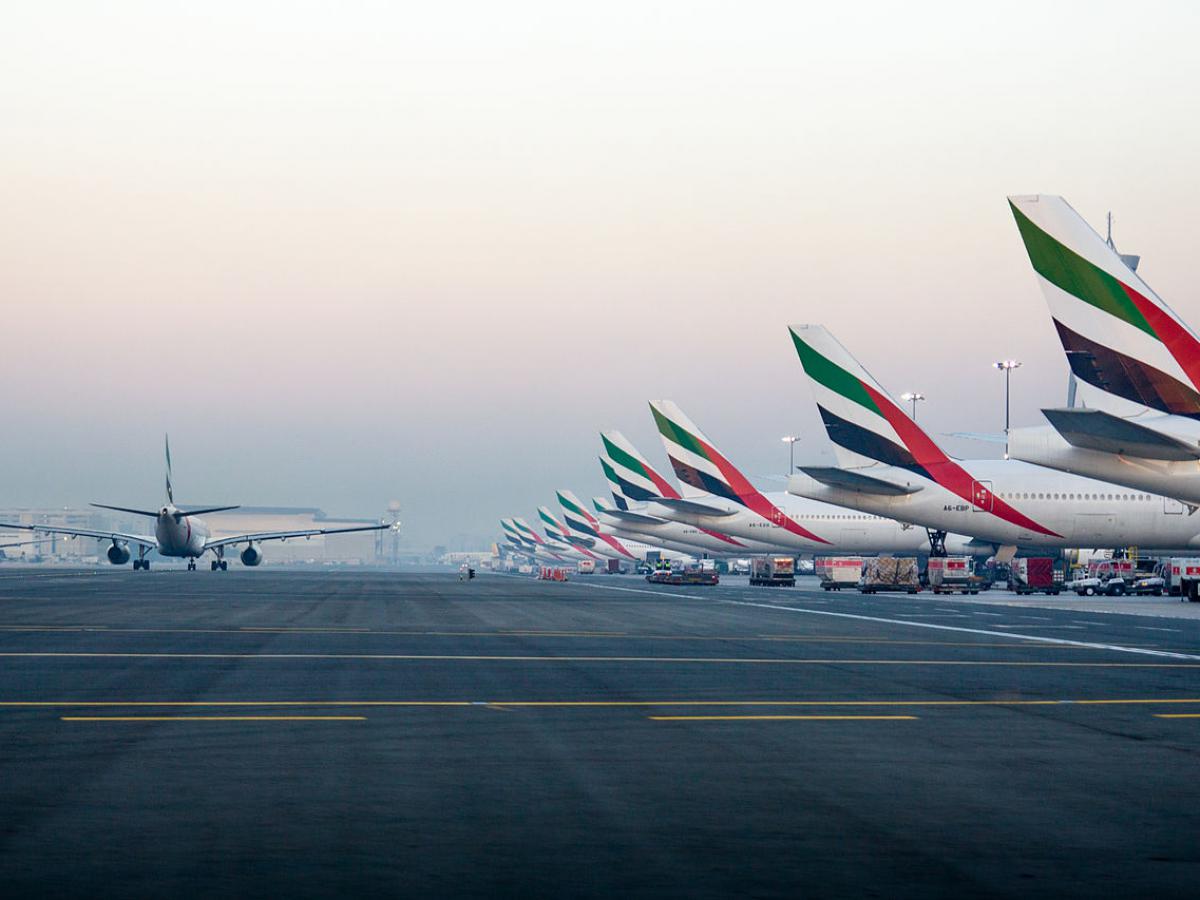
International tourism grew just 2% in the first quarter of 2026, with the Middle East conflict that erupted in late February dragging March almost flat and forcing UN Tourism to trim its full-year forecast. For carriers, hoteliers and destination marketers, this latest data maps where demand is being redirected: Europe, Africa and a clutch of long-haul outliers are absorbing flows diverted from a Middle East where arrivals fell 14% and hotel occupancy more than halved.
Some 307mn tourists travelled internationally in the first quarter of 2026, about 6mn more than the same period of 2025, according to the latest data from UN Tourism. The agency said travel demand held up over January and February, with cumulative growth of 2.5%, before the Middle East conflict pulled March performance down to a marginal 0.4% rise.
UN Tourism now expects the conflict to cut growth in international arrivals by one to two percentage points below its initial forecast of 3% to 4% for 2026, depending on how long the fighting lasts and how far it spreads. Beyond the direct disruption to flights to, from and within the Middle East, the agency pointed to a spike in oil prices and a jet fuel shortage in some markets that is pushing up air fares and cutting flight capacity in other regions too. More expensive travel, combined with uncertainty over air connectivity, could redirect demand towards closer destinations while denting overall travel appetite.
UN Tourism Secretary-General Shaikha Al Nuwais said the conflict was disrupting travel patterns well beyond the region itself.
“The ongoing conflict in the Middle East is disrupting travel patterns well beyond the region itself, including rising inflation, particularly in transport and accommodation. This is placing pressure on travellers, businesses and destinations alike. Even amid this uncertainty, international tourism continued to show resilience in the first quarter of 2026, with 307 million people travelling internationally, a 2% increase on last year. At a time of growing geopolitical and economic pressure, this reinforces tourism’s wider role in supporting economies, creating opportunity and sustaining communities far beyond the sector itself,” Al Nuwais said.
Middle East slumps
Europe, the world’s largest destination region, drew more than 130mn international tourists in the quarter, a 4% increase that built on the 5% momentum of 2025. UN Tourism said some destinations benefited from the redirection of tourism flows. Southern Mediterranean Europe and Northern Europe each saw arrivals rise 4%, while Central Eastern Europe continued its recovery with a 6% gain.
Africa also grew 4% in the quarter. North Africa rose 4%, supported by strong double-digit figures in March of 18%, while Sub-Saharan Africa likewise increased 4%.
Asia and the Pacific recorded 3% growth, slower than expected on mixed performance across destinations. Strong February results of 9% gave way to a more moderate 2% in March, as disruption to Middle Eastern air hubs contributed to a 27% decline in South Asia. Oceania, up 9%, and North-East Asia, up 5%, were the standout sub-regions. Arrivals across Asia remained 11% below pre-pandemic levels, at 89% of Q1 2019.
The Americas saw 2% more international arrivals, with strong growth of 18% in Central America offset by a 1% dip in South America.
In the Middle East, arrivals dropped 14%, hit directly by the conflict. Several Gulf destinations recorded sharp declines, though Egypt bucked the trend with a 16% rise. The fall follows a strong post-pandemic rebound that had lifted 2025 arrivals 40% above 2019 levels.
The quarter’s outperformers
Among destinations reporting growth in arrivals over the first three months, the best performers were Paraguay at 46%, New Zealand at 45%, El Salvador at 43%, Mongolia at 39%, Palau at 37% and Uzbekistan at 37%.
On receipts, several countries posted double-digit growth: Pakistan at 60%, the Republic of Korea at 38%, Morocco at 24%, Brunei at 22% and Brazil at 12%.
Why it matters for the trade
- Diversion is already commercial, not theoretical. African, Asia Pacific and European carriers recorded stronger growth as passenger flows moved away from Middle Eastern hubs. Operators positioned on those corridors are picking up displaced demand now, not next season.
- The Gulf transit model is exposed. A 14% regional arrivals drop and the collapse in Middle Eastern carrier traffic show how quickly a hub-and-spoke network built on Gulf connectivity can unwind when the chokepoint is contested.
- Fuel cost is the transmission mechanism. The jet fuel squeeze is lifting fares and trimming capacity in regions far from the fighting, which means destinations with no direct exposure to the conflict still face softer demand and thinner margins.
- “Closer to home” is the consumer hedge. With travellers expected to seek value and shorten trips, intra-regional and domestic products stand to gain, while long-haul leisure faces the steepest price resistance.
- Egypt is the regional exception worth studying. A 16% rise against a falling regional average suggests perceived distance from the front line, and pricing, can still pull share even inside a disrupted region.
Expert sentiment and the summer outlook
The latest survey of UN Tourism’s Panel of Tourism Experts named the Middle East conflict, high transport and accommodation costs and broader economic factors as the three main challenges facing international tourism in 2026.
Almost two thirds of panel experts, 64%, said the conflict was negatively affecting travel demand for their destination, split between 43% who judged the impact moderate and 21% who called it high. The remaining 36% reported little or no impact. Around 61% said the conflict was reducing inbound tourism to their destination, while 17% reported an increase as disruption elsewhere worked in their favour. Some 14% pointed to a rise in domestic tourism as travellers swapped outbound trips for travel at home.
The UN Tourism Confidence Index, which tracks sentiment among 300 tourism professionals worldwide, gave a cautiously positive reading for May to August 2026, a window that covers the Northern Hemisphere summer. On a scale of 0 to 200, where 100 marks equal expected performance, experts scored the period at 105, down from 117 for January to April.
Key travel industry indicators
- According to IATA, international air traffic grew 4% in Q1 2026, measured in revenue
passenger-kilometres (RPKs), with positive performance across all regions, except the Middle
East (-16%). International traffic declined modestly in March (-1% RPKs), largely due to a sharp
contraction in air traffic among Middle Eastern carriers (-61%). - African, Asia Pacific and European carriers recorded stronger growth, as passenger flows
were diverted away from Middle Eastern hubs. - According to IATA, international air capacity (measured in available seat-kilometres or ASKs)
increased 2% in Q1 2026, with a contraction of 6% in March also largely due to a 57% drop in
the Middle East. - Global occupancy in accommodation establishments reached 64% in March 2026, matching
the levels of March 2025. Europe, the Americas and Asia Pacific recorded the highest
occupancy rates (all 65%), followed by Africa (56%) and the Middle East (48%) based on STR
data. - Occupancy rates in the Middle East declined to 48% in March from 75% in January.
Around 39% of panel experts expected better, 34%, or much better, 5%, performance over the four-month period, while 28% foresaw similar results to 2025 and 31% expected things to be worse or much worse.
Experts flagged uncertainty over the scope and duration of the conflict, alongside flight disruptions, air capacity cuts, the oil price surge and the potential jet fuel shortage, all carrying implications for travel costs, bookings and consumer confidence. The disruption of shipping through the Strait of Hormuz has driven up oil prices, particularly for jet fuel, which remains highly volatile, feeding higher transport prices on top of already elevated services inflation and pressuring travel demand.
The uncertainty has shifted destination preferences and forced airlines to reroute or cancel thousands of flights. Against that backdrop, tourists are expected to keep hunting for value for money while leaning towards destinations closer to home. In the Americas, Canada, the United States and Mexico could draw a lift from hosting the 2026 FIFA World Cup in June and July.
To read the original report, see here.