

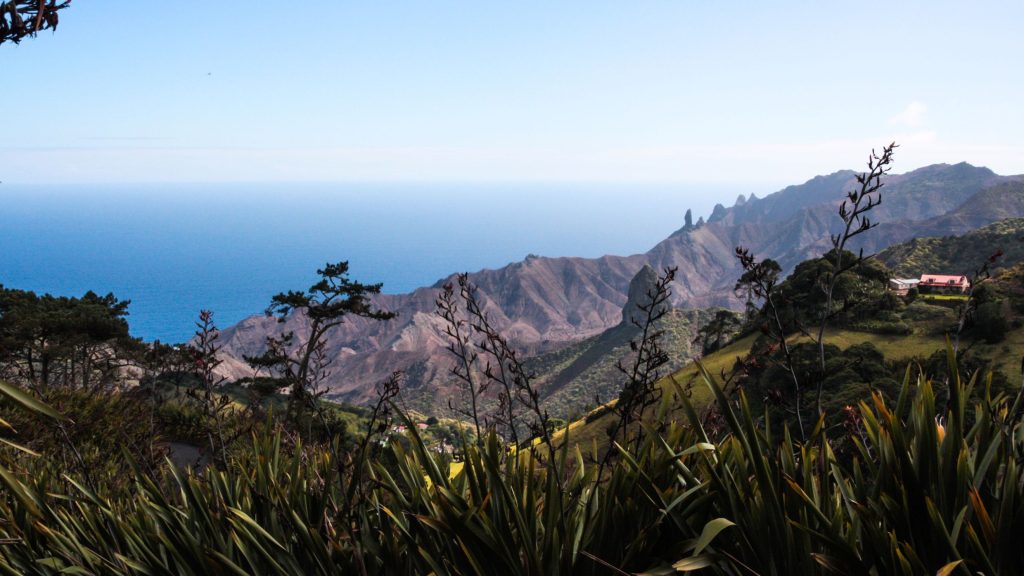
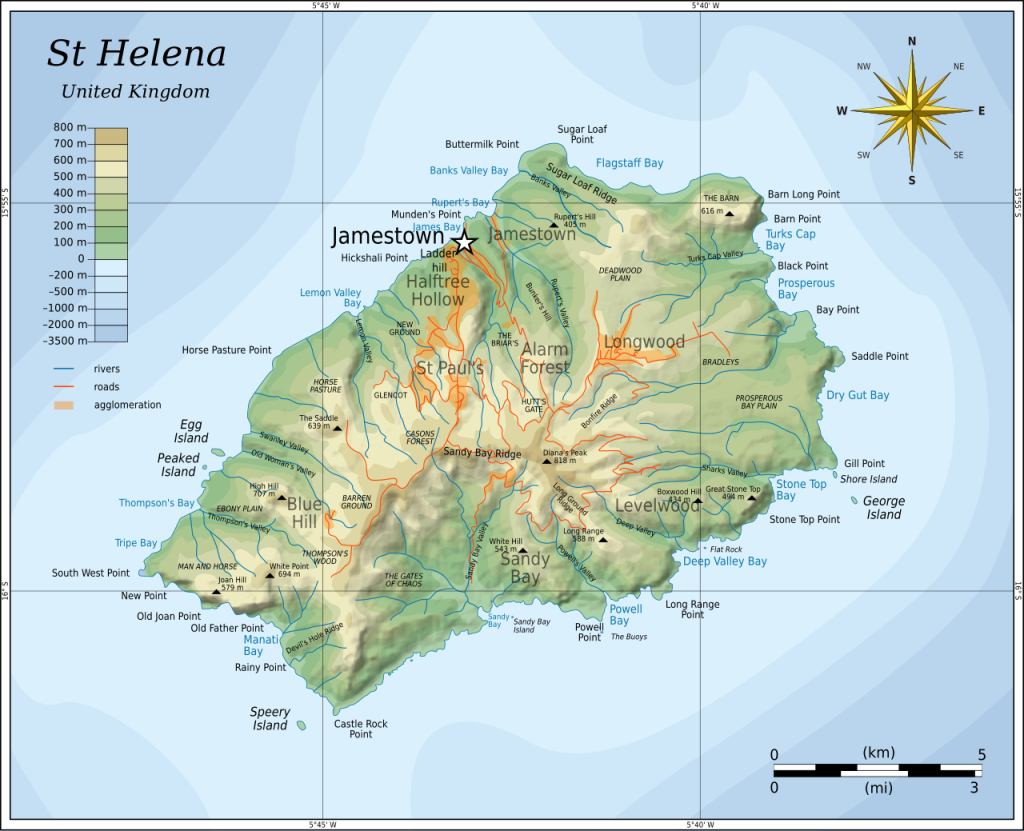
There are few destinations left that can still credibly trade on being hard to reach. Blink and you’d miss it. St Helena is a speck of volcanic rock in the South Atlantic, roughly equidistant between Angola and Brazil, and new research suggests that remoteness is fast becoming a selling point rather than a deterrent in the age of experience.
Survey work released this month found that half of UK long-haul travellers said they would consider visiting the island once they had read a short description of it. More striking for trade buyers weighing demand: St Helena leapt from fifth to first place on a ranking of the most appealing remote-island destinations after respondents learned more about it, overtaking Madagascar and the Galápagos.
The finding points to a familiar challenge and an opportunity in equal measure. Awareness of St Helena remains low; appetite, once awareness is built, is high. That is precisely the gap a well-briefed operator or DMC is positioned to close.
Why now: access is the story
St Helena spent most of its history reachable only by sea. That changed in 2017, when St Helena Airport opened and scheduled flights began, ending the island’s dependence on the RMS St Helena mail ship and recasting a five-day voyage as a flight of under five hours from Johannesburg.
Connectivity is now deepening. Under an 18-month forward schedule released by Airlink and St Helena Tourism, the carrier maintains its weekly Saturday service between Johannesburg (JNB) and St Helena (HLE), and adds a seasonal Tuesday return between Cape Town and the island from mid-December 2026 through mid-March 2027 — timed squarely to the southern-summer peak. A monthly inter-island link to Ascension continues alongside.
The Cape Town addition matters commercially for upcoming growth as it hands trade two viable South African gateways and a natural twin-centre structure, even if the booking horizon remains capped at 360 days despite the longer published schedule.
A market with room to grow
The numbers underline that St Helena is an early-stage destination. Arrivals in the 12 months to February 2025 reached 4,774, a 7.9% rise year on year, according to the St Helena Government’s statistics office. Leisure visitor numbers, hit hard by the pandemic, have been climbing steadily back towards their 2018–20 highs without yet reaching them.
For context, the airport’s original business case targeted 30,000 annual visitors, but as a long-term goal set for the 2040s, not a near-term forecast. In 2019, some 2,481 tourists arrived. Tourism was, pre-pandemic, the island’s largest export sector, accounting for around 11% of all foreign earnings and second only to UK aid as a source of external income. The National Audit Office has tracked the airport’s role in the territory’s path towards greater self-sufficiency.
The takeaway for trade is this is a destination with deliberate carrying capacity, low visitor density, and a government actively courting tourism, especially from the growing South African outbound market.
St Helena’s appeal clusters around three pillars that map neatly onto current high-yield travel trends wildlife, marine adventure and heritage and with little overdevelopment so far it has retained much of its historic beauty.
The island also hosts one of the world’s most unusual whale shark aggregations between December and April. Uniquely, St Helena draws a near 50/50 split of males and females, with courtship behaviour recorded — a pattern documented in peer-reviewed work in Frontiers in Marine Science that frames the island as a significant reproductive habitat. Snorkelling alongside the animals, rather than crowded cage-style encounters elsewhere, is the draw.
A marine environment found nowhere else
Beyond the sharks, the waters hold more than 780 recorded marine species, at least 50 of them endemic — among them the St Helena butterflyfish. Visibility reaches 30–40m in peak season (December to May), sea temperatures sit at a comfortable 19–25°C, and eight accessible shipwrecks add a heritage-diving dimension. Humpback whales pass between June and December, and resident dolphin pods are routinely encountered. The surrounding waters are protected as a Category VI marine protected area.
Jonathan, Napoleon and the slow-travel narrative
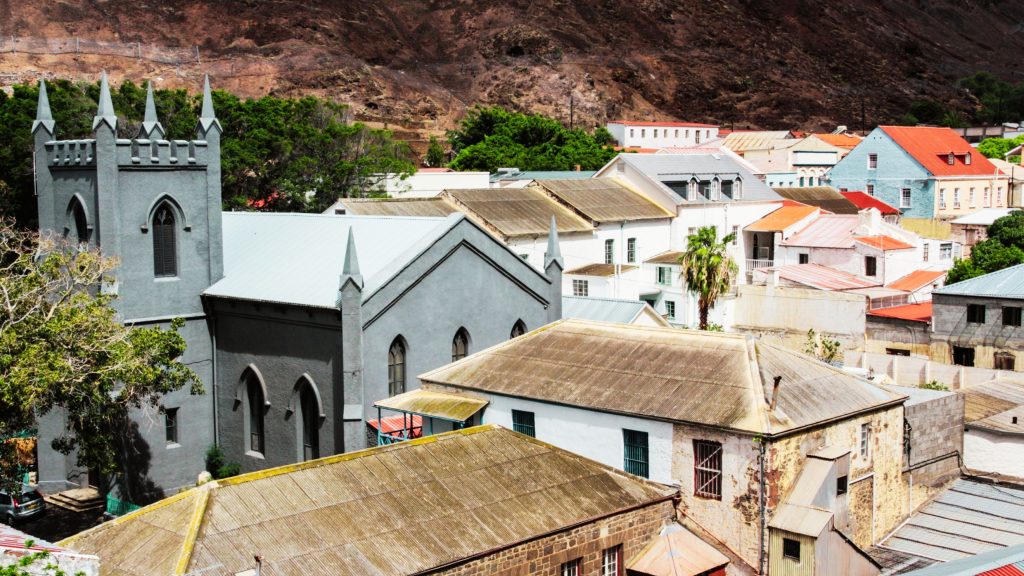
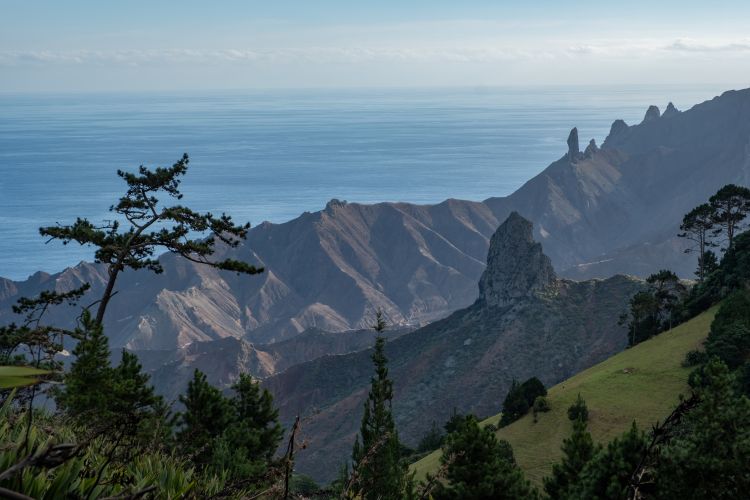
On land, the island offers two ready-made hooks. St Helena was the place of Napoleon Bonaparte’s final exile, and Longwood House and the associated French heritage sites remain a draw for cultural travellers. It is also home to Jonathan, a Seychelles giant tortoise widely cited as the world’s oldest living land animal at around 194. Dramatic volcanic hiking, including the celebrated Jacob’s Ladder climb in the capital, Jamestown, rounds out an itinerary built for slow, immersive travel rather than box-ticking.
The research identifies the most promising segment as younger travellers aged 25–44 seeking authentic, uncrowded, meaningful trips, the demographic driving the wider “bucket-list” and off-the-beaten-track boom. Top stated motivations break down as follows:
- Remoteness: cited by 54% as among the island’s most appealing features
- Napoleon and history: 47%
- Whale sharks and marine life: 44%
- Diving and snorkelling: 42%
“What’s exciting about this research is how strongly people respond once they discover St Helena,” said Jonathan Passaportis, Head of Tourism for St Helena Government. “Younger travellers are increasingly looking for places that feel unique, authentic and memorable, and the research shows St Helena really resonates with those looking for something beyond a traditional holiday.”
For the trade
St Helena will not be a volume destination due to its location, and that is the point. For operators in adventure, wildlife, diving and cultural travel, the island offers a rare combination: a genuinely distinctive product, demonstrable latent demand, improving air access, and a twin-centre structure with Cape Town or Johannesburg that turns a logistically remote dot into a programmable itinerary. The constraint, a single weekly core flight, capped capacity, is also the moat. Early movers who build supplier relationships now will own a destination the market is only beginning to discover.