
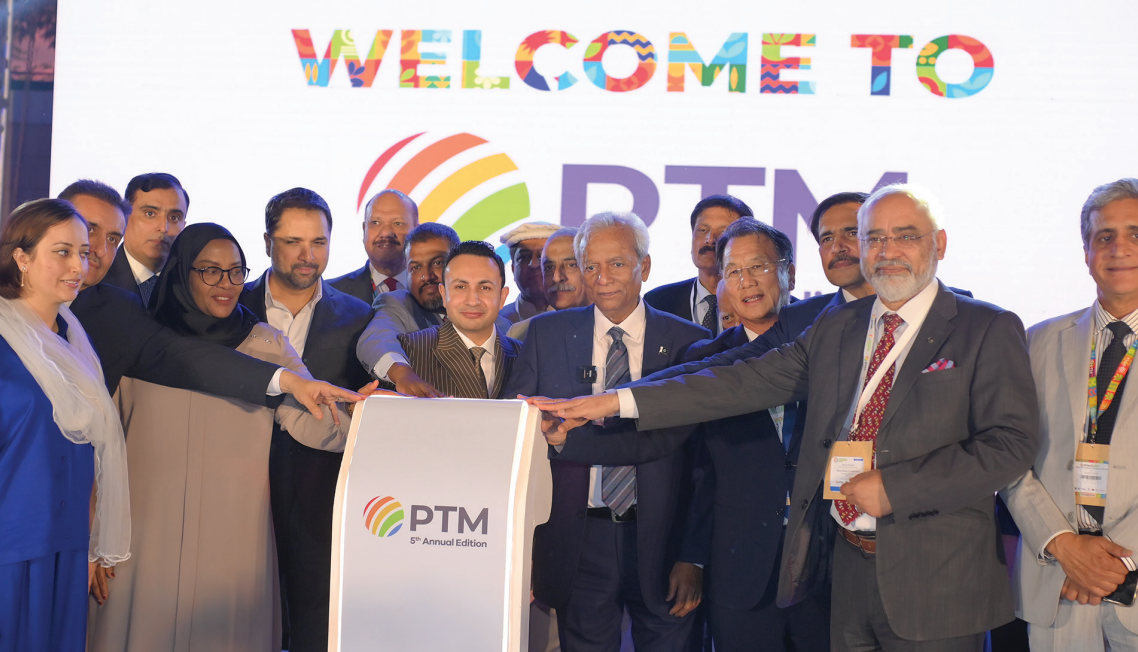
Pakistan Travel Mart (PTM) 2026 brought together more than 250 exhibiting organisations from 20 countries across a five-day programme combining a three-day exhibition in Karachi and a two-day B2B roadshow in Islamabad, according to the event’s official impact report.
The fifth edition signals Pakistan’s continued push to build a structured travel trade marketplace and position itself within the regional outbound and inbound tourism economy, at a point when the country is courting destination partners, airlines and investors to grow a sector long held back by perception and access barriers.
Held from April 3-5 at the Karachi Expo Centre under the theme “Shaping the Future of Travel: Innovation, Sustainability & Global Connectivity,” the exhibition drew a reported 20,000 trade visitors and hosted 25 live podcast sessions, the report said. Exhibitors spanned destinations, tourism boards, airlines, hospitality brands, travel technology providers and tour operators.
Participating countries included Saudi Arabia, the UAE, Oman, Turkey, Malaysia, Indonesia, Thailand, Vietnam, Singapore, Nepal, China, Kazakhstan, Uzbekistan, Tajikistan, Azerbaijan, Sri Lanka, Mauritius, Rwanda, Ethiopia and the United Kingdom.
The Karachi floor was organised into themed districts covering hospitality, travel technology, destinations and aviation, alongside a Hunar Zone showcasing Pakistani artisans as a cultural tourism asset. Domestic representation came from national and provincial bodies including the Pakistan Tourism Development Corporation and the tourism authorities of Sindh, Balochistan, Punjab, Gilgit Baltistan and Azad Jammu and Kashmir.
The Islamabad Roadshow on April 7-8, held at the Mövenpick Centaurus, drew 65 exhibitors, 2,500 trade visitors and 12 countries, with eight podcast sessions, according to the report. The capital edition added a medical and wellness tourism vertical and a diplomatic zone hosting embassy-led country representation, positioning tourism as a tool of bilateral engagement.
The Islamabad conferences carried the event’s policy weight, with a plenary panel and three sessions on Brand Pakistan, aviation connectivity and barriers to inbound tourism. Speakers included Inter-Provincial Coordination Secretary Mohyuddin Ahmad Wani, UN Tourism Asia and Pacific regional director Harry Hwang, and National Coordinator and Advisor on Tourism to the Prime Minister Sardar Yasir Ilyas Khan.
Panel discussions returned repeatedly to the gap between Pakistan’s tourism potential and its actual growth, citing fragmented promotion, weak tourism data, visa and facilitation hurdles, and the need for stronger coordination between policy and industry. Aviation was framed not as a support function but as the backbone determining whether destinations remain aspirational or become accessible.
The report positioned medical and wellness tourism as an emerging growth segment, pointing to the potential of Pakistani healthcare institutions to attract international patients, alongside heritage, Buddhist, Sikh and adventure tourism as areas for diversification.
Why it matters for the trade
For destination partners and outbound sellers, PTM is becoming the structured entry point into a large, underserved outbound market, and the country breakdown shows where the competition for Pakistani travellers is concentrating: the Gulf, Central Asia and Southeast Asia. The event’s value to exhibitors lies less in the headline visitor numbers than in the access it gives to provincial tourism bodies, embassies and federal policymakers in one room, a rare consolidation in a market where fragmented governance is itself the recurring complaint.