
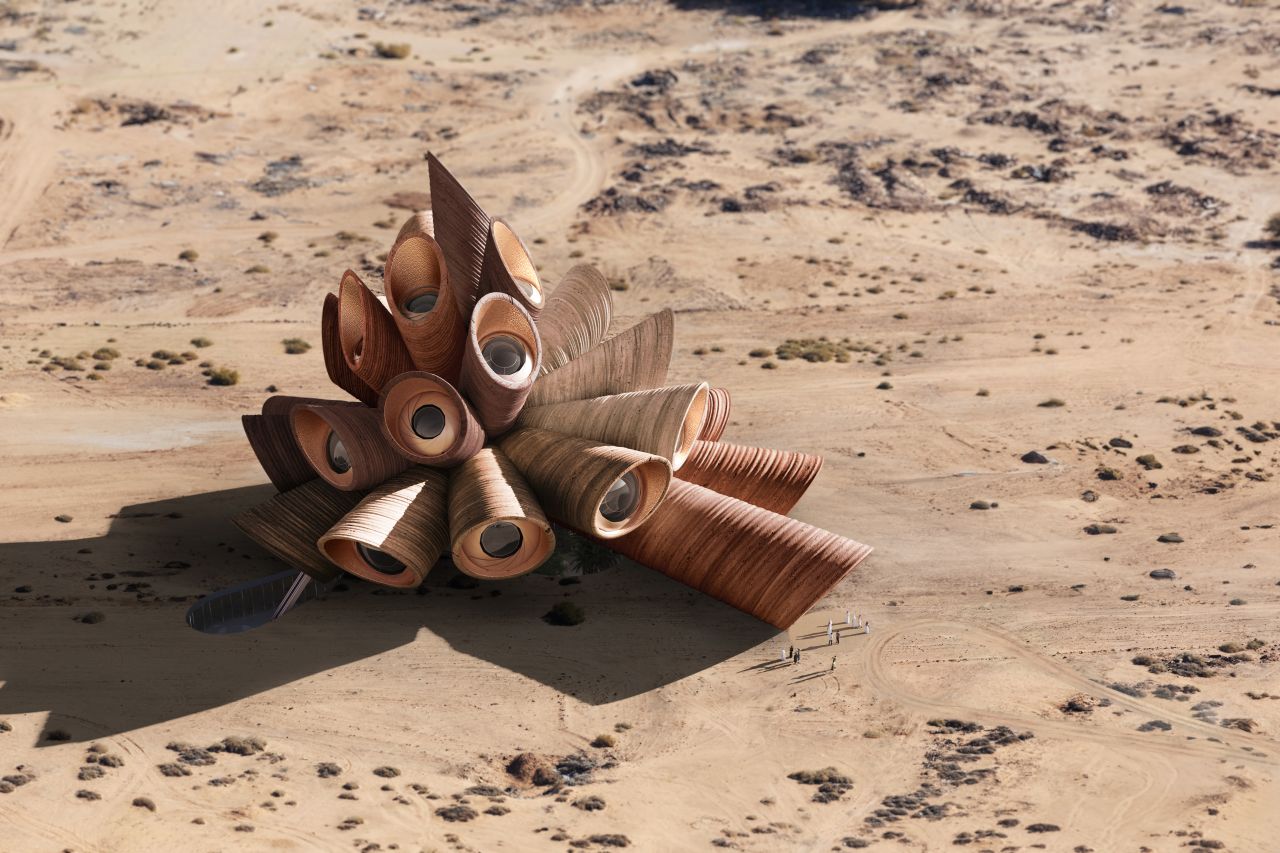
Saudi Arabia’s AlUla has revealed the design of AlUla Manara, an astronomy and astrotourism destination set within the world’s third-largest Dark Sky Park, the Royal Commission for AlUla (RCU) announced.
The project extends AlUla’s tourism offer beyond heritage and archaeology into science-led travel, as Saudi Arabia courts discerning visitors and positions itself as an emerging hub for astronomy and space science under Vision 2030. The design has been approved by the RCU’s board of directors.
Designed by Heatherwick Studio, the practice behind Little Island in New York and Coal Drops Yard in London, the facility draws its form from the spiralling geometries found in galaxies, planetary rings, plants and shells. Clad in textured stone inspired by AlUla’s sandstone landscape, three interlocking telescope-like structures reach skywards from the desert floor.
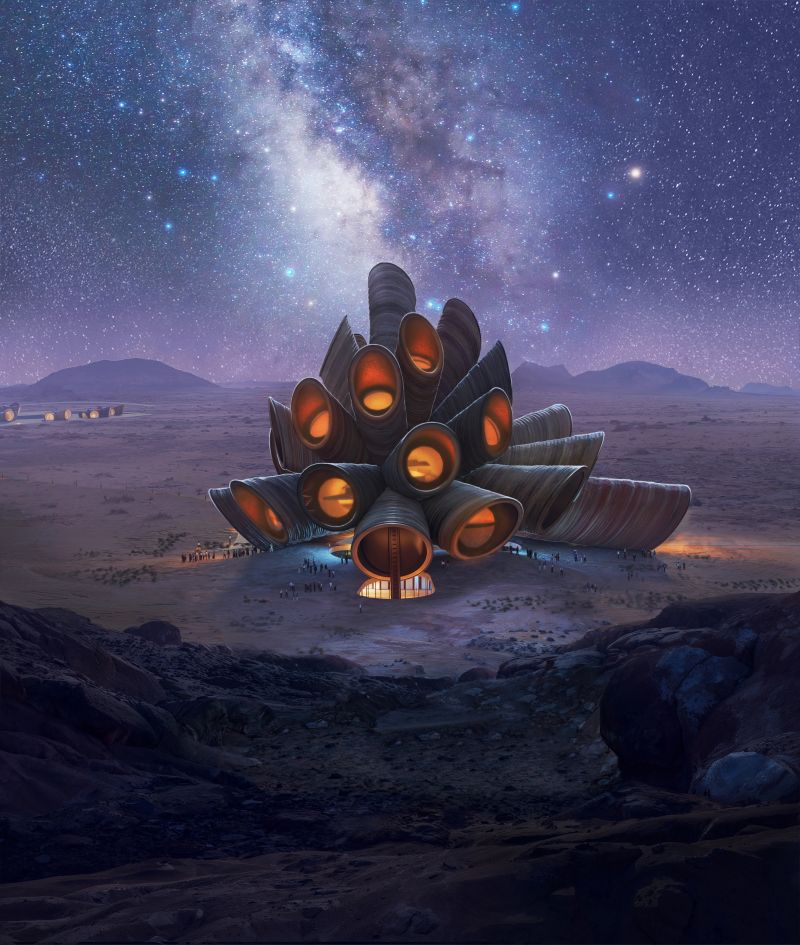
The main visitor building will house immersive exhibitions and galleries, a planetarium, a restaurant and a rooftop observation deck, alongside real-time scientific research that visitors can witness in progress. The site sits between the Gharameel Nature Reserve and the Harrat Uwayrid Reserve, beneath skies that rank among the top 5% globally for natural darkness.
“Space observatories are often remote, sterile places, technical outposts that feel distant from the public. We saw an opportunity to dissolve those barriers and create a place where visitors can step inside the wonder of the cosmos,” said Heatherwick Studio Executive Partner and Group Leader Stuart Wood.
RCU Chief Tourism Officer Phillip Jones said Manara could become a defining symbol of AlUla’s future in the way Maraya became an internationally recognised icon for architecture and culture. He said the investment expanded AlUla’s tourism offer beyond heritage and archaeology while reinforcing its appeal to astronomy enthusiasts and researchers.
The destination builds on AlUla’s growing astrotourism credentials, supported by Dark Sky Park certifications from DarkSky International across the Manara site, Gharameel Nature Reserve, Sharaan National Park and Wadi Nakhlah Nature Reserve, alongside an Astrotourism Policy setting lighting controls, zoning and visitor management standards.
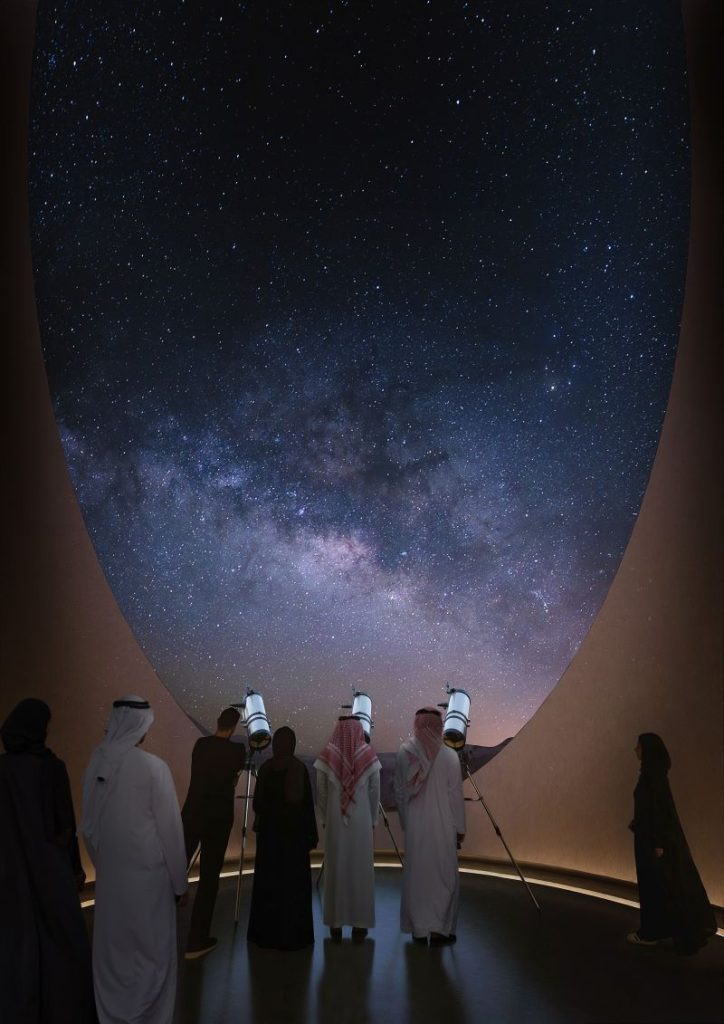
The facility’s tubular forms incorporate shading systems that manage daytime sunlight while protecting dark-sky visibility at night, with operable windows responding to weather conditions to improve energy efficiency.
Manara joins Hegra and Maraya as part of AlUla’s strategy to develop visitor experiences combining heritage, culture, nature and science, RCU said.
Why it matters for the trade
Astrotourism is one of the few experiential niches with genuine pricing power, and AlUla is building the infrastructure to own it regionally rather than chase it. For operators, Manara turns a dark-sky asset that previously suited only specialist stargazing trips into a flagship visitor attraction with a planetarium, dining and research access, the kind of anchor that supports multi-night itineraries and shoulder-season demand.
The deliberate framing alongside Hegra and Maraya signals AlUla’s intent to be sold as a layered, repeat-visit destination rather than a single-sight stopover, which is the more valuable proposition for agents building Saudi product. With the design only just approved, the commercial window is in early positioning: operators who fold AlUla’s night skies into itineraries now will be ahead of the curve when Manara opens.