
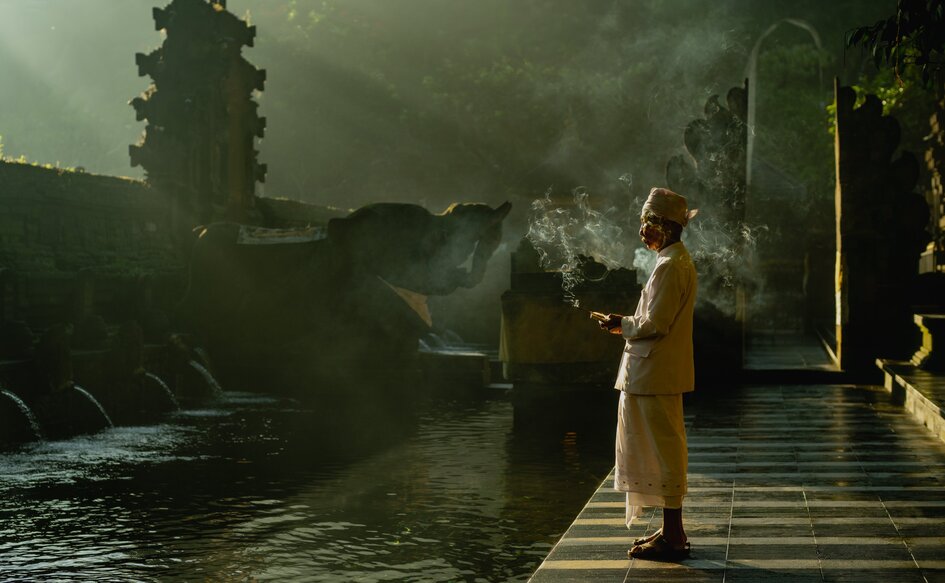
Aman has refreshed its flagship “Wonders of Aman” campaign, leaning hard on the proximity of 14 of its properties to UNESCO-protected sites and selling privileged as part of Aman UNESCO experiences. The high end is moving decisively away from the room and towards the “experience.”
The campaign lands as Aman pushes into Saudi Arabia, the UAE and the Maldives, expanding a portfolio it now puts at 35 hotels and resorts across 20 countries.
The group’s latest brand story, published on aman.com, frames its estate around cultural and natural heritage rather than amenities. The pitch is exclusivity of access: a dawn Melukat water blessing at Bali’s Tirta Empul temple before public opening hours, meditation with monks at Borobudur, the world’s largest Buddhist temple, and swimming with whale sharks in Indonesia’s Saleh Bay from Amanwana on Moyo Island.
It is a familiar Aman formula, but the explicit count of UNESCO-adjacent properties is the commercial tell. Aman is no longer selling a bed near a famous site. It is selling the site itself, on terms no independent traveller can replicate.
- Access is the margin. Privileged entry, private gates and pre-opening rituals are precisely the components an advised client cannot book direct. That hands operators and DMCs a defensible role in a market where booking platforms have eroded everywhere else.
- Heritage proximity becomes a sales filter. Aman’s UNESCO framing gives advisers a clean way to package itineraries around cultural credentials, useful for clients increasingly motivated by meaning over labels.
- The expansion map points to MENA. Amansamar in Saudi Arabia, Aman Dubai and Aman Maldives are all listed as coming soon, opening fresh inventory in exactly the markets where regional buyers and tourism boards are spending.
- Experiences are now multi-property. The same ritual is offered across several resorts, from Cambodia’s Amansara to Japan’s Amanemu, which lends itself to the multi-destination journeys Aman is actively promoting.
The campaign sits against Aman’s continued physical growth. The group lists openings through to the end of the decade, including Aman Niseko in Hokkaido for 2030, alongside near-term arrivals in the Gulf and the Maldives. Saudi Arabia‘s Amansamar gives Aman a foothold in a market where the Public Investment Fund is underwriting a wave of luxury hospitality, and where the kingdom is courting exactly the high-net-worth experiential traveller Aman has spent four decades cultivating.
The whale shark excursion is offered not only at Amanwana but on diving trips from Amanvari in Mexico, Amanpulo in the Philippines and Amanyara in Turks and Caicos. The Melukat blessing at Amandari is mirrored by onsen bathing at Amanemu and a Khmer water ritual at Amansara. Aman is building repeatable signature experiences that travel across the portfolio, which simplifies the sell for advisers handling clients who move between properties.
The open question is supply. Pre-opening temple access and limited wildlife encounters do not scale, and Aman’s appeal rests on scarcity. As the portfolio grows towards 20 countries, the group will need to protect the exclusivity that the campaign sells, particularly at heavily visited UNESCO sites where its privileged access depends on relationships with local authorities and communities.
For the trade, the near-term opportunity is the Gulf pipeline. With Aman Dubai and Amansamar both unbuilt, operators and tourism boards in the region have a window to align experiential product and access partnerships before the properties open. Aman’s reservations team is positioned as the single point of contact, with the group reiterating its standing line: no request is too great and no detail too small.
Aman is a luxury hotel group founded in 1988, operating around 35 hotels and resorts across 20 countries, known for low-density, design-led properties in remote or culturally significant locations and a service model built on privacy and exclusivity. Many of its properties sit beside UNESCO-protected sites, and the brand has expanded beyond resorts into city hotels, residences, yachts and a younger sister brand, Janu.
