
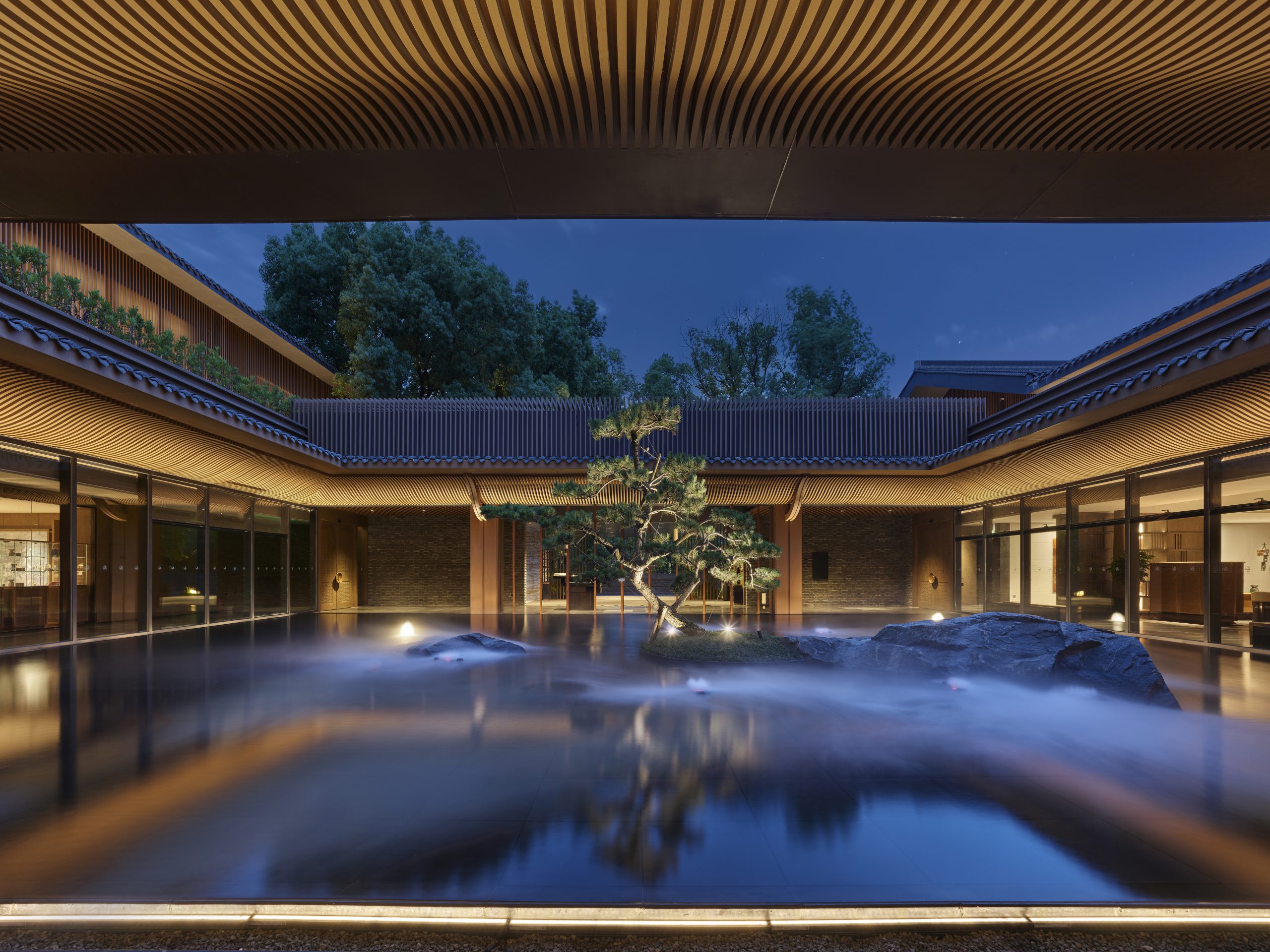
Banyan Group has opened Banyan Tree Mount Emei in Sichuan province, a 130-room mountainside resort at the foot of one of China’s four sacred Buddhist mountains, extending its flagship brand’s reach into the country’s fast-growing domestic luxury market.
The resort sits in the foothills of Mount Emei, a UNESCO World Heritage Site inscribed for both cultural and natural value, and serves as a gateway to the Mount Emei Scenic Area. It is the Singapore-listed group’s latest China opening in a year that also brings Banyan Tree Guangzhou Jiulong Lake, part of a wider expansion for a company that crossed its 100-resort milestone in 2025.
The property draws on the courtyard homes of western Sichuan, following the contours of a forested valley. During construction, seven century-old camphor trees and all trees with a trunk diameter above 10 centimetres were kept in place, and pathways were routed to let bamboo grow through and alongside the walkways. The arrival court uses the traditional principle of “four waters returning to the hall”, in which pitched roofs channel rainwater into a central courtyard.
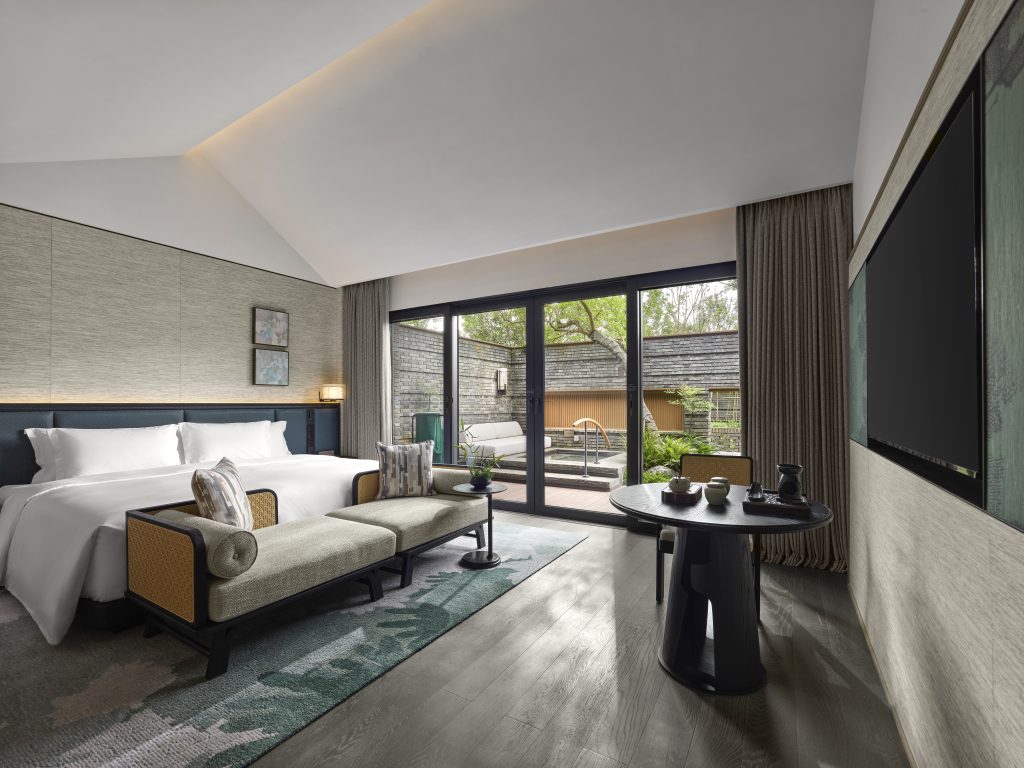
The resort comprises 130 rooms and villas across six categories, each with a private outdoor hot spring pool, ranging up to a 320-square-metre Presidential Villa. Facilities include the Banyan Tree Spa with five couples’ treatment rooms, a bamboo forest trail, a temperature-controlled pool with views over the groves, and more than 1,200 square metres of indoor and outdoor event space anchored by the pillarless 500-square-metre Xiangzhang Ballroom.
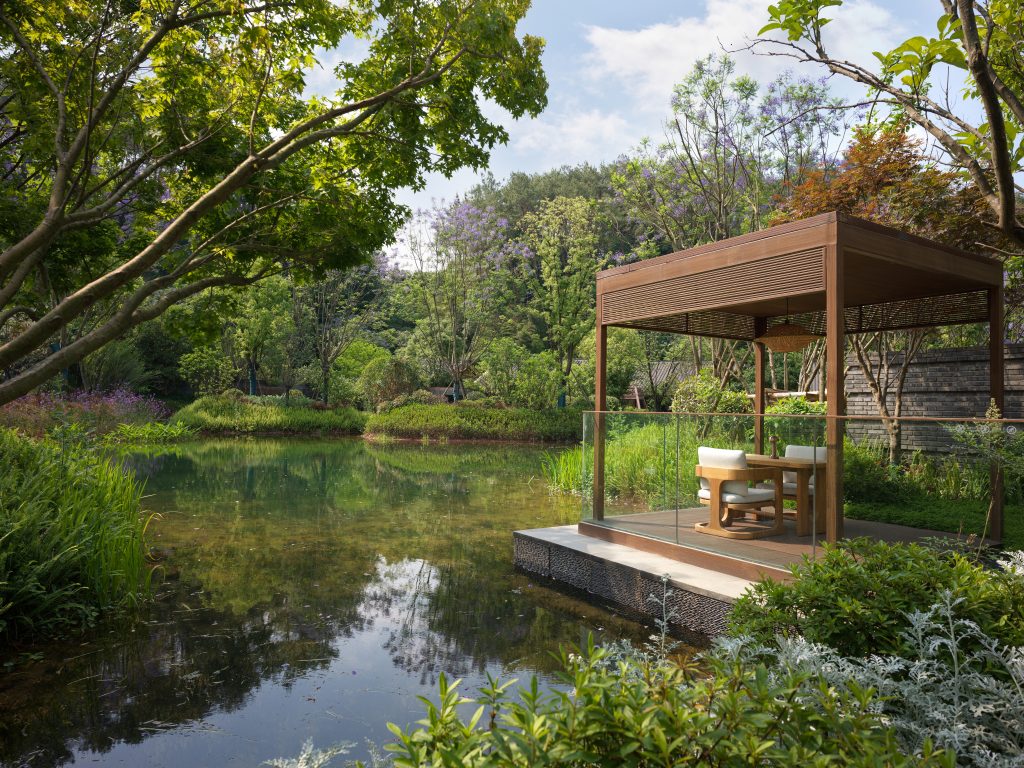
Dining centres on Sichuan cuisine with Cantonese and international influences, alongside the brand’s Destination Dining, where guests can take afternoon tea aboard a traditional black-canopy boat or dine in a mid-lake pavilion.
The resort is a five-minute drive from Emeishan High-Speed Railway Station and about two hours from Chengdu’s two international airports. Leshan Airport, expected to open later in 2026, will sit around 40 minutes away.
Why it matters for the trade
Banyan Tree Mount Emei is a bet on Chinese domestic luxury and experiential travel, and the location tells operators where the demand is heading: not the first-tier cities but the culturally and ecologically rich interior, reachable by high-speed rail. The two-minute proximity to the scenic-area entrance and the five-minute rail link matter for operators building fly-and-rail itineraries, since Chinese affluent travellers increasingly treat the train, not the plane, as the premium domestic connector.
For inbound operators serving Western clients, the resort strengthens the case for Sichuan as a two-centre pairing with Chengdu, and the wellbeing and cultural-immersion programming (Emei martial arts, tie-dyeing, bamboo weaving) fits the shift away from monument-ticking towards slower, participatory product that commands higher margins.
The opening also signals Banyan’s read on where luxury supply should sit. With Leshan Airport due later in 2026, access will only improve, and operators positioning Sichuan product now stand to benefit as connectivity catches up. For the group itself, deepening its China footprint hedges a portfolio that is expanding simultaneously into Africa, the Caribbean and Europe.