
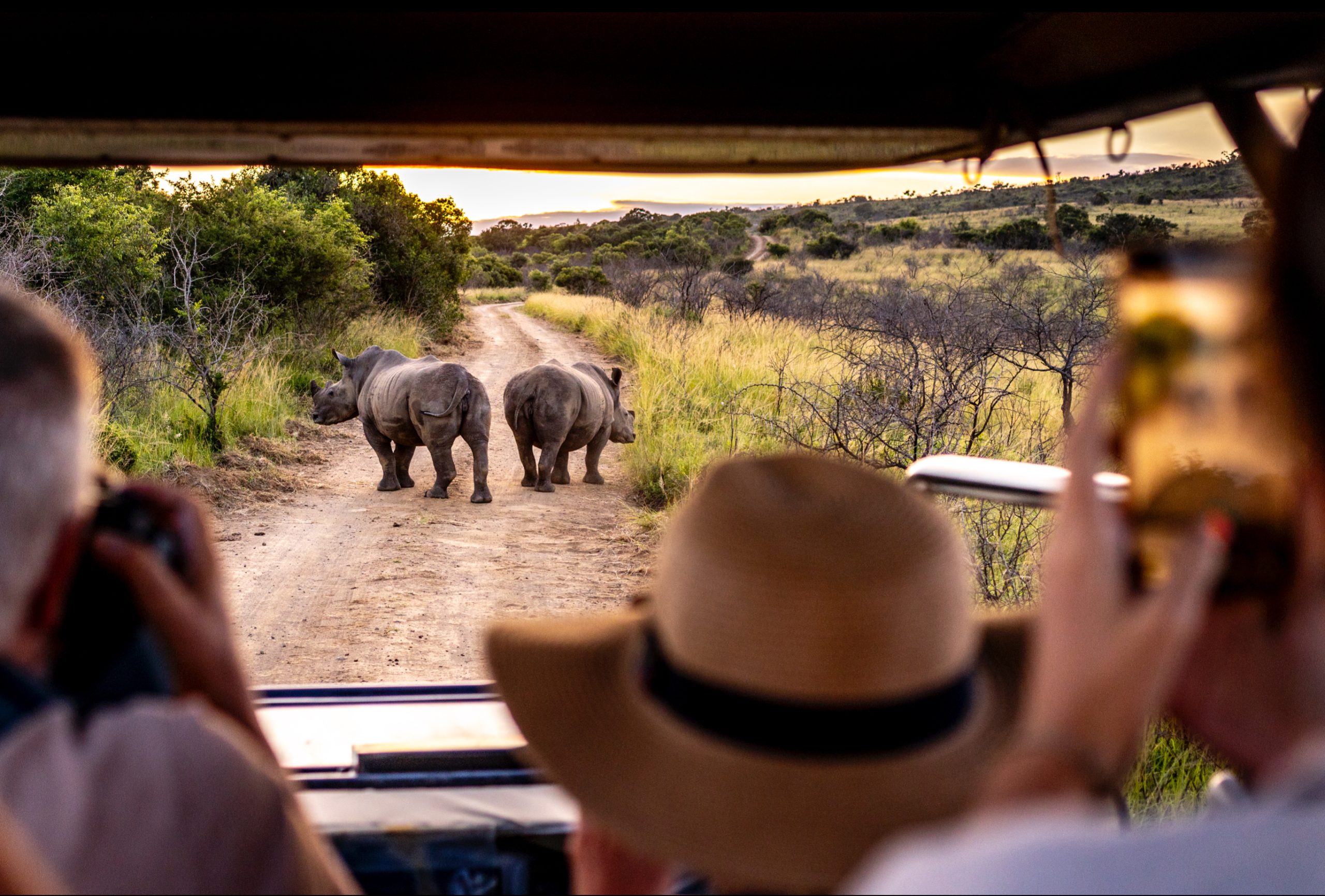
Hluhluwe-iMfolozi Park has just posted a striking figure: a 52% drop in rhino poaching this year. It’s one of the most significant conservation results to come out of southern Africa in recent memory — and Rhino Ridge Safari Lodge, set inside the reserve itself, is positioning guest stays as part of the reason why.
The park holds a unique place in conservation history. Every southern white rhino alive today traces its lineage back to this landscape, the result of Operation Rhino, the pioneering initiative launched decades ago by conservationist Dr. Ian Player and the Natal Parks Board. That legacy is still being written. Hluhluwe-iMfolozi has partnered with the WWF Black Rhino Range Expansion Project, which tackles one of the species’ most persistent problems: a shortage of viable habitat. The project identifies suitable land and establishes new breeding populations through managed translocations, aiming to diversify genetics and grow numbers over the long term.
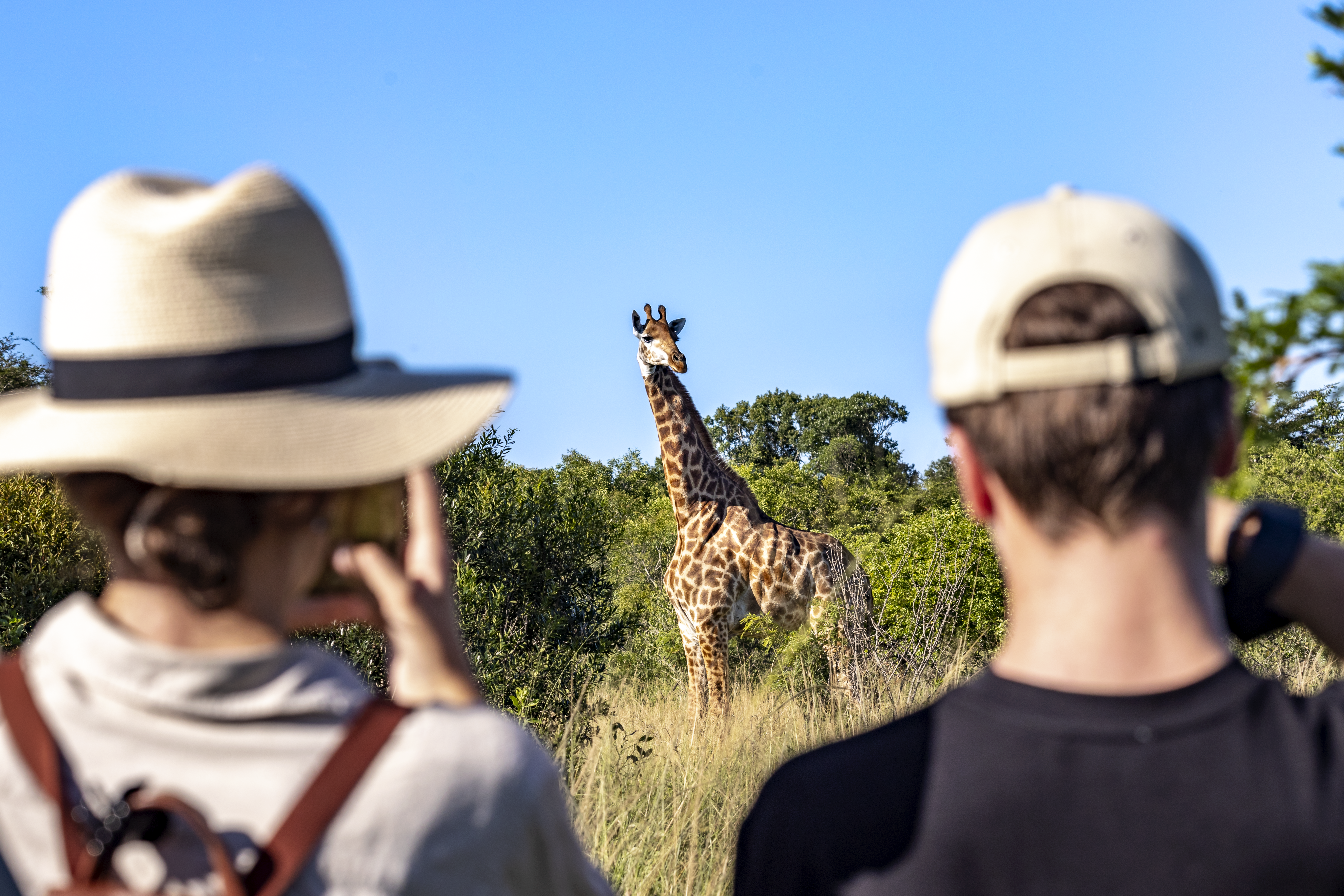
Protecting black rhino comes with its own difficulties. Unlike white rhino, which graze in more open terrain, black rhino are browsers that stick to dense vegetation — harder to spot, harder to monitor, and more vulnerable given how few individuals remain. On the ground, protection means ranger patrols, aerial surveillance, horseback units, and specialist canine teams working in concert.
Rhino Ridge’s model ties directly into this effort. Because the lodge sits inside the park boundary rather than outside it, guests experience conservation as part of the landscape rather than as a separate activity layered on top of a safari. Revenue flows back into that system in concrete ways: park entrance fees paid to Ezemvelo KZN Wildlife largely go toward conservation programs, and a separate Isibindi Foundation levy funds community and conservation initiatives run in partnership with the lodge.
The community dimension is central to the model too. Many staff members come from the neighboring Mpembeni community, and the lodge treats conservation, community employment, and tourism as interconnected rather than three separate priorities competing for attention.
That philosophy extends to how the lodge handles its signature wildlife encounters. Rhino sightings are kept deliberately quiet and unhurried, prioritizing the animal’s wellbeing before anything else. Guides wait until the moment has settled before sharing the history behind what guests are witnessing — from the species’ near-collapse to the recovery effort still underway today. Even the lodge’s architecture reflects this restraint: some rooms sit up to 200 meters from the main facility, designed to maximize privacy while minimizing the property’s footprint on the reserve.
Dr. Ian Player described conservation as a continuous battle. At Rhino Ridge, that battle is quietly built into the price of a stay — funding ranger capacity, anti-poaching infrastructure, and community partnerships that extend well beyond the boundaries of a typical guest experience.
For more information, visit Isibindi.co.za or contact the reservations team at res@isibindi.co.za / +27 (0)35 474 1473.