
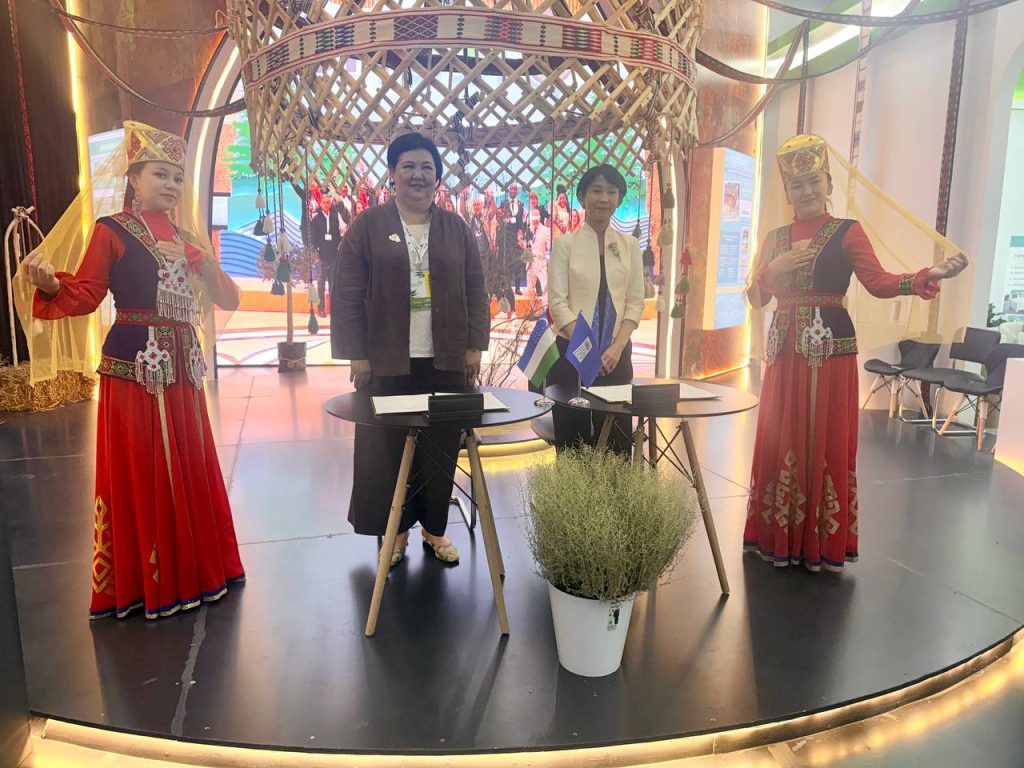
The United Nations Development Programme (UNDP) signed a statement of intent with the Committee of Ecology of the Republic of Karakalpakstan on June 4, committing both parties to conservation work across the Lower Amudarya and Aral Sea Basin, according to the text of the agreement seen by Emerging Travel.
The document was signed at the Eco Expo, where the autonomous republic in western Uzbekistan was exhibiting. It commits the signatories to the conservation, restoration and management of wetlands, lakes, forests and other ecosystems, with particular attention to Key Biodiversity Areas and Important Bird Areas.
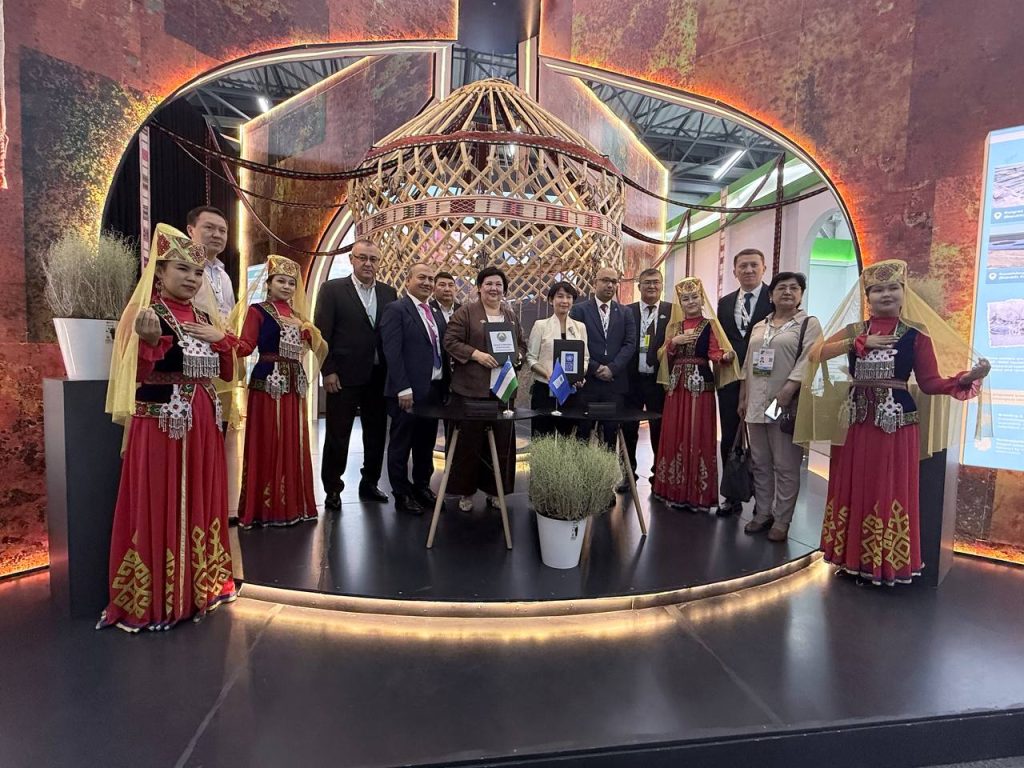
It also covers integrated land and water management, the expansion of protected areas, sustainable pasture management, and the engagement of women, youth and local communities in conservation.
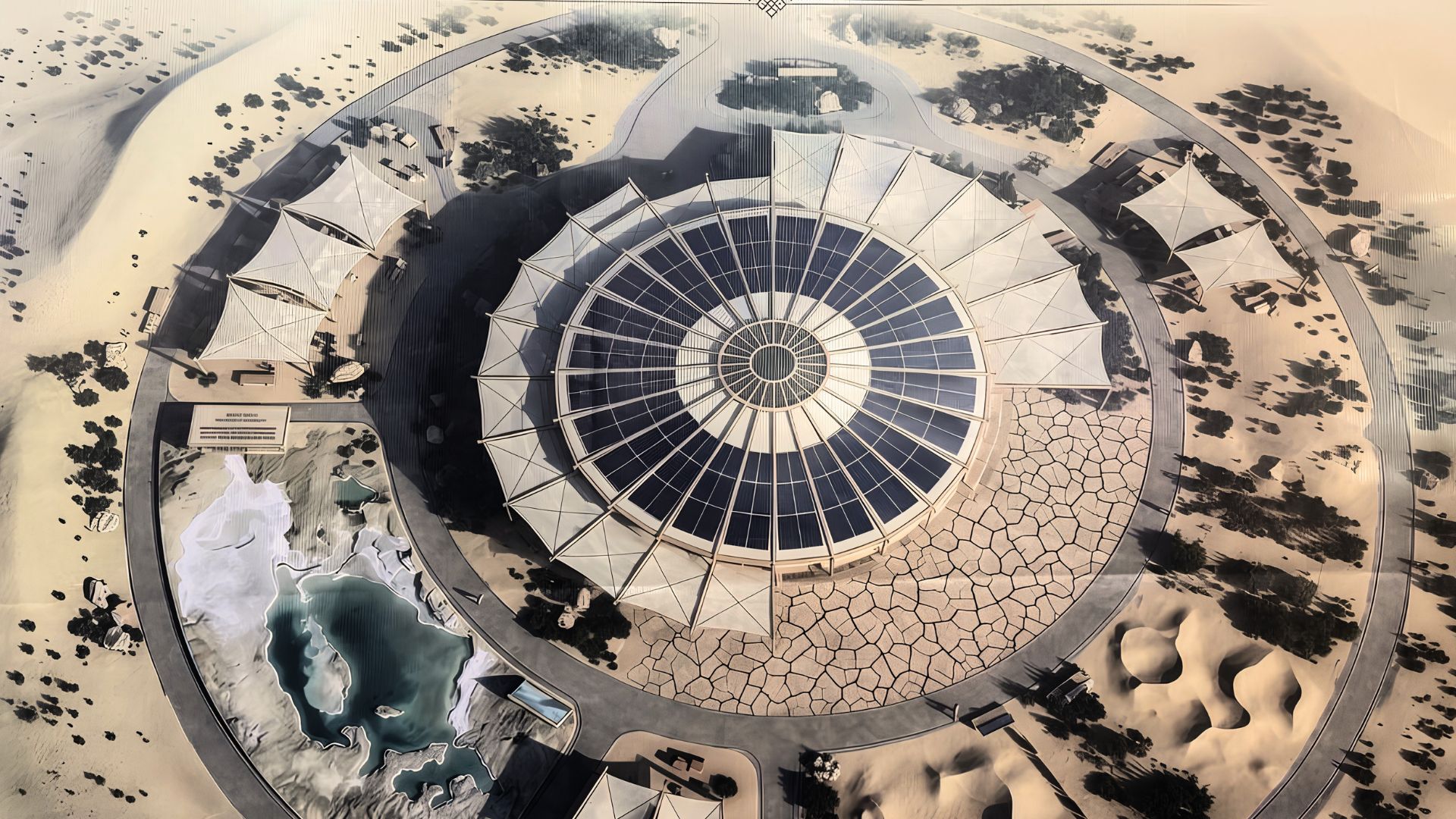
The agreement coincides with plans for a Museum of Climate Change in the regional capital, Nukus. The concept draws on Japan’s disaster museums, and a Japanese architect has designed the building. Preliminary funding has been approved, and planned exhibitions will cover water, biodiversity and land degradation. The museum is intended as an education centre and a visitor attraction.
The new Climate Museum in Nukus will provide a focal point for the climate change narrative in Karakalpakstan. It’ll be an important tourist attraction in Karakalpakstan, complementing the famous Savitsky Museum of art, but it’ll also play a role in climate and environmental education, in Uzbekistan and abroad.
Sophie Ibbotson, Uzbekistan’s Ambassador for Ecology and author of Bradt Travel Guides’ Karakalpakstan.
Nukus already holds the Savitsky Museum, home to the world’s second-largest collection of Russian avant-garde art. A climate museum would give the city a second anchor tied to the region’s environmental story.
The two announcements add to Karakalpakstan’s existing conservation work at the Lower Amudarya State Biosphere Reserve, which protects one of the largest remaining stands of tugai, the riparian forest once common along Central Asia’s rivers and now among the region’s most threatened habitats.
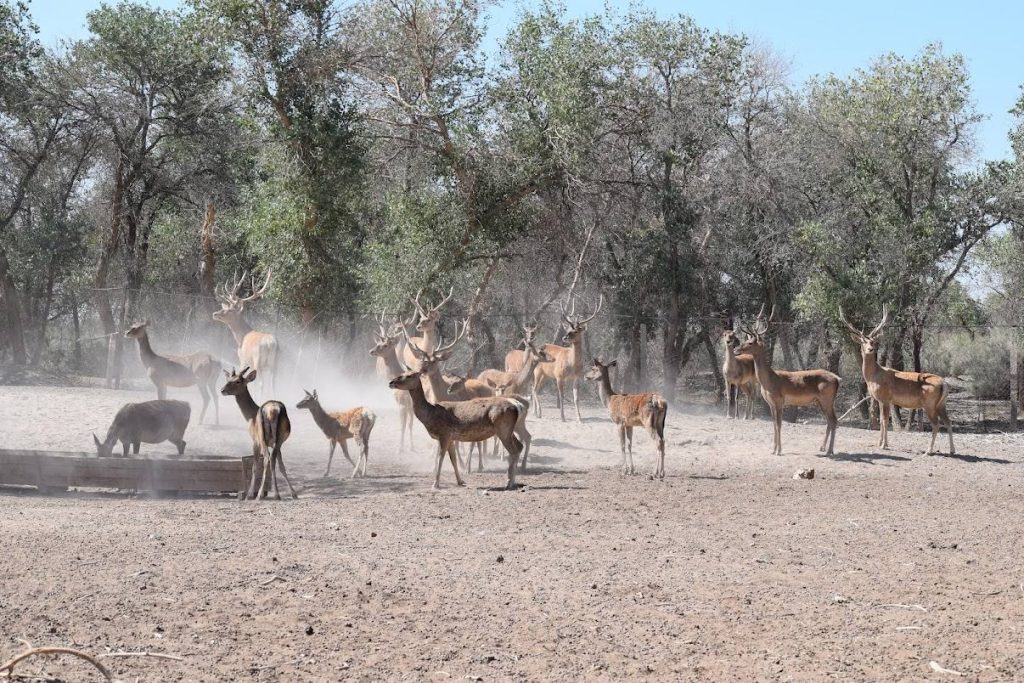
The reserve is the leading centre for breeding the Bukhara deer, a rare subspecies of red deer referred to locally as the Bactrian deer. Reintroduction began in the 1970s with animals brought from Tajikistan, and the reserve now holds the largest population in Uzbekistan and continues releasing deer into the wild.
The site is the most accessible wildlife destination in Karakalpakstan. A GIZ-supported visitor centre anchors it, rangers take guests to see deer in enclosures and in the forest, and the riverbanks carry abundant birdlife, a contrast with the disaster tourism around the dried Aral Sea. The biosphere reserve was established in its current form in the early 2010s on the territory of the former Baday-Tugay reserve.
What this means for trade
For the trade, Karakalpakstan has rested on the Aral Sea as its headline draw since opening up to foreign tourism. The UNDP agreement, the planned museum and the deer reserve give operators a conservation-led product to sell alongside the Aral draw, with an institutional backer, a forthcoming flagship attraction and a wildlife experience that holds up against regional competition.
The Japanese design involvement is a selling point in its own right for source markets that respond to the disaster-museum format. The open questions are timing and access: museum funding is described as preliminary, with no construction timeline or confirmed budget yet, and capacity at the reserve, including ranger availability, will set how much volume the site can take.