
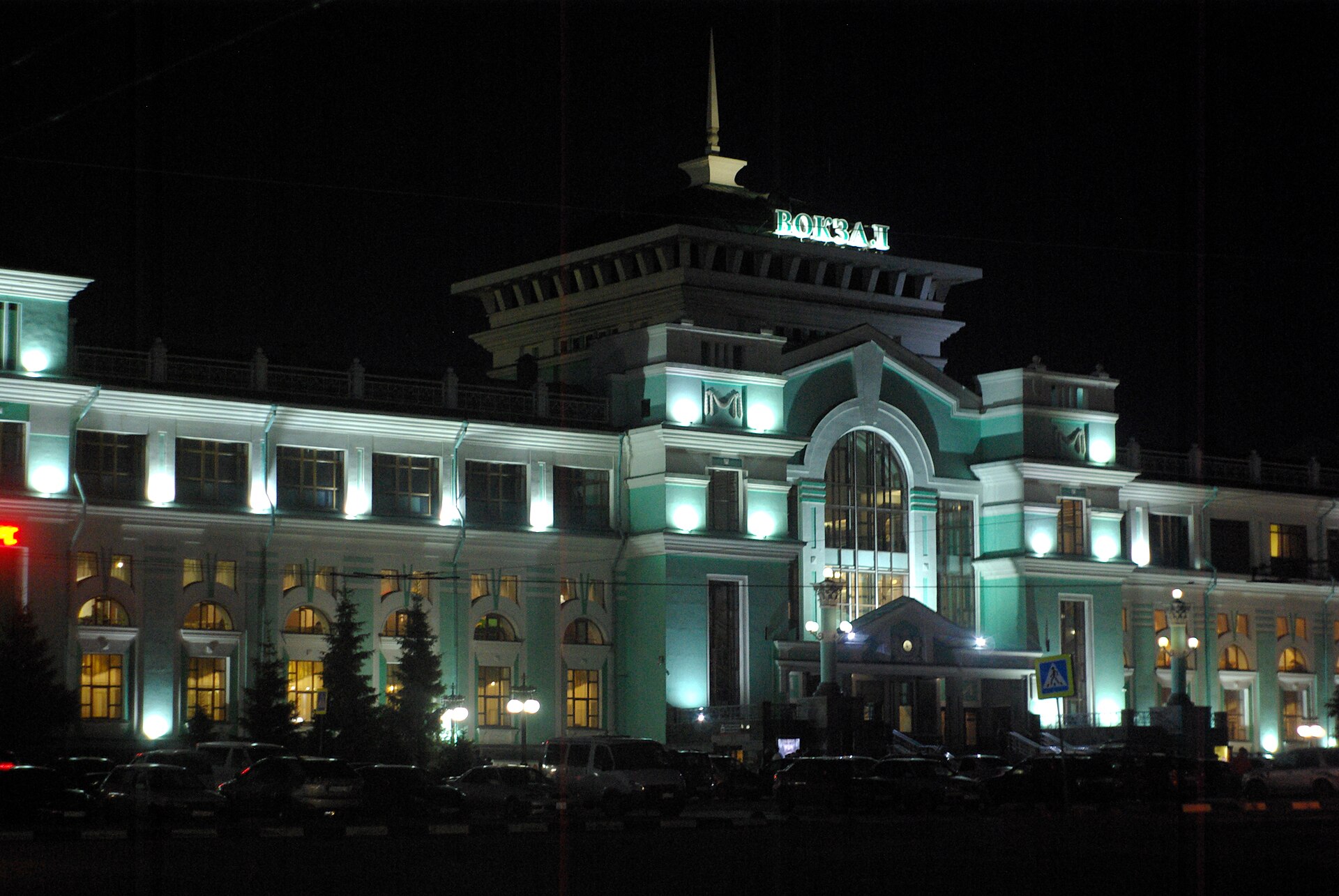
Health officials in Russia’s Omsk Region have dismissed messaging-app claims that a passenger with signs of plague collapsed at a railway station in the city, they said on October 8.
The denial is the latest in a string of official rebuttals since a worker at the Irkutsk Anti-Plague Research Institute of Siberia and the Far East died of pneumonia of undetermined cause on the night of October 1-2. The World Health Organization (WHO) rated the risk beyond Russia “very low” on October 6. Even so, Kazakhstan, Kyrgyzstan, Tajikistan and Uzbekistan have all stepped up health screening at their borders. That leaves operators selling Lake Baikal, the Trans-Siberian and overland routes south of Siberia handling a scare driven by unverified posts that spread faster than official corrections. Russia is already Mongolia’s largest source market.
Rospotrebnadzor, Russia’s public health watchdog, said on October 7 that there were “no epidemic risks to the public”. It said nearly 5,000 laboratory tests had found no dangerous pathogens, and monitoring had ended for 90% of the dead worker’s contacts. A day earlier it said a document circulating online, which described planned restrictions for the region, was false.
In Omsk, the posts claimed a man had coughed up blood and lost consciousness at the station before an ambulance took him to hospital. The regional health ministry said it had received no emergency call matching that description on the day or at any time this month. It added that the photograph attached to the posts had been taken several years ago in the Novosibirsk metro. Omsk sits on the Trans-Siberian Railway, about 2,000 km west of Irkutsk.
The institute employee was admitted to hospital in Shelekhov, outside Irkutsk, on September 29 with severe pneumonia. Irkutsk Governor Igor Kobzev said 189 contacts had been hospitalised, and none showed signs of illness. On October 7, WHO Director-General Tedros Adhanom Ghebreyesus referred to a second institute employee with pneumonia of unclear origin. He called for timely and transparent information sharing under the International Health Regulations.
Kazakhstan’s Health Ministry began sanitary and quarantine checks at border crossings on October 5 and said the chance of infection crossing the border was low. Tajikistan is taking the temperature of everyone who enters the country. Kyrgyzstan has moved its border health posts to an enhanced regime, and Uzbekistan’s sanitary committee has put its services on higher alert. None has announced flight or travel restrictions.
Irkutsk is the main gateway to Lake Baikal. The lake’s national parks and nature reserves drew 297,200 visitors from more than 73 countries in 2025, most of the foreign visitors from China, according to Roszapovedtsentr, Russia’s federal protected areas agency. Pribaikalsky National Park in Irkutsk Region took 188,500 of them.
Plague survives in wild rodent populations in natural foci across southern Siberia, including the Altai and areas near the Mongolian border. If confirmed, the Irkutsk case would be Russia’s first human plague infection since 2016.
Image: Artyom Svetlov via Wikimedia Commons, CC BY-SA 4.0