
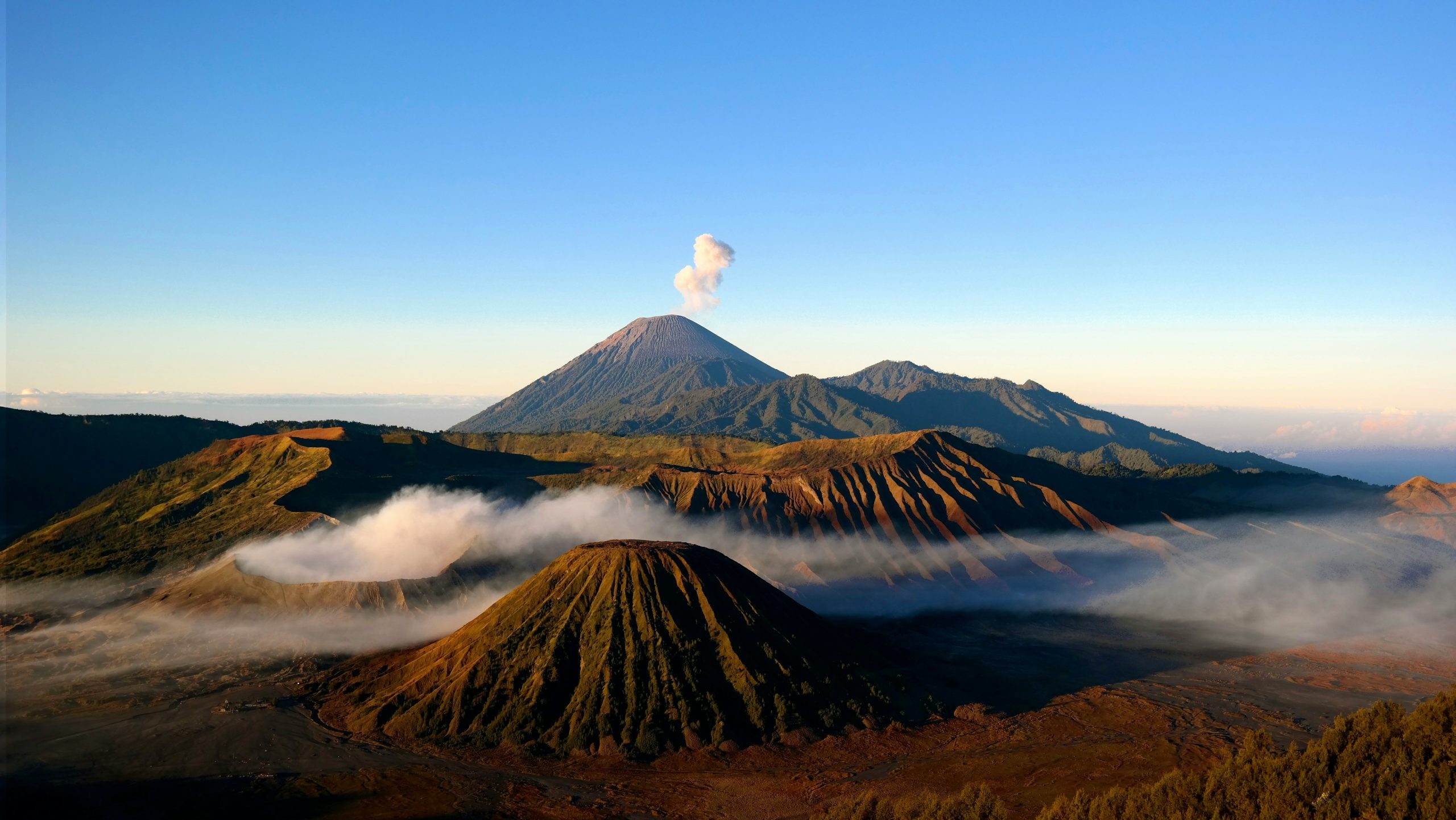
Mount Semeru, Indonesia’s highest active volcano and one of East Java’s most visited trekking destinations, has been erupting persistently since November 2025, with authorities maintaining a Level III alert and exclusion zones that are curtailing tourism across the region.
On April 4, the volcano erupted nine times, sending ash clouds up to one kilometre above the summit. Eruptions continued the following day, with pyroclastic flows recorded reaching 3.5 kilometres. Mount Semeru observation post officer Liswanto told reporters: “The highest eruption occurred at 5:19 a.m., with an ash column reaching around 1,000 meters above the summit. The ash plume was gray and thick, moving westward.”
Mount Semeru has been at Level IV alert since November 19, 2025. An exclusion zone covers an 8-kilometre radius around the crater and extends 20 kilometres along the Besuk Kobokan drainage channel. Pyroclastic flows reached the volcano’s base on January 14, 2026.
Communities within the vicinity of Mount Semeru have been warned of the potential for further pyroclastic flows, lava avalanches, and lahars along rivers originating from the peak, including the villages of Besuk Bang, Besuk Kembar, and Besuk Sat.
Australia’s Volcanic Ash Advisory Centre has previously issued a red aviation warning in connection with Semeru eruptions, signalling that ash clouds could affect flight operations across the region, including airspace around Bali and neighbouring airports in Surabaya and Yogyakarta.
The UK Foreign, Commonwealth and Development Office advises against travel to within several kilometres of the volcano, with exclusion zones subject to change at short notice. Travel insurance may be invalidated for visitors who travel against official advice.
The eruptions have not yet impacted broader travel in Java or Bali, and airports remain open. However, massive eruptions in mid-November 2025 sent ash and lava plumes up to 8.5 kilometres into the sky, and 32 avalanche earthquakes were recorded within a single six-hour observation period.
Local government and tour operators in East Java have developed safety measures to minimise risk for visitors, and travellers are advised to consult official government websites and the Indonesian Meteorological, Climatological, and Geophysical Agency for updates on flights, road access, and health precautions