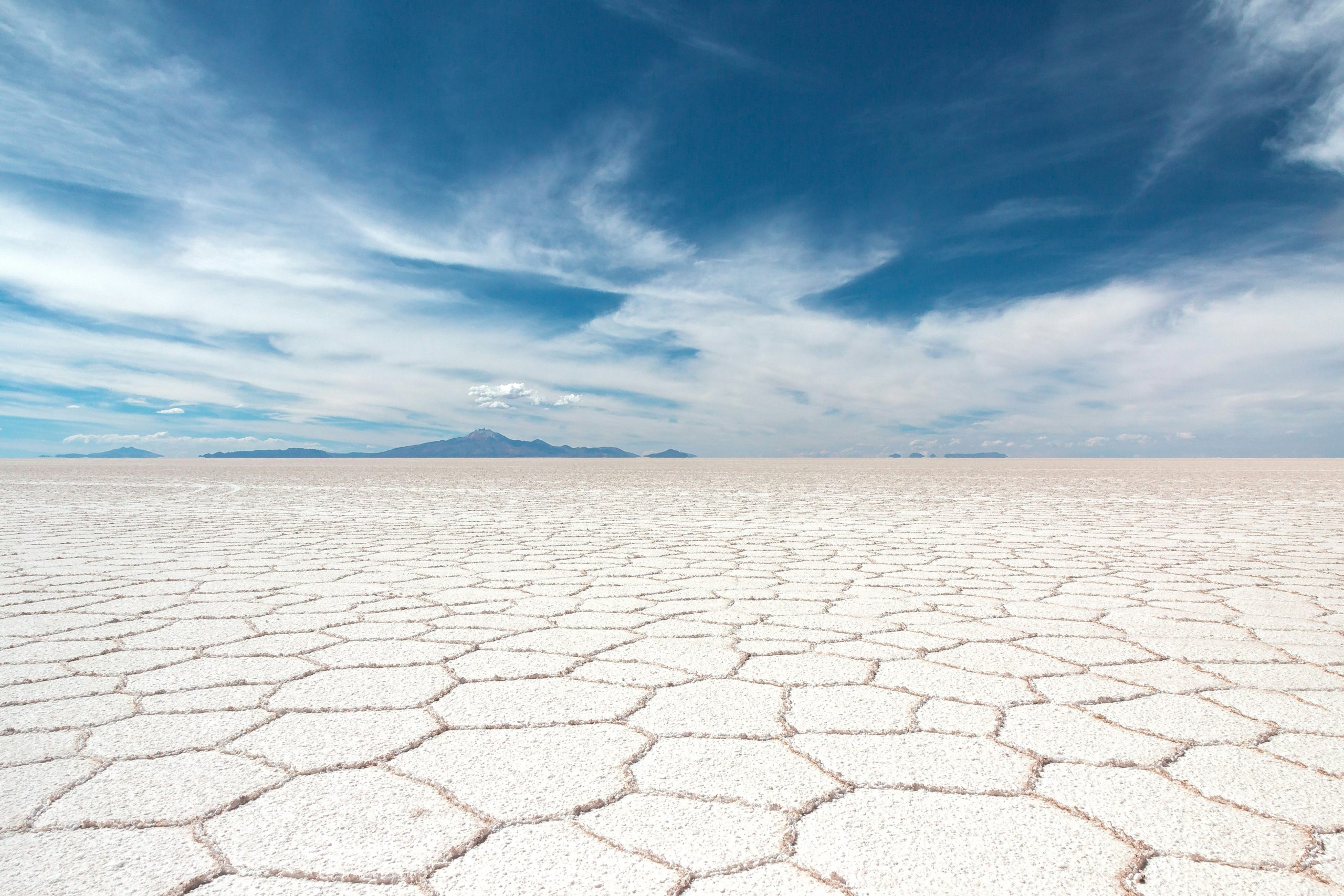
There is no other place on earth quite like Bolivia’s Salar de Uyuni. At 10,582 sq km, it is the world’s largest salt flat, the flattest large landmass on the planet, and — for a few months each year, when a thin layer of rainwater turns its surface into a vast, still pool — the world’s largest natural mirror. More than 400,000 travellers visit each year, drawn by one of the most photographed landscapes in South America. This month, Bolivia is adding something new: its first international film festival, staged entirely on the salt itself. Rock & Gem Magazine
The inaugural Salar International Film Festival (SalarFF) runs on May 28 to 31, led by Bolivian filmmaker Rodrigo Bellott as artistic director and programmed under the theme “Mirror of the Soul.” It opens with Dolores Fonzi’s Belén, winner of the Goya for Ibero-American Film at the 40th Premios Goya and shortlisted for an International Feature Film Oscar at the 98th Academy Awards. A short film competition will challenge accredited attendees to shoot original films entirely on location at the Salar in just four days, with the winning entry projected on a screen built directly on the salt desert. Variety + 2
SalarFF is presented by Una Gran Nación, the Bolivian cultural-pride and content collective, in partnership with HidalgoCorp, the four-decade-old Bolivian hospitality and tourism group whose Palacio de Sal Hotel anchors the Uyuni region, and organised in collaboration with Bolivia’s Vice Ministry of Sustainable Tourism, Culture, Folklore and Gastronomy.
“Our main objective is to make the Salt Desert and Bolivia visible to the world through cinema,” Variety reported Bellott as saying on May 5. “We want to make our cinema, industry, locations and culture visible to the world.”
The choice of location is no accident. The Salar has always had a cinematic quality. Tourism surged after the 2017 release of Star Wars: The Last Jedi, when filmmakers used the flats as the fictional red-mineral planet Crait — and the landscape has appeared in productions ranging from James Bond to Bolivian art-house films. Its surface elevation varies by less than one metre across its entire expanse, making it so precisely flat that it is used to calibrate satellite radar altimeters.
The story of how the Salar came to be is as striking as the landscape itself. According to Aymara legend, the surrounding volcanic mountains were once giant, god-like beings. Tunupa, married to Kusku, wept when her husband had an affair, and her tears mixed with her milk to create the brilliant white salt of the Salar. Beneath that salt, the reality is equally extraordinary: approximately 70% of the world’s lithium reserves lie under the crust, an entire industry now devoted to the extraction of the light metal that powers laptops, smartphones and electric vehicles.
The Salar sits at 3,656 metres above sea level in the Potosí department of southwest Bolivia, accessible from La Paz by an eight-hour overnight bus or a one-hour domestic flight. Three-day tours cost between $150 and $280 per person in 2026, including accommodation, meals and transport by 4WD. The destination draws two very different visitor experiences depending on season. The wet season from December through April produces the famous mirror effect, when the surface transforms into the world’s largest natural mirror reflecting the sky above; the dry season from May through November reveals geometric salt hexagons, clearer skies and easier travel conditions.
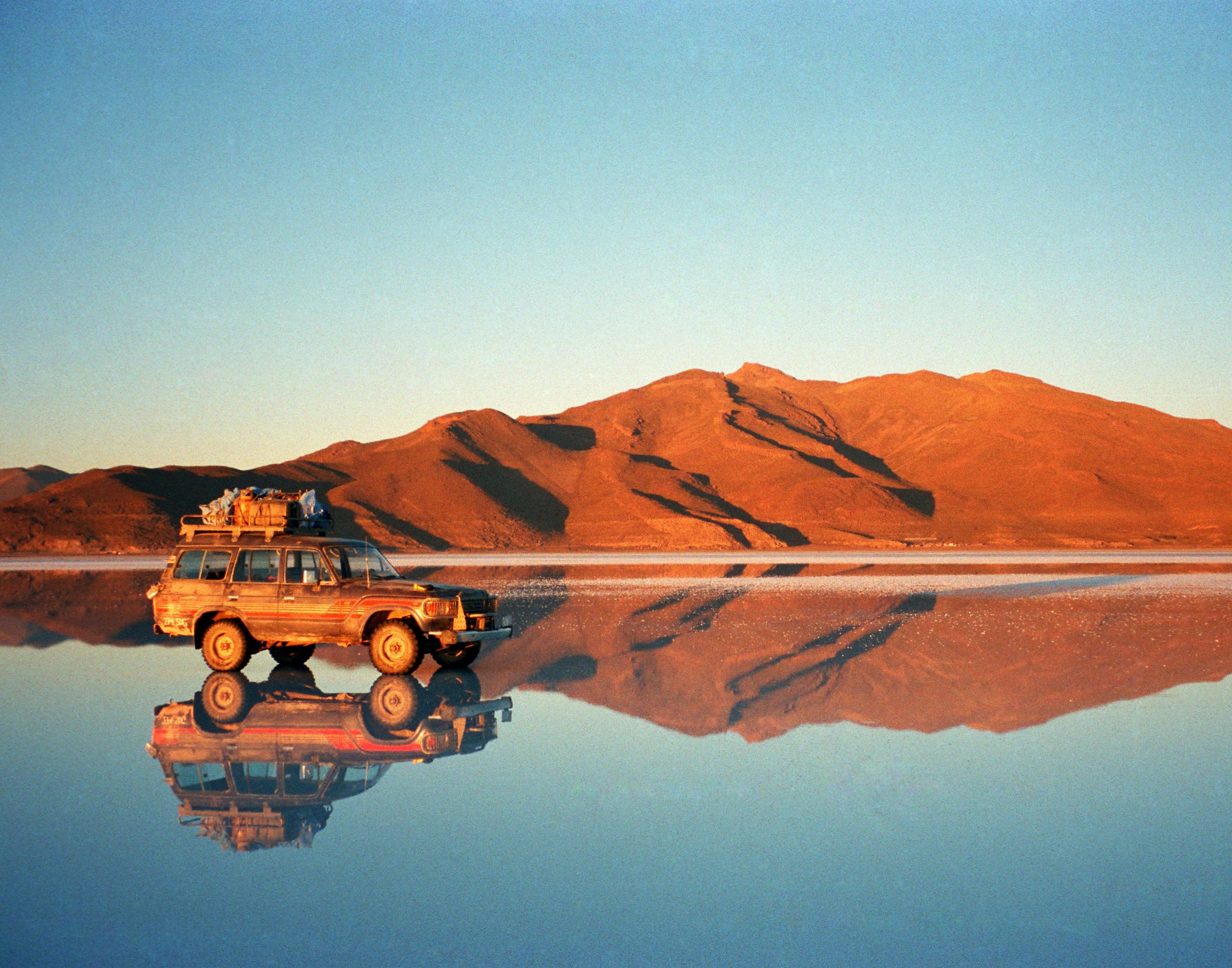
Beyond the salt flats, the surrounding high-altitude desert holds its own draws. Incahuasi Island is a rocky outcrop in the middle of the flats covered in towering cacti; Laguna Colorada is a red-hued lake coloured by algae and minerals, home to three species of flamingo; and the Sol de Mañana Geysers offer bubbling mud pools and steam fumaroles at the edge of the desert. The Train Cemetery on the edge of Uyuni town — an eerie graveyard of 19th-century British-built locomotives left to rust on the Altiplano — has become a destination in its own right.
Despite its status as Bolivia’s most visited attraction, the Salar de Uyuni region is also the country’s poorest, with around 80% of its inhabitants living in poverty. The tension between the destination’s global appeal and the economic reality of the communities around it sits at the heart of what SalarFF is attempting to address, using cinema and cultural tourism to build a more durable economic argument for the region. CODESPA
For Bellott, the festival is about more than a single event. “In a place where the sky and the earth become one,” he said, “SalarFF emerges with a perspective that invites us to see ourselves not only as Bolivians in isolation, but also in relation to others.”