
Turkmenistan is tentatively welcoming foreign tourists after decades of near-total isolation, with tour agencies reporting a sharp fall in visa rejections and authorities unveiling plans to grow the sector, AFP reported on June 23.
One of the world’s most reclusive countries, the former Soviet republic adopted strict visa requirements after gaining independence in 1991 and closely monitors travellers. While this policy remains largely in place, tour agencies in the Central Asian nation have noticed a recent decrease in visa rejections and this year authorities announced plans to expand the tourism sector.
“We have certainly noticed a change,” said Dylan Harris, Head of British tour company Lupine Travel. “Visas have started to be issued quicker than they have been in the past, plus we haven’t had any rejections at all within the past 12 months.” RFE/RL — Radio Free Europe/Radio Liberty, May 15
A law adopted in April 2025 introduces electronic visas and simplifies entry procedures for foreign visitors, allowing travellers to apply through a simplified online system without a letter of invitation Travel Tomorrow, though the e-visa system is yet to be fully implemented, AFPreported.
From April 14 to 16, Ashgabat hosted the International Tourism Exhibition and Conference Turkmentravel 2026 at the Chamber of Commerce and Industry of Turkmenistan, gathering representatives of government institutions, international organisations, tourism professionals, investors and private-sector actors from across Europe, Asia and the wider region. Eureporter A roundtable of international participants resulted in the signing of cooperation documents between tourism enterprises, EU Reporter reported on April 22.
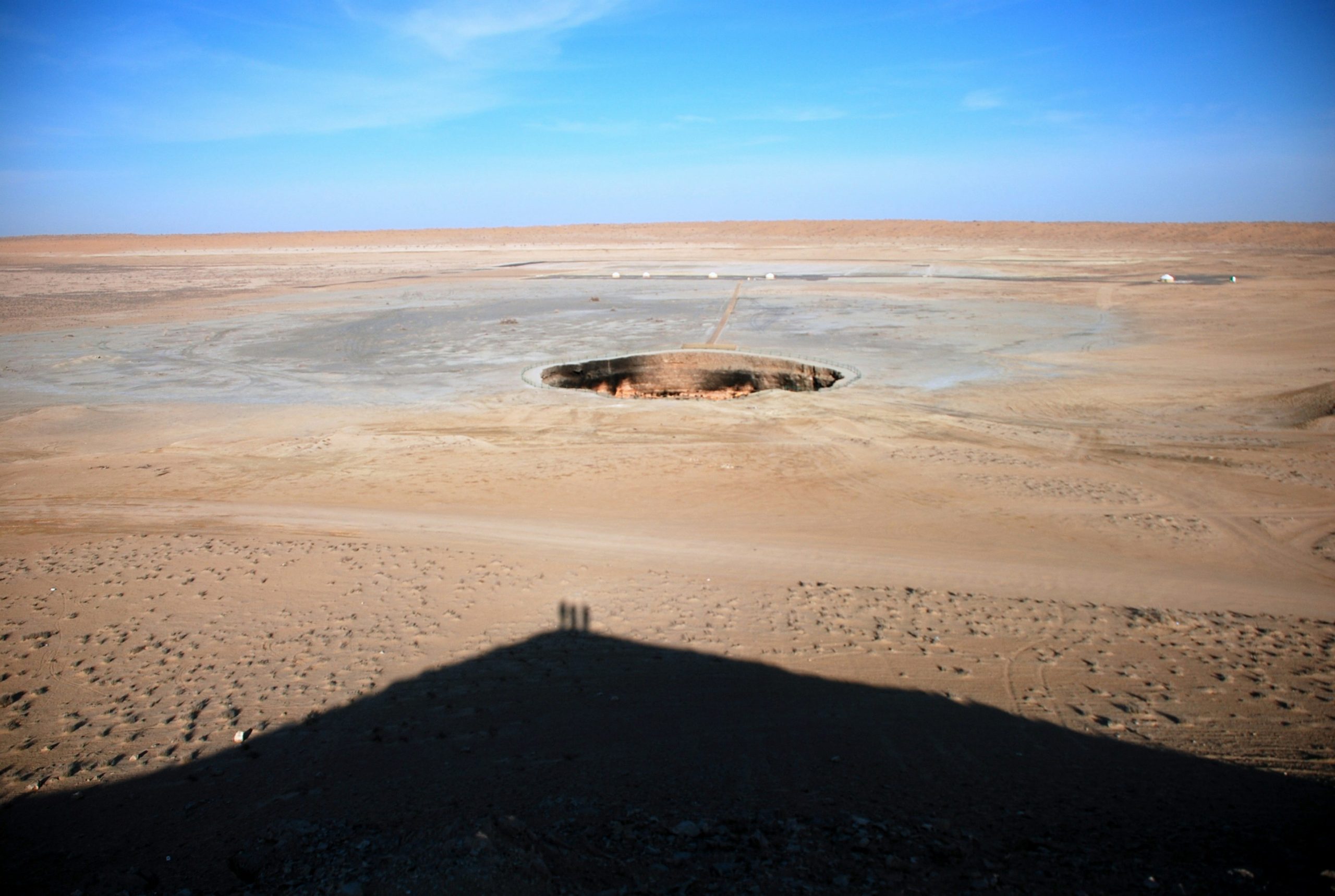
One attraction dominates nearly every tourism campaign: the Darvaza Gas Crater, widely known online as the “Door to Hell.” The crater has burned continuously in the Karakum Desert for decades, glowing brightest at night and drawing photographers, drone operators and overland travellers from around the world. Etu Bonews
Turkmenistan’s Silk Road sites form the backbone of its cultural tourism offer. The Ancient City of Merv, a UNESCO World Heritage Site, is increasingly positioned as one of Central Asia’s most significant archaeological treasures, with tour companies packaging these locations as part of “extreme Silk Road” or off-the-grid itineraries aimed at travellers who have already explored more accessible Central Asian destinations such as Uzbekistan or Kazakhstan. Travel Tomorrow
Turkmenistan still relies almost exclusively on gas revenues to power its economy and does not regularly publish data on the number of arrivals. Bangkok Post Only a few thousand visitors are recorded annually, placing the country at the bottom of global tourism rankings.
The apparent shift in official attitudes has not extended to Turkmen citizens, however. “Nothing has changed for better in the lives of ordinary people,” a resident of the eastern province of Lebap told RFE/RL’s Turkmen Service. RFE/RL
“Tourists visiting this country could, with multiple-entry visas, continue their tour along the Great Silk Road,” said Azat, an employee at a local travel firm, who proposed collaborating with Uzbekistan as there are many archaeological sites close to the border that are inaccessible to foreigners. “We are ready to welcome large numbers of tourists from neighbouring countries.” Bangkok Post — AFP, June 23