
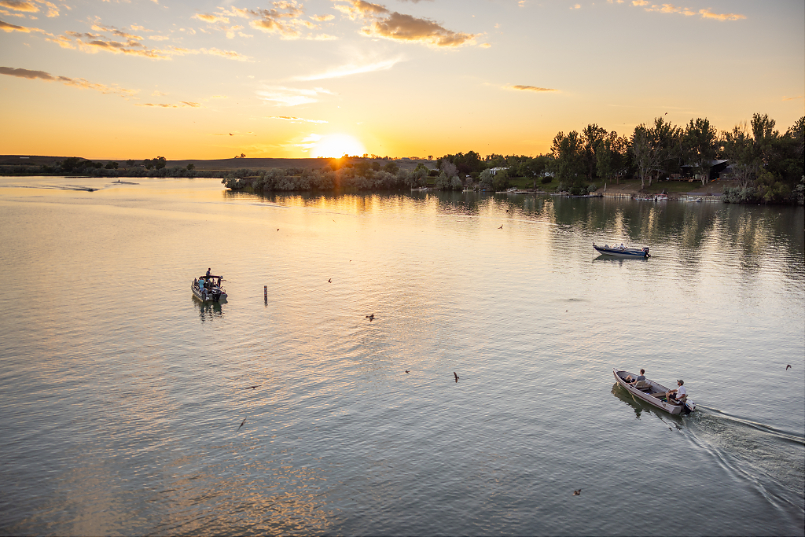
Montana’s tourism authority is promoting bass and northern pike fishing as a summer alternative to the state’s trout waters, in a push aimed at spreading angler demand across the season and across the state’s geography.
The Montana Department of Commerce said warm-water species offer anglers a draw during the hottest months, while easing pressure on the cold-water trout fisheries that anchor the state’s angling reputation. August and September are the strongest months for trophy fish, the department said, as rising water temperatures make bass more aggressive feeders.
State record bass approaching 10 pounds have been landed at Lake Elmo near Billings, Noxon Reservoir near Thompson Falls, and Fort Peck Lake in the state’s Missouri River Country. The northern pike record stands at 37.5 pounds, caught at Tongue River Reservoir.
“From east to west, Montana is a true angler’s paradise,” said Marta Bertoglio, director at the Montana Department of Commerce. “Whether you’re looking to land a trophy northern pike or just teaching your kids how to catch their first bass, we encourage everyone to get outside to explore our state’s incredible fisheries.”
The five waters
The department named five waters. Seeley Lake in the northwest holds largemouth bass, northern pike and occasional trout. Thompson Chain of Lakes State Park spans more than 3,000 acres across 20 miles, with Lower Thompson Lake known for largemouth among its weed beds and Horseshoe Lake for smallmouth habitat.
Noxon Reservoir, formed by damming the Clark Fork River, offers more than 7,000 acres of fishable water for bass and pike. Tongue River Reservoir in the southeast carries crappie alongside bass. Fort Peck Lake has more shoreline than the California coast.
Two tournaments run on Noxon Reservoir in August, the Montana BASS Nation Qualifier and The Bass Federation Draw Series Qualifier. The Kalispell-based Montana chapter of TBF’s Student Angler Federation holds the Montana Student Anglers tournament on the Thompson Chain of Lakes on August 1.
Anglers require appropriate licences and should review the 2026 state fishing regulations.
Why it matters for the trade
The commercial logic here is seasonal load-balancing. Montana’s angling product is built on trout, and trout fishing concentrates demand into specific rivers at specific times, which caps how much a destination can sell and pushes yield onto a narrow band of the calendar. Warm-water species peak in August and September, exactly when trout fishing is least attractive, which gives operators a product to sell into a window that would otherwise soften.
The geographic spread is the second point. Tongue River Reservoir and Fort Peck Lake sit in the state’s eastern reaches, away from the Bozeman and Missoula corridors where most fly-fishing volume lands. Directing anglers east moves bed nights into communities with spare capacity and lower price points, which matters for tour operators assembling packages against rising accommodation costs in the western hubs.
For the trade, warm-water fishing is also a lower-barrier product. Fly fishing carries an equipment and skill threshold that filters out families and first-timers. Spin-fishing for bass does not, and Bertoglio’s framing around teaching children to catch their first fish is a deliberate signal to the family segment. That widens the addressable market for lodges, guides and outfitters beyond the specialist angler, and it supports multi-generational bookings that tend to run longer and spend more per party.
The tournament calendar gives agents fixed dates to build around. Noxon Reservoir hosts two competitive events in August, and organised competition brings participants, support parties and spectators to a defined location on known dates, which is the sort of demand certainty that regional accommodation can actually plan against.