
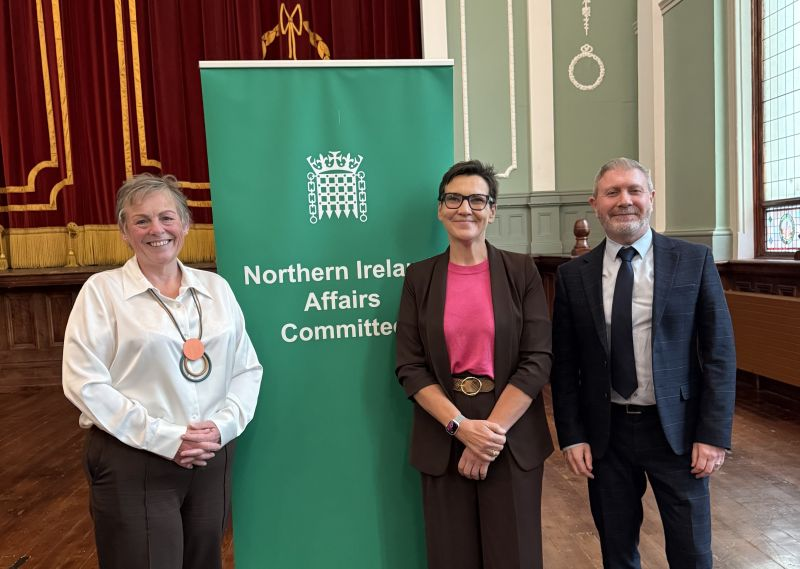
MPs have called for a four-year pilot cutting VAT to 10% on food and accommodation in Northern Ireland, the Northern Ireland Affairs Committee said on October 22.
In a letter to Chancellor John Healey ahead of the Budget, the cross-party committee also urged the government to scrap Air Passenger Duty (APD) on the new Derry~Londonderry to Dublin air route and exempt tour operator customers from the UK’s Electronic Travel Authorisation (ETA).
The proposals target a sector that competes directly with the Republic of Ireland, which applies a 9% VAT rate on food and catering and 13.5% on accommodation, against the UK’s standard 20%.
The committee heard that group tour operators are moving overnight stays across the border to benefit from lower VAT. Conference, wedding and events venues near the border reported similar losses, weighing on a visitor economy that Tourism Northern Ireland is trying to grow under its three-year strategy.
“The tax regime set from Westminster is undermining competitiveness, particularly in border regions, and is holding back economic growth,” committee chair Tonia Antoniazzi wrote.
The pilot would exclude alcohol. Contributors to the inquiry estimated a Northern Ireland-only scheme would cost £225mn-£400mn a year, while HM Treasury put the cost of a UK-wide cut to 10% for hospitality at about £11bn a year.
The committee said businesses would use the savings mainly to protect margins, invest and absorb rising costs, rather than cut prices. It recommended the Treasury study the impact of Ireland’s 9% rate with the Irish government and Tourism Ireland.
APD adds £15 per passenger on the Derry~Londonderry to Dublin service, which is due to launch shortly. The committee warned the duty could threaten the route’s viability and called for a UK-Ireland agreement exempting all flights within the island of Ireland from APD and equivalent taxes.
On the £20 ETA, the committee cited a survey by the Inbound Tourism Operators Association (ITOA) Ireland in which 65% of respondents said the requirement had affected their business to some extent and a further 10% said it had significantly affected them.
It proposed exempting customers of approved tour operators, with the Home Office able to withdraw approval from any business that abuses the exemption.
The committee also pointed to higher employer National Insurance contributions, business rates and energy costs. It heard that employing a minimum-wage worker in Derry~Londonderry costs about 8% more than across the border, and that average wages in Northern Ireland are 7% below the UK average.
The committee asked for a government response within two months and copied its letter to the Northern Ireland Secretary and the Home Secretary.
The Northern Ireland Affairs Committee is a cross-party House of Commons select committee that scrutinises the work of the Northern Ireland Office and policy affecting Northern Ireland.
