
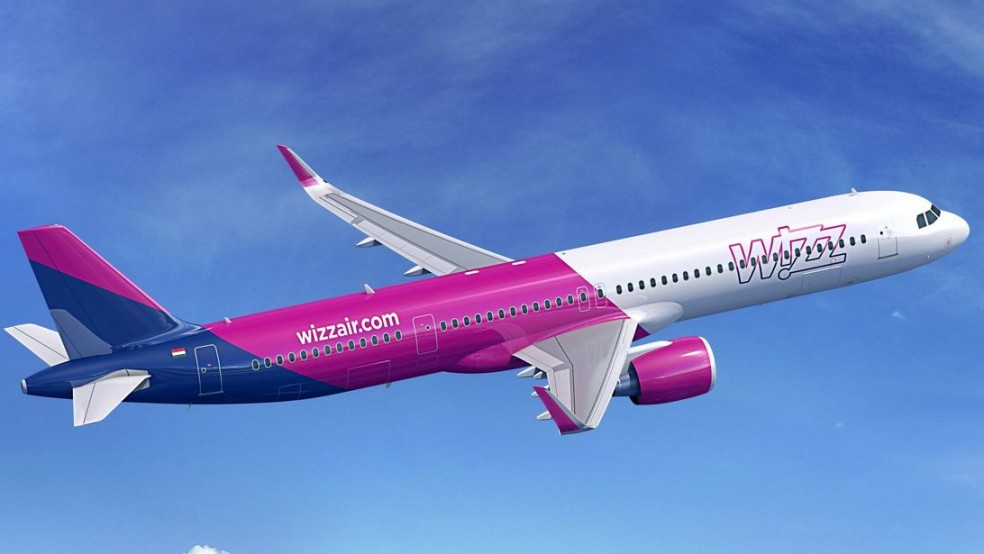
Budget carriers Wizz Air (WIZZ) and Pegasus Airlines (PGSUS) risk credit-rating downgrades if the coming quarters stay weaker than expected, as persistently high jet fuel prices and limited scope to raise fares squeeze earnings, Fitch Ratings said on August 24.
The warning points to a widening gap between Europe’s network carriers and its low-cost operators, with the latter far less able to pass fuel-cost increases on to passengers, leaving the more heavily indebted budget airlines most exposed as the fallout from the Iran war continues to work through the sector. Fitch said the scale of the second-quarter earnings drop was unsustainable for current ratings.
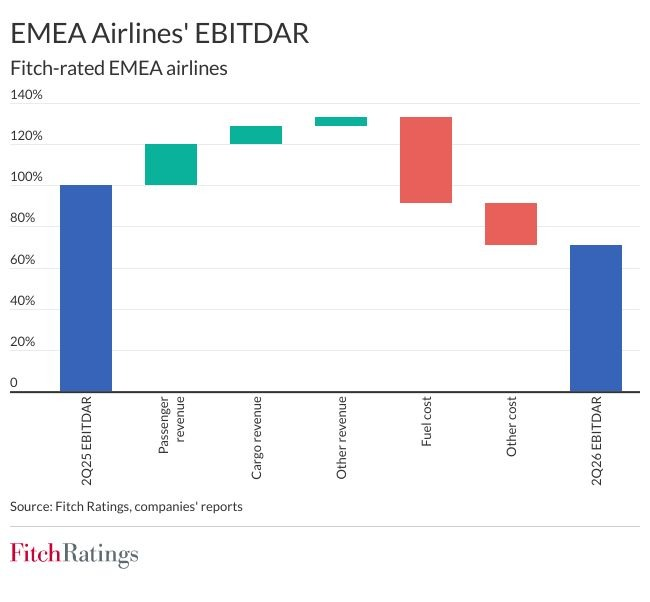
Higher jet fuel prices cut EMEA airlines’ second-quarter EBITDAR by around a third on average year on year, Fitch said, even after higher ticket prices, stronger air cargo rates and some hedging. The decline ranged widely between individual carriers, from about 10% to more than 65%.
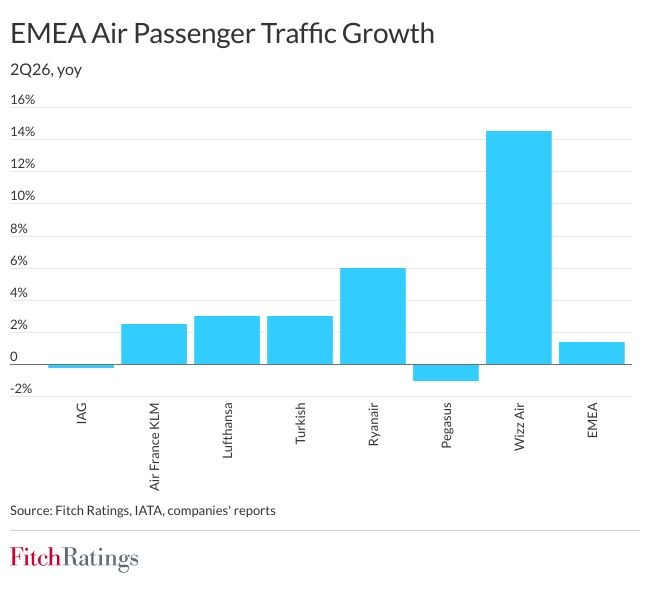
Passenger volumes grew broadly in line with Fitch’s forecast of around 1.4% year on year in the quarter, measured in revenue passenger kilometres, with most Fitch-rated EMEA carriers outpacing the industry average. The agency expects low- to mid-single-digit volume growth for the rest of 2026.
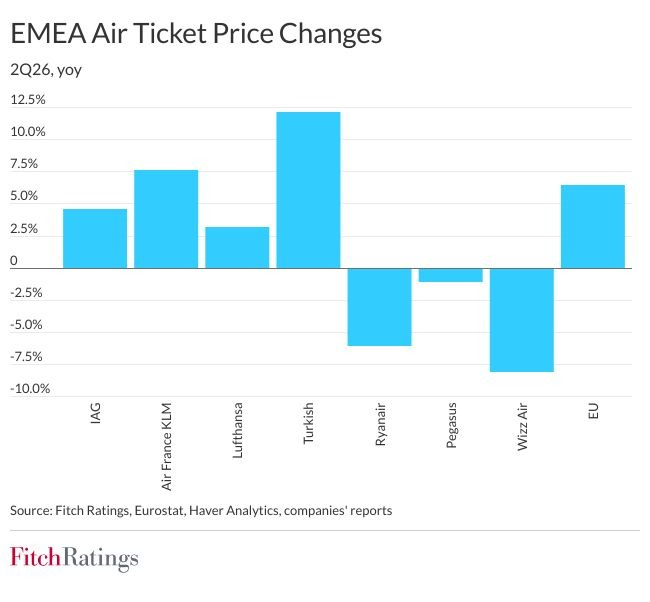
Average ticket prices rose 6% year on year, but the increase was uneven. Network carriers benefited from higher long-haul fares and stronger premium demand, recovering fuel-cost rises through pricing far more effectively than the budget carriers, which recouped only about a quarter of the increase on average as they used lower fares to stimulate demand amid rapid capacity growth.
Fitch flagged Pegasus and Wizz Air as most at risk, citing high existing leverage, weaker pricing power, soft international demand at Pegasus and Wizz’s aggressive capacity expansion, though it said the latter should support the Hungarian carrier’s medium-term market position. Wizz Air last year reported a sharp profit drop and rising net debt, underlining the balance-sheet strain now compounded by fuel costs. Latvia’s Air Baltic is already in debt restructuring, while Fitch views British Airways as the best-positioned EMEA network carrier for its current rating.
The agency assumes jet fuel prices will return close to pre-war levels from 2027, allowing a near-complete recovery in profits, but warned that a failure of prices to fall would likely bring negative rating action. Fitch continues to assume crude will average $87 a barrel in 2026, about 20% above pre-war levels, and said jet fuel could stay elevated for longer than crude given wider refining crack spreads.
Hedging cover for 2027 is lighter than for 2026, meaning costs could remain high into next year and keep leverage elevated unless offset by higher fares, Fitch said. Labour costs are also expected to show relatively high per-unit growth, while airport, navigation, handling and maintenance cost increases remain more moderate.
The pressure follows a turbulent period for the sector, with carriers including Pegasus repeatedly rerouting or cancelling flights across the Middle East since the Iran conflict began, adding to fuel-driven cost strain.