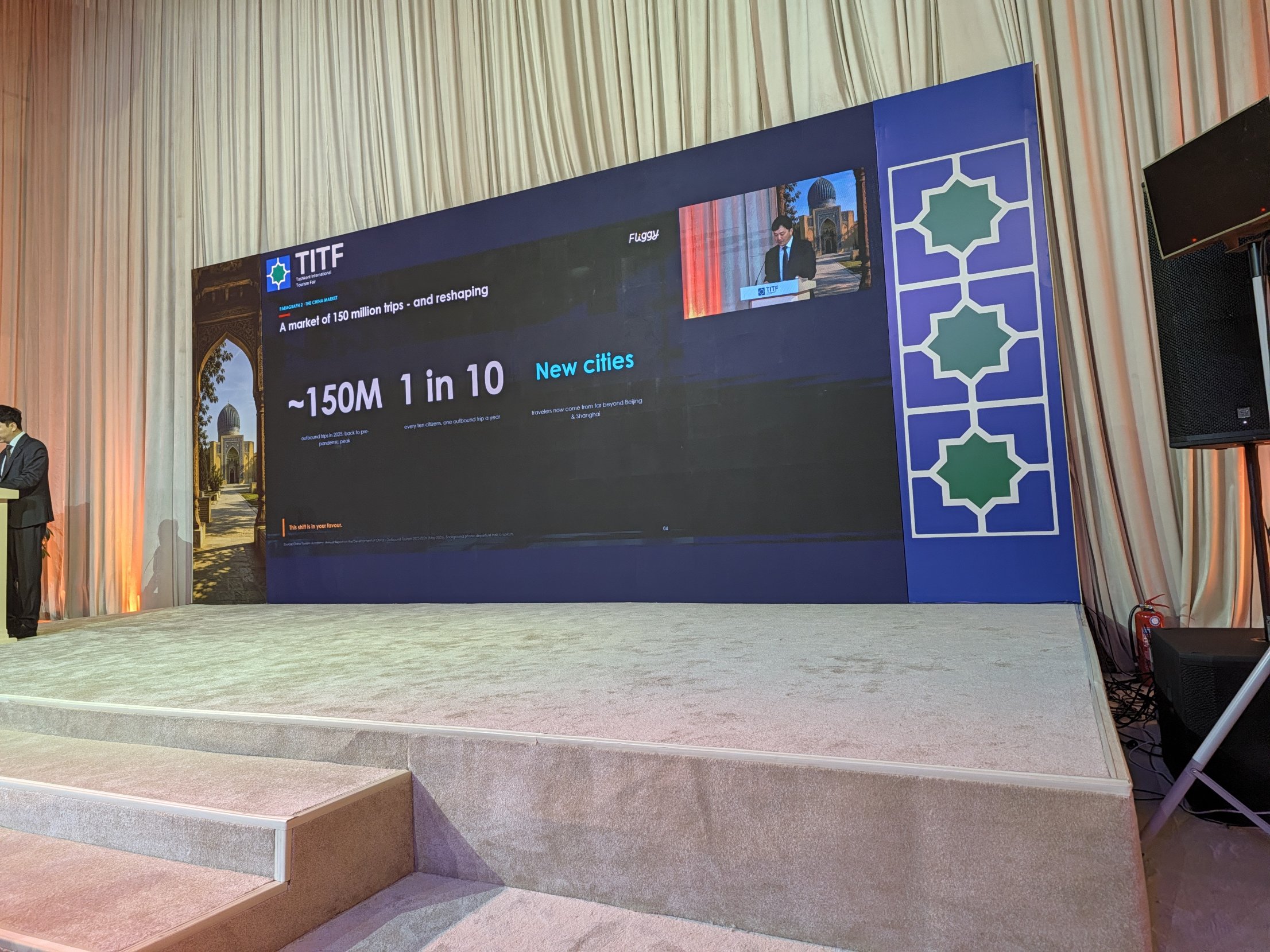
Chinese passenger numbers to Uzbekistan booked through Fliggy, Alibaba Group’s online travel platform, rose by 21.5% y/y between January 1 and November 20, Yang Li of Fliggy told the Tashkent International Tourism Fair (TITF) on November 25.
Gross merchandise value grew faster, by 37.4% y/y, after demand turned upwards in June 2025, and almost all of it is independent travel: group tours account for about 0.2% of Fliggy’s Uzbekistan bookings. Uzbekistan is now the platform’s second-largest Central Asian market and the largest for cultural leisure travel once border and business traffic to Kazakhstan is stripped out.
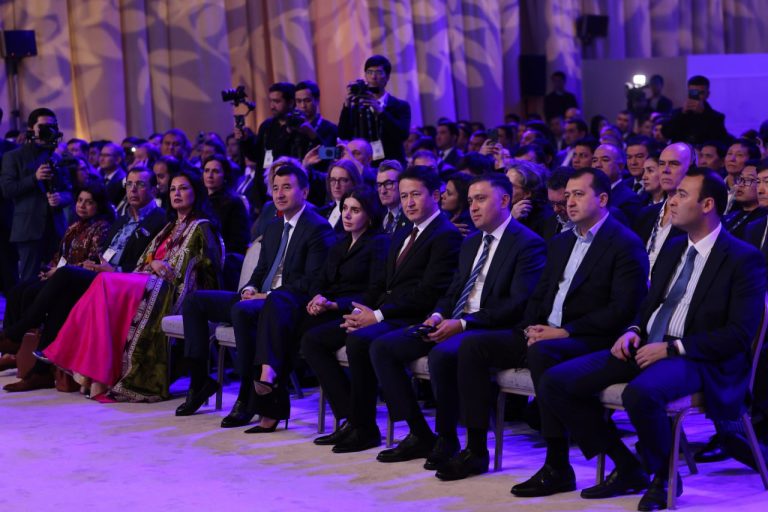
Li gave the first presentation in the fair’s programme, on Uzbekistan, Chinese travellers and working with a digital platform. TITF 2026, the 31st edition of “Tourism on the Silk Road”, is running alongside Uzbekistan’s First International Tourism Investment Forum at the CAEx Exhibition Centre.
Fliggy’s Uzbekistan customers skew premium, female and millennial. Some 40% of users ordering Uzbekistan trips are members of Alibaba’s 88VIP premium programme, 53% are women and 40% men, and travellers born in the 1980s and 1990s make up 75% of the total, at 36% and 39% respectively. Those born after 2000 account for 6%. Trips combine short stopovers with culture, with an average stay of 1.7 nights.
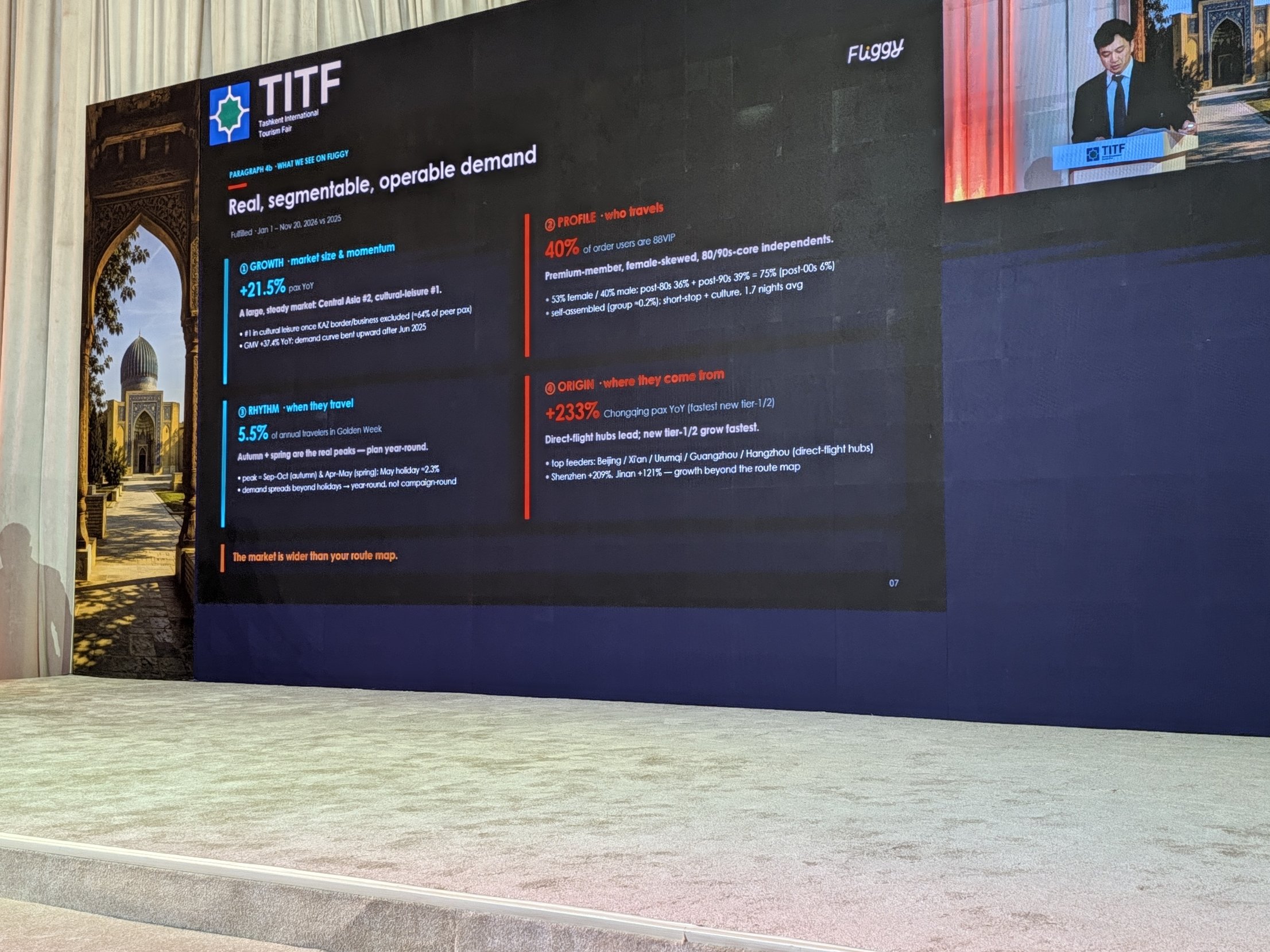
Demand peaks in autumn, in September and October, and in spring, in April and May, rather than around China’s national holidays. Golden Week accounts for just 5.5% of annual travellers and the May holiday about 2.3%, and Li urged Uzbek partners to plan for year-round demand rather than campaign-led spikes.
Beijing, Xi’an, Urumqi, Guangzhou and Hangzhou, all with direct flights to Uzbekistan, are the largest source cities. Growth is fastest in newer tier-one and tier-two cities without them: passenger numbers from Chongqing rose by 233% y/y, Shenzhen by 209% and Jinan by 121%. “The market is wider than your route map,” one slide read. ET has previously reported on weekly flight limits between Uzbekistan, Kazakhstan and China.
Li set the figures against a Chinese outbound market of around 150mn trips in 2025, back to its pre-pandemic peak and equivalent to one outbound trip a year for every ten citizens, citing the China Tourism Academy. Travellers increasingly come from cities well beyond Beijing and Shanghai, he said.
He pitched Fliggy’s marketing tools to the Uzbek trade, including Fliggy Super VIP livestreams, content seeding on Rednote and amplification through WeChat. In one campaign for Malaysia’s durian season, viewers watched the fruit being cut open and booked an orchard trip within the same stream.
The platform also follows travellers through the whole trip, from inspiration on Taobao and Tmall, Fliggy bookings and AI-generated itineraries before departure, to Alipay payments, Chinese-language points of interest on Amap and round-the-clock assistance during the trip, and reviews and repeat bookings afterwards. “Most campaigns end when the traveler lands. Ours continues,” the presentation said.
Li closed with three recommendations for Uzbekistan: make visa, registration and emergency information machine-readable for platforms; make tourism supply bookable and reviewable for Chinese travellers, with Chinese points of interest, payment options, merchants and honoured refunds; and build one joint year-round plan with a single point of contact.