
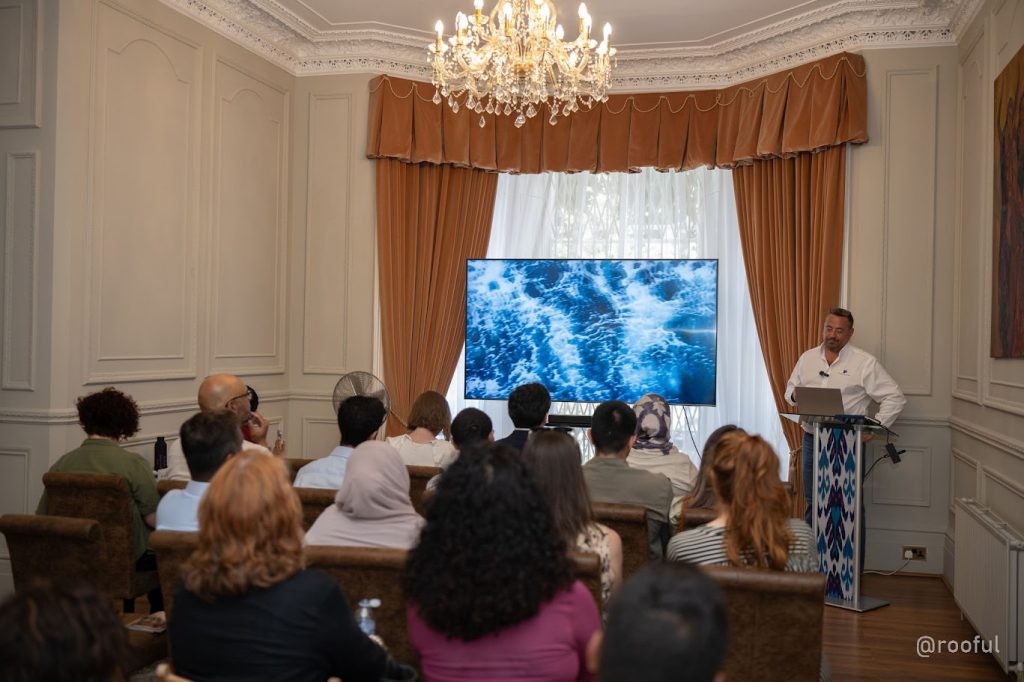
The halal travel market is expanding well beyond traditional destinations and product categories, tourism professionals heard at the Halal Travel Network’s Summer Network event at the Embassy of Uzbekistan in London on June 25, according to the company.
The breadth of the programme points to a segment maturing past its origins in food and accommodation compliance, with operators now testing halal-conscious product in expedition cruising and frontier destinations where the category had no prior presence.
Consul Davron Aliakbarov opened the afternoon with a presentation on Uzbekistan’s tourism ambitions, highlighting landmarks including the Imam Bukhari complex in Samarkand and the Islamic Civilisation Centre, which opened this year. He said the centre aims to present, study and promote the scientific, cultural and spiritual heritage of Islamic civilisation in Uzbekistan.
Craig Upshall of Polar Latitudes Expeditions presented on the operator’s halal-conscious voyage to Antarctica in January, describing how crew training on the needs of halal-conscious passengers supported the trip, which included Friday prayers on deck. Polar Latitudes plans to return to Antarctica at the end of the year and to run a halal voyage to Svalbard in June 2027.
Rooful Ali of Emerald Network delivered a masterclass on travel photography, while a fireside discussion with Sophie Ibbotson of Maximum Exposure and Joanna Marsh of HalalBooking covered emerging destinations and shifting traveller demand. The panel discussed Pakistan and Turkmenistan, and the investment those countries are making in e-visas and international flight connections.
Marsh said HalalBooking had recorded demand for destinations including the UK, driven by available halal-conscious facilities. HTN head of training David Archer introduced the concept of a “halal confidence layer”, arguing that halal considerations should be designed into the customer journey rather than attached as vague labels such as “Muslim-friendly”, to reduce friction in the booking process.
Why it matters for the trade
The Antarctica case is the one to sit with. A polar expedition operator running a halal-conscious voyage, with crew trained on requirements and Friday prayers held on deck, demolishes the assumption that this market is served by adding a prayer room and a halal menu to a beach hotel.
It suggests halal-conscious travellers are pursuing the same adventure, wildlife and expedition products as everyone else, and that the constraint has been supply rather than demand. Operators in adventure, expedition and experiential travel who have written off this segment as irrelevant to their product should reconsider.
The “confidence layer” framing is the practical takeaway for agents and suppliers. The commercial problem with vague halal labelling is not that it offends; it is that it generates unanswered questions, and every unanswered question is friction that kills a booking. Can the agent explain whether alcohol is used in food preparation without a chain of follow-up emails?
Do prayer times work with the itinerary? A supplier who answers those questions upfront makes the product sellable through the trade; one who does not forces the client to book direct or not at all. That is a distribution issue, not a compliance one.
For destinations, the message from the emerging-markets panel is that accessibility infrastructure comes first. Turkmenistan growing its flight hubs and countries investing in e-visas are the unglamorous prerequisites. The trade should watch which frontier destinations pair that access work with clear, verifiable halal provision, because those are the ones that will convert interest into bookings.