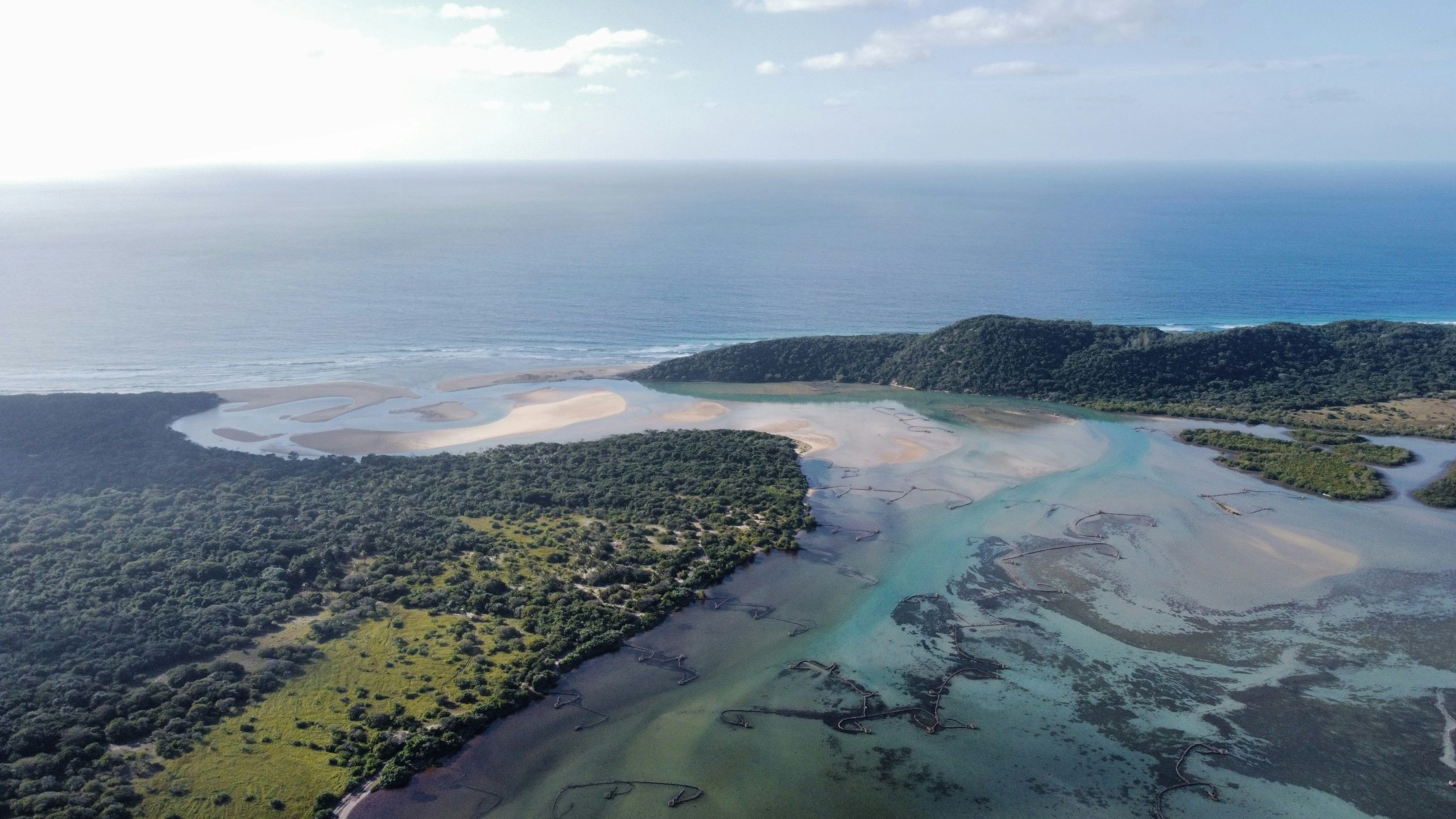
Inside the Indian Ocean’s last quiet whale corridor in South Africa, protected by the Thonga community’s marine guides.
Most whale watching happens from a crowded boat, engines idling, cameras competing for the same angle. At Mabibi, on South Africa’s Maputaland coast, the whales come to you instead. Stand on the wooden deck at Thonga Beach Lodge between June and September and there is nothing between land and open ocean but a stretch of undisturbed water, close enough that humpbacks can be tracked without binoculars.
That silence is rarer than it sounds. Marine protected areas are increasingly recognised as refuges where whales can communicate, navigate and breed away from the noise of shipping lanes and sonar, and iSimangaliso Wetland Park has recorded more than 11,000 whales passing through in a single migration season. Every year, humpbacks travel the length of Africa’s east coast on one of the longest migrations of any mammal on earth, moving from Antarctic feeding grounds to the warm breeding waters off Mozambique and Madagascar. The Maputaland coast sits directly on that route.
Access here is deliberately narrow. Thonga Beach Lodge runs the only commercial boat launch from the secluded shores of Mabibi, a stretch of coastline without the boat traffic or acoustic pollution that has crept into busier whale watching hubs further down the coast. Bottlenose and spinner dolphins, manta rays, whale sharks and giant turtles all pass through the same protected waters.
Guides who grew up reading this ocean.
What sets the experience apart is who is doing the guiding. The lodge’s Marine Centre team was born and raised in Mabibi, part of the Tsonga fishing community that has worked this coastline for generations, long before any of them were trained to interpret it professionally. Bonani Mbonambi started out as a general helper before an interest in the underwater world led him to qualify as a dive master. Sipho Qwabe began in maintenance and now leads guests through coral rockpools he has known since he was a child.
“The ocean has always been part of our lives here in Mabibi,” says marine educator Saneliso Mathenjwa, known locally as Sunny. He grew up swimming and fishing in these waters and now works alongside the other guides to protect the same beaches and pass that knowledge on to younger residents of the village.
What protection looks like in practice.
Beyond the whale season, the reef in front of the lodge is one of the most closely monitored marine sites in the park, with guides helping track activity that would otherwise go unrecorded. The lodge’s owner, the Isibindi Collection, funds community projects through its Isibindi Foundation, including support for the local school, staff training and employment for Mabibi residents, turtle monitoring alongside the iSimangaliso Authority, and beach clean-ups.
iSimangaliso itself became South Africa’s first UNESCO World Heritage Site in December 1999, covering 1,328,901 hectares and 220km of coastline that takes in coral reefs, dune forest, estuaries and open ocean. It is also home to the coelacanth, a fish once believed to have died out 66 million years ago until it was rediscovered off South Africa’s coast in 1938.
For visitors, the appeal is less about ticking off a sighting and more about what an unspoilt stretch of ocean sounds like when it is left alone, a rarer experience with each passing season.