
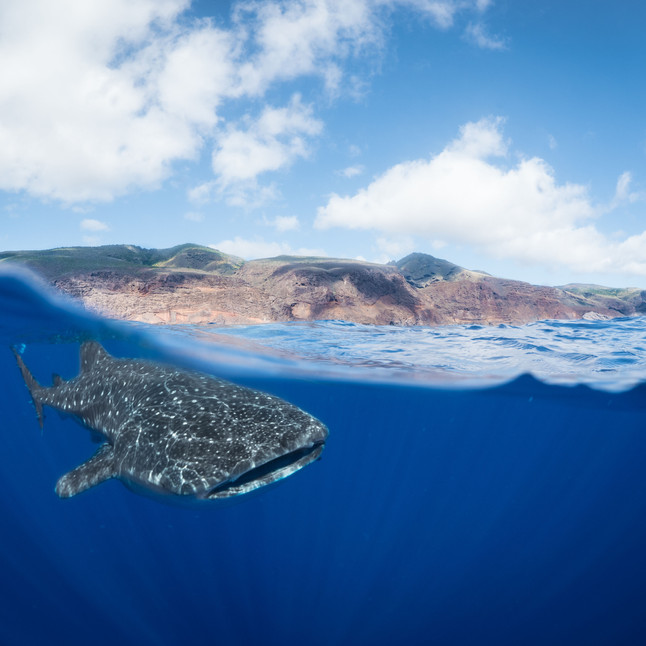
The endangered whale shark, called the “bone shark” by islanders, returns to the remote South Atlantic outpost of St Helena between January and April each year, drawing snorkellers to one of the few places on Earth where the species gathers in such numbers and giving the travel trade a reason to start selling the 2027 season now.
The timing chimes with a wider shift in how people choose holidays. Kayak’s What the Future Report 2026 found that 55% of Gen Z and millennial travellers say natural wonders, from aurora displays to solar eclipses and seasonal wildlife, will shape their travel plans in 2026.
The whale shark is the largest fish in the sea, reaching lengths of around 18 metres, and the St Helena aggregation is unusual in drawing roughly equal numbers of adult males and females, among them pregnant females at early stages. That balance has led researchers to conclude the animals come to the island to breed, a pattern seen at few other sites worldwide.
Listed as endangered by the International Union for Conservation of Nature, the whale shark can live for up to 150 years, according to WWF, though fewer than one in ten survive to adulthood. It is harmless to people. Despite a mouth that can open to more than a metre across, the fish feeds by straining shrimp, small fish and plankton through its gills, filtering thousands of litres of water an hour rather than biting or chewing.
Interactions off St Helena are tightly controlled to keep them low-impact. Diving with the sharks is banned, and guidelines cap each encounter at eight snorkellers in the water and two boats near the animals at any one time, a set of limits designed to put conservation and animal welfare ahead of volume.
Guided whale shark snorkelling trips and other marine excursions run throughout the season with the island’s accredited operators, among them Dive St Helena, Sub-Tropic Adventures, Wicked Wahoo, Enchanted Isle and Seahawk Odyssey.
Repeat visitors rate the encounter highly. “St Helena has become my favourite place to encounter these gentle giants. Nowhere else have I seen so many large adult sharks in such a small area,” one said.
St Helena is reached by weekly flights from Johannesburg, with seasonal services from Cape Town.
The Kayak finding gives agents a concrete hook: more than half of younger travellers now plan around natural phenomena, and St Helena’s whale shark season is a premium, low-volume product that fits the “authentic, far from the crowds” brief those clients want. The strict capacity limits (eight snorkellers, two boats) make this a genuine scarcity product, supporting advance booking and higher-value tailor-made packages over last-minute sales.
