
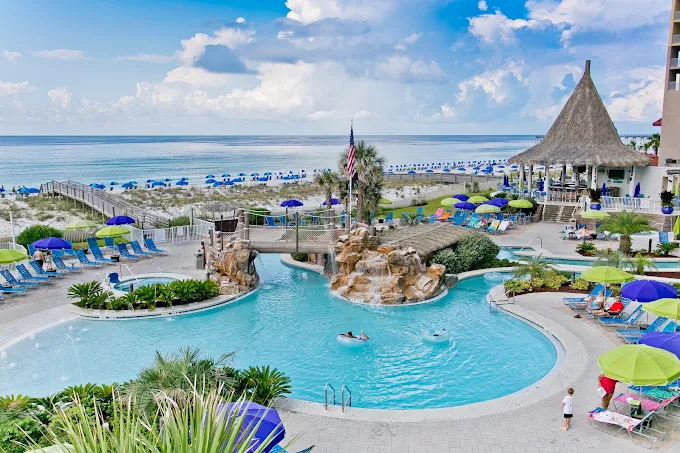
US operator Innisfree Hotels has broken ground on a Gulf-front Hampton Inn by Hilton on Pensacola Beach and a new arts academy in Pensacola, the company said on July 13.
The projects point to the community-reinvestment model increasingly favoured by regional hospitality operators, pairing a revenue-generating hotel with a philanthropic venture funded from its success, as destinations compete on more than room supply.
The 215-room Hampton Inn by Hilton Pensacola Beach, due to open in 2028, will be Innisfree’s sixth hotel on Pensacola Beach and seventh in Escambia County, expanding its beach portfolio to 1,194 rooms, according to the company. It will introduce the beach’s first hotel waterslides, a zero-entry lazy river, a two-level poolside bar and restaurant, more than 4,000 sq ft of meeting space and direct beach access.
The hotel will employ about 150 people, bringing Innisfree’s local workforce to over 825 and helping its Pensacola-area portfolio generate more than $16.6mn in expected annual tax revenues.
The Hive Arts Academy, opening next summer, will provide a permanent home for the youth arts programming of Innisfree’s philanthropic arm, the Hive Foundation. Designed for students in grades 8 to 12, it will offer instruction in visual arts, sculpture, culinary arts, engineering and fabrication across more than 6,000 sq ft of studios, gallery space and a makerspace.
“Every guest who chooses Pensacola Beach helps strengthen our local economy, and that success allows us to invest back into the community,” said Innisfree president and chief executive Ted Ent.
Innisfree, the largest beachfront hotel owner-operator on the Gulf Coast, owns or manages more than 44 entities and around 3,600 rooms, with about $1.1bn of assets under management.
Why it matters for the trade
The Pensacola groundbreaking is less about a single Hampton Inn than about the model Innisfree is demonstrating: a triple-bottom-line operator that ties its expansion to visible community reinvestment. For the trade, that positioning is increasingly a selling point, particularly with younger travellers and group organisers who factor a destination’s social credentials into where they book.