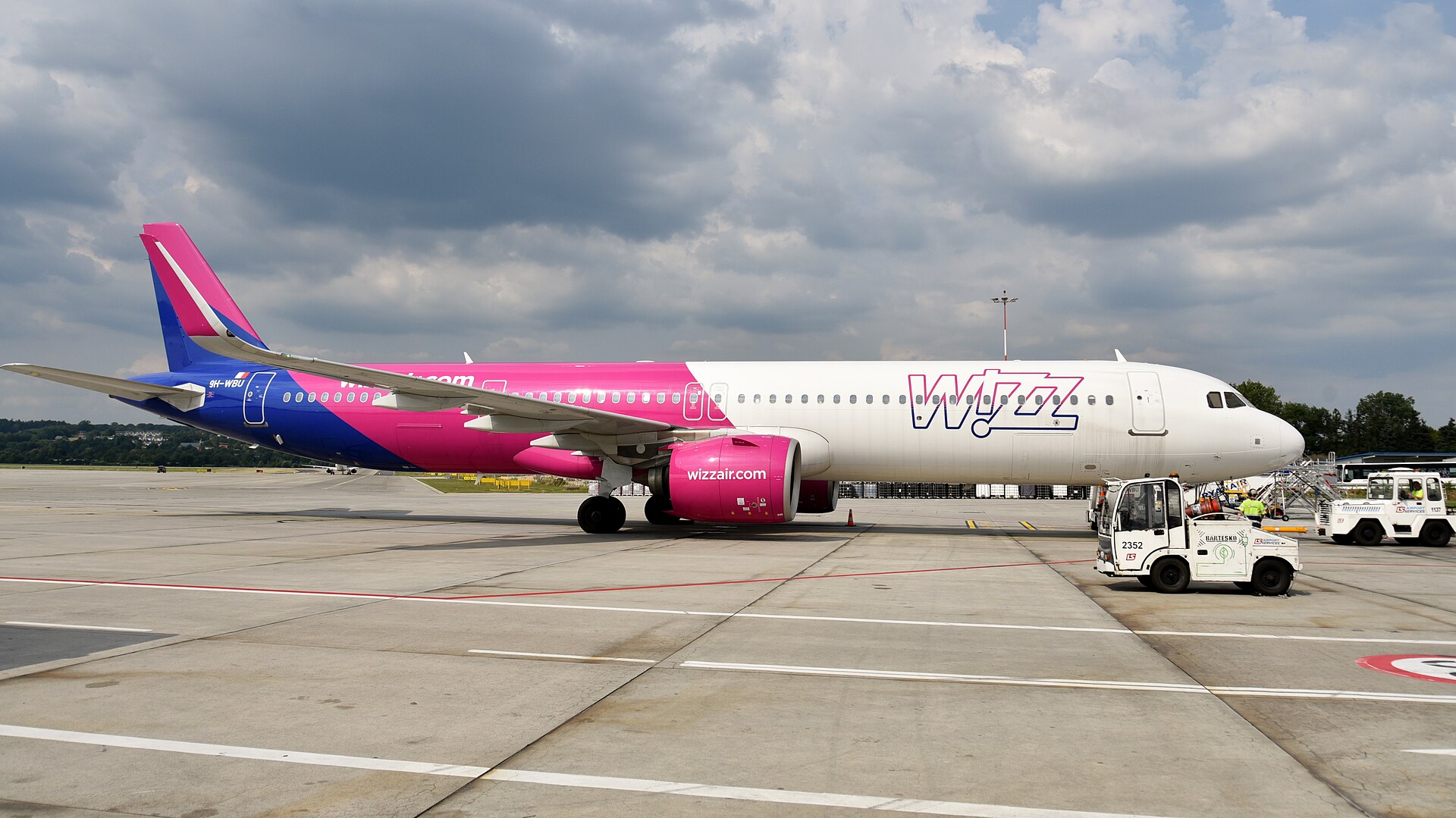
Wizz Air’s first-half net profit fell 66% to €108.1mn as fuel costs jumped and Middle East disruption hit the start of the period, even as the Budapest-based low-cost carrier grew passenger numbers by more than a quarter.
In the six months to the end of September, fuel costs rose 33.7% to €1.24bn. Total revenue increased 13.8% to €3.8bn and passenger numbers rose 26.2% to 46.1mn, with the load factor edging up to 92.5% from 92.4%. Revenue per available seat kilometre fell 2.9% to 4.84 euro cents and average revenue per passenger dropped 9.9% to €82.5.
“Although profitability in the period was impacted by elevated fuel costs, Middle East disruptions at the start of Q1, and fleet availability constraints, revenue trends strengthened through the summer, supported by solid load factors and improving unit revenue performance,” said Chief Executive József Váradi.
Váradi said trading momentum had continued into the third quarter. Revenue per available seat kilometre rose around 5% year on year in October, with ticket revenue per passenger up 7% even though the average sector was 5% shorter. Around 70% of November seats and 40% of December seats are sold, with unit revenue on hand in line with last year on around 18% more capacity.
“Fuel remains the main headwind, and our hedging, covering 82% of second-half requirements, is doing what it was designed to do,” he said. Wizz Air shares were down 1% at 1,135p in London on Thursday morning.
The results follow Wizz Air’s move to restore UAE flights as part of a 12-route Middle East comeback. Fitch had warned that EMEA low-cost carriers including Wizz Air and Pegasus faced rating pressure from fuel costs, and Lufthansa Group said the Middle East conflict added €543mn to its third-quarter fuel bill.