Dubai’s Emirates Group posted a profit before tax of AED4.1bn ($1.1bn) for the six months to September 30, down 66%, the group said on November 5.
The half carried the full six-month impact of regional conflict and high fuel costs, according to the group. Emirates was flying 91% of its pre-disruption network at September 30, serving 150 airports in 78 countries and territories.
Group revenue fell 12% to AED66.2bn ($18.0bn). Cash balances dropped to AED54.1bn ($14.7bn) from AED59.6bn ($16.2bn) at March 31, as the group funded aircraft pre-delivery payments and debt servicing.
“It has been a demanding six months, and once again our business model and our people stood up to the test,” said Sheikh Ahmed bin Saeed Al Maktoum, Chairman and Chief Executive of Emirates Airline and Group. “We enter the second half of our 2026-27 financial year with measured optimism.”
The airline’s profit before tax fell 68% to AED3.7bn ($1.0bn) from AED11.4bn ($3.1bn). Its revenue dropped 13% to AED56.9bn ($15.5bn).
Emirates carried 21.8mn passengers, down 22%. Capacity measured in available seat kilometres fell 17% and the passenger seat factor slipped to 72.0% from 79.5%.
Fuel costs before hedging rose 60% on the previous half-year. Hedging gains of AED7.1bn ($1.9bn) cut the net increase to 13%. Fuel accounted for 34% of operating costs.
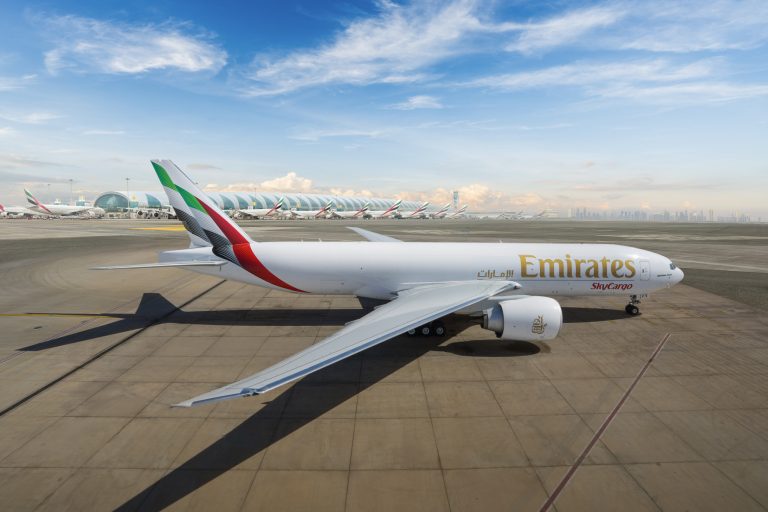
Cargo held up better. Emirates SkyCargo carried 1.2mn tonnes, down 1%, while cargo revenue rose 52%. The division added freighter services to Almaty and Zhengzhou and took delivery of five Boeing 777 freighters.
The airline received nine A350s in the half. It fitted Starlink on 36 more aircraft, taking the total to 57.
Ground services and travel arm dnata posted a 51% fall in profit before tax to AED410mn ($112mn), on revenue down 7% at AED11.0bn ($3.0bn). Revenue at its travel division dropped 31% to AED1.4bn ($373mn), mainly after it sold Travel Republic and Netflights.
The group employed 128,237 people at September 30, down 2% from March 31.