
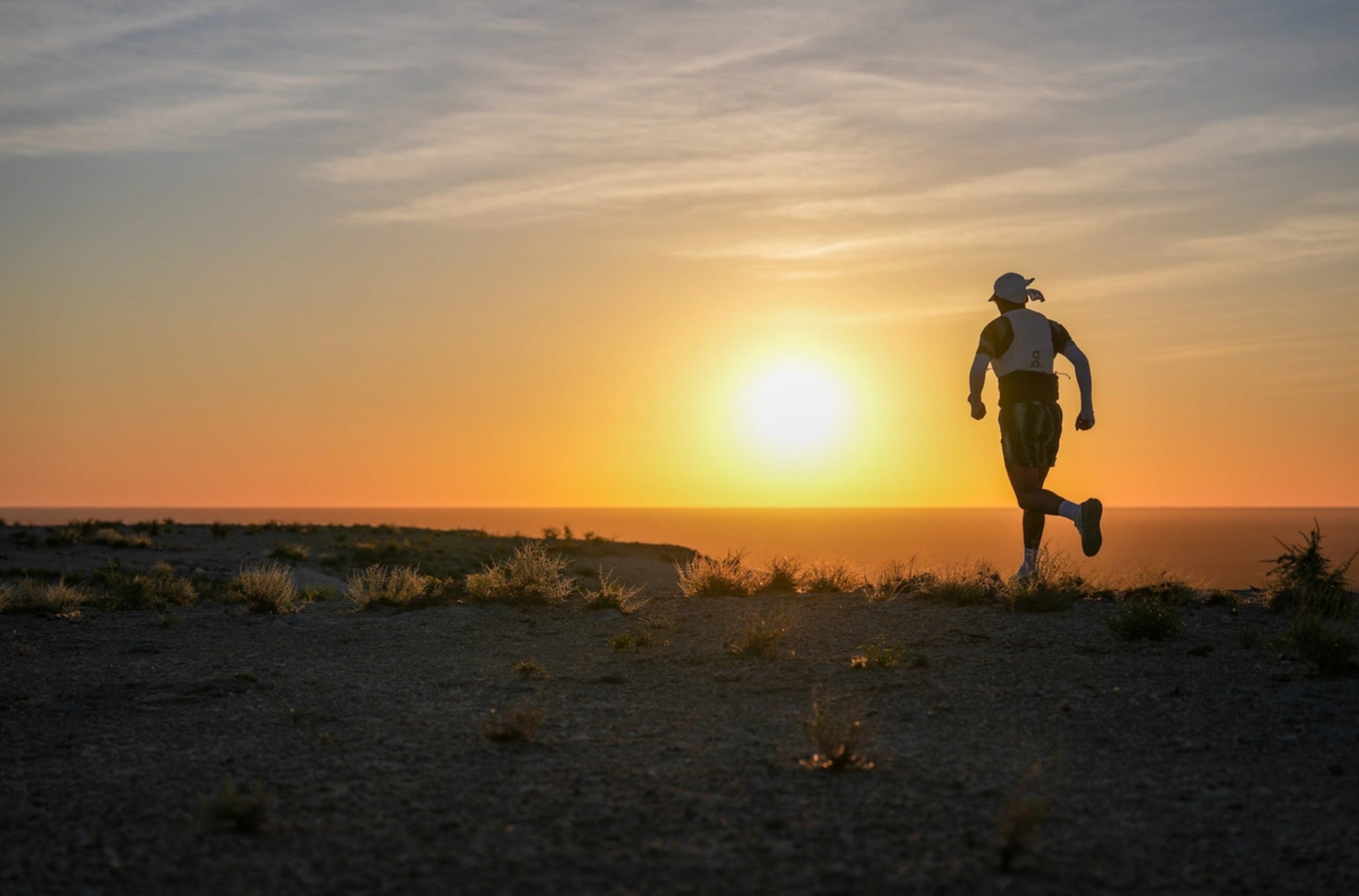
Runners will gather in Karakalpakstan in western Uzbekistan on October 3 for an ultramarathon along the escarpment above what remains of the Aral Sea, with every distance finishing at a shoreline that organisers must reposition each year as the water evaporates, the Samarkand Marathon Series said on September 14.
The Aral Ultra offers 100 km, 50 km, 25 km and 15 km races on October 3, followed by a 2 km fun run and children’s races on October 4. Entry for the longest distance costs UZS1mn ($80), a figure the organisers play on, since a million som buys relatively little.
The course runs along the top of the Ustyurt Plateau escarpment, with views east across the former seabed. The 100 km race starts near an outcrop above the abandoned fishing village of Urga and Lake Sudochye, a shallow wetland protected under the Ramsar Convention and a stopover on the Central Asian flyway.

Conditions are demanding. The region receives barely 100 mm of rain a year, summer temperatures routinely pass 40°C and October is still likely to sit above 30°C. Water stations and medical support are provided, and the longer distances are aimed at experienced runners.
“A finish line that moves further out every year due to an ecological crisis really highlights the alarming significance of the Aral Ultra Race,” said London-based runner Zak Timol, who is returning this year.
Participants are based in Nukus, with briefings held over the two days before the race and transfers of more than 300 km to the start lines by four-wheel drive. The 100 km field leaves Nukus at 11pm for a 4am start, while 15 km runners depart at 9am for an afternoon race.
Nukus is served by daily flights from Tashkent with Uzbekistan Airways and Centrum Air, and sits under three hours by road from Urgench, which has wider international connections. Hotels in the city include Jipek Joli Inn, BesQala Guesthouse and Jipek Joli Art. Two and three-day extensions are available through Ayimtour and Aral Sea Discovery.
The Aral Sea, once the world’s fourth-largest inland lake, has lost more than 90% of its volume and surface area since the 1960s after water from the Amu Darya and Syr Darya was diverted for cotton production. The exposed seabed, known as the Aralkum, is the world’s newest desert. Uzbekistan’s response includes water-sharing agreements with neighbouring states, efficient irrigation, relocating water-intensive agriculture and replanting the Aralkum with salt-tolerant species, coordinated by the National Committee on Ecology and Climate Change, which has announced a Climate Change Museum in Nukus.
Karakalpakstan covers almost 40% of Uzbekistan and holds around 2mn of the country’s 39mn people, with roughly 350,000 in Nukus. Visitors come for the rusting hulks at the former port of Moynak and its Aral Sea Museum, the Ustyurt escarpment and community-owned yurt camps, with wildlife including saiga, caracal, goitered gazelle, Ustyurt urial and desert monitor lizards.